Ignacio Packer: Following the compass
Forty-five years of purpose and possibility
15/10/2026
As Ignacio Packer retired as Executive Director of the Caux Foundation on 14 October 2026, we look back on a remarkable 45-year career spanning continents, sectors and cultures. Throughout this journey, one thread has remained constant: a deep belief in the human factor, the power of relationships, the value of listening and the importance of bringing people together to make a difference. His story is one of unexpected paths, enduring values and a commitment that goes far beyond any professional title.
Forty-five years have passed since Ignacio Packer took his first steps into professional life - a time in which he crossed continents, moved between sectors, met people who became friends, colleagues and sometimes unexpected guides, and discovered that the path you thought you were following was, in fact, being drawn one step at a time.
For Ignacio Packer, there was never really a master plan.
“I started working in 1981,” he says. “If you look at it now, you might think there was a plan. I assure you there wasn’t.”
There was, instead, curiosity, a willingness to step beyond the familiar and a conviction that work should mean something. He followed people and opportunities rather than titles and, perhaps above all, held on to one powerful belief: “I believe in the impossible!”
His professional journey has taken him from the deck of a merchant ship to Buenos Aires, from financial auditing to humanitarian operations, public health, children's rights and international advocacy, and ultimately to Caux. It has been a journey across very different worlds, yet one in which certain values have remained remarkably constant.
If you look at it now, you might think there was a plan. I assure you there wasn’t.
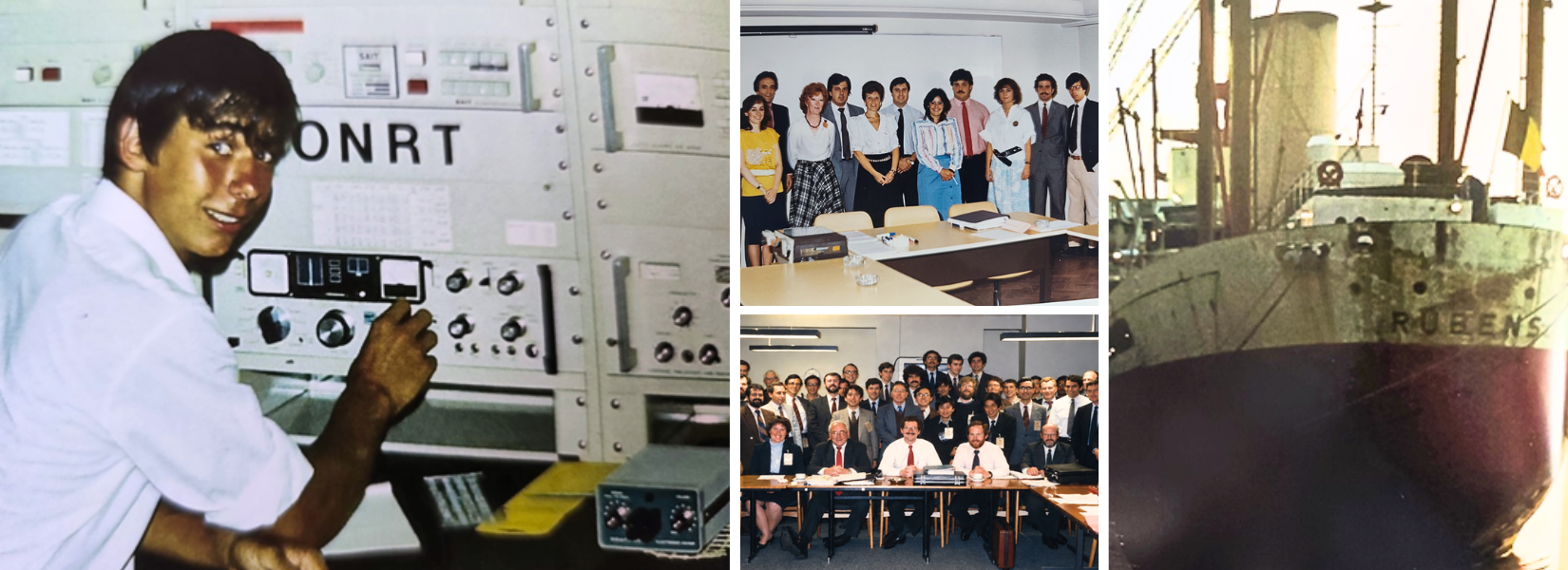
Leaving the port
Some of the most important lessons came early. In 1981, at nineteen, Ignacio spent three months at sea with Compagnie Maritime Belge. It was his first real experience away from his family and outside Europe. Looking back, he says: "Life on a ship teaches you quickly that you cannot do everything alone: you have to rely on others, accept uncertainty and find your way through unfamiliar waters."
Teamwork has remained a defining feature of Ignacio's professional life and personal philosophy ever since.
The years that followed brought other lessons. At FARRA-Clerlande in Belgium, where he worked with adults living with disabilities, he learned to look differently: to see the person before the difference and to question his own assumptions.
In Buenos Aires, where he discovered finance and Latin America, forged friendships that would last a lifetime and began to understand that money could be a means, but not the ultimate purpose of a professional life.
At KPMG in Brussels and Luxembourg, he learned rigour: check before asserting, pay attention to detail and have the humility to acknowledge a mistake.
It was also at KPMG that he met Maria Martin-Prat, then a young trainee at the European Commission. Neither could have known where their respective paths would lead. Today, Maria serves as Ambassador and Permanent Representative of the European Union to the World Trade Organization and is based in Geneva. Their encounter illustrates a recurring theme in Ignacio's story: careers may look logical in retrospect, but they are often shaped by unexpected encounters.
And then came the decisive turn.
Teamwork has remained a defining feature of Ignacio's professional life and personal philosophy ever since.
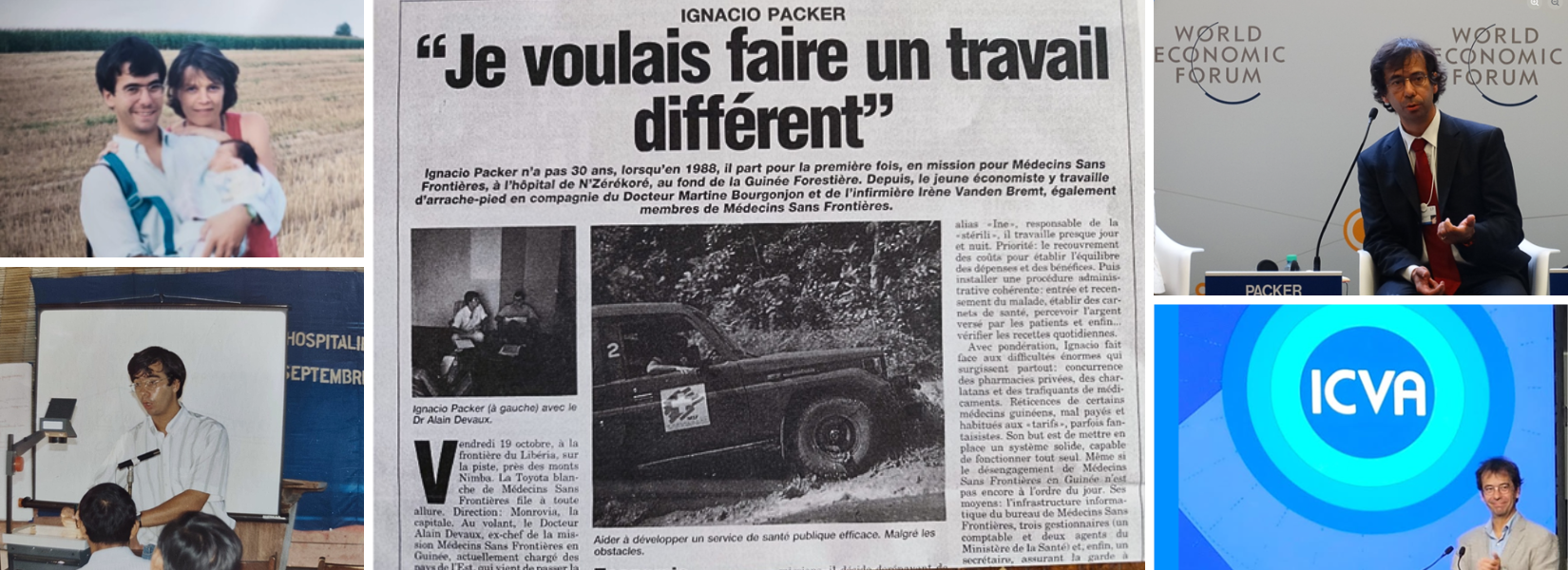
People at the centre: Focussing on the human factor
In 1988, Ignacio left financial auditing to join Médecins Sans Frontières (MSF). The red pencil gave way to health systems, humanitarian crises and the realities of working in countries affected by war and poverty. Across Africa and Asia, he learned to respond to suffering while looking beyond its immediate consequences to the systems and circumstances behind it.
It was also during these years, in 1992, that he met his wife, Denise. “Paf!” is how he describes the moment. Since then, they have shared their lives, supporting and inspiring each other along the way.
His work in health and development later took him from Guatemala to the Solomon Islands, back to Switzerland and to the Swiss Tropical Institute. There, he learned to stay close to reality: behind every statistic, system or research finding is a person, a family and a story. “It's important that the system never lets you lose sight of the human factor.”
Meanwhile, family life was growing alongside his career. Alicia was born in 1993, Gaël in 1996 and Line in 1998.
At Terre des Hommes Lausanne, where he spent twelve years, the lesson became one of refusing to accept the unacceptable. Protecting children's rights and dignity requires more than compassion; it demands action, persistence and, sometimes, a willingness to fight.
As Secretary General of the International Federation Terre des Hommes, he learned to turn diversity into a strength. “A shared mission does not require everyone to think or act alike,” he says. “The challenge is to create enough trust and common purpose for differences to become an asset.”
At ICVA, where he worked from 2018 to 2023, the lesson was about making space for others' voices. It was important to him to use his position in Geneva not simply to speak, but to bring forward the perspectives of humanitarian organisations and people who were not in the room.
Across these very different roles, his personal philosophy of leadership was taking shape.
Then came the Caux Foundation.
A shared mission does not require everyone to think or act alike. The challenge is to create enough trust and common purpose for differences to become an asset.
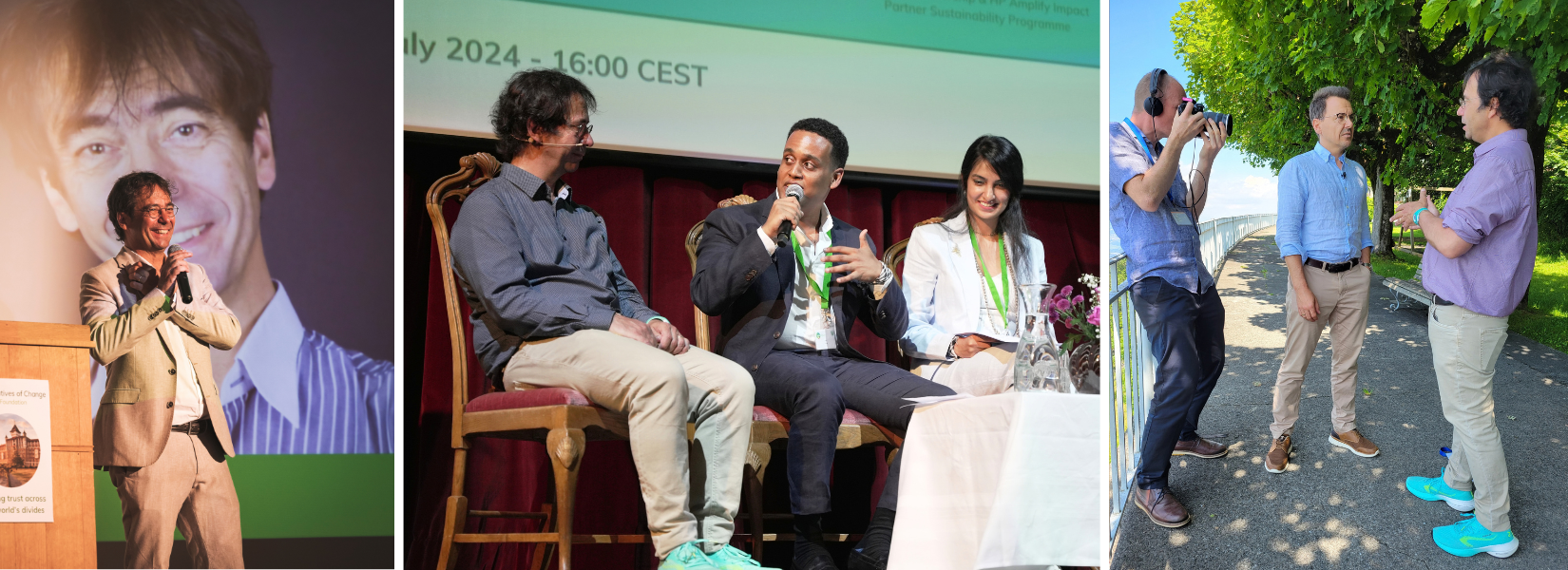
Leadership up the mountain
Since 2023, as Executive Director of the Caux Foundation, Ignacio has brought together many of the lessons learned along the way. Working between Geneva and the Caux Palace, high on the mountain above Montreux, he has focused on listening, connecting, challenging, creating space and, above all, trusting the collective.
When he arrived at the Caux Foundation, Ignacio often spoke of learning from the past while preparing for the future. The Foundation’s 80-year history was a precious asset, he believed, but history on its own is not a mission. The task was to make Caux relevant to the challenges of today.
That meant strengthening the Foundation’s work on democracy, peacebuilding, ethical leadership and inner development, bringing new energy to the programme through arts and culture, giving young people a stronger voice and opening Caux more widely to its local communities.
It also meant bringing people back up the mountain. After the pandemic years, when relatively few guests made the journey to Caux, the Foundation welcomed more than 8,000 people in 2025, and expects a similar number again in 2026.
“I have tried to contribute with a fairly simple leadership style,” he says. “Trust, give space, empower, listen, be available and accept that others may do things differently from me.” The last part comes with a smile. “But not too differently.”
Behind the humour lies a serious conviction. Leadership, Ignacio has learned, is not simply about doing things yourself or getting others to do them. It is also about how you are present: attentive and authentic, while allowing others the space to be themselves. That does not mean leading without standards. Decisions still have to be made, risks taken and responsibility assumed.
Trust, give space, empower, listen, be available and accept that others may do things differently
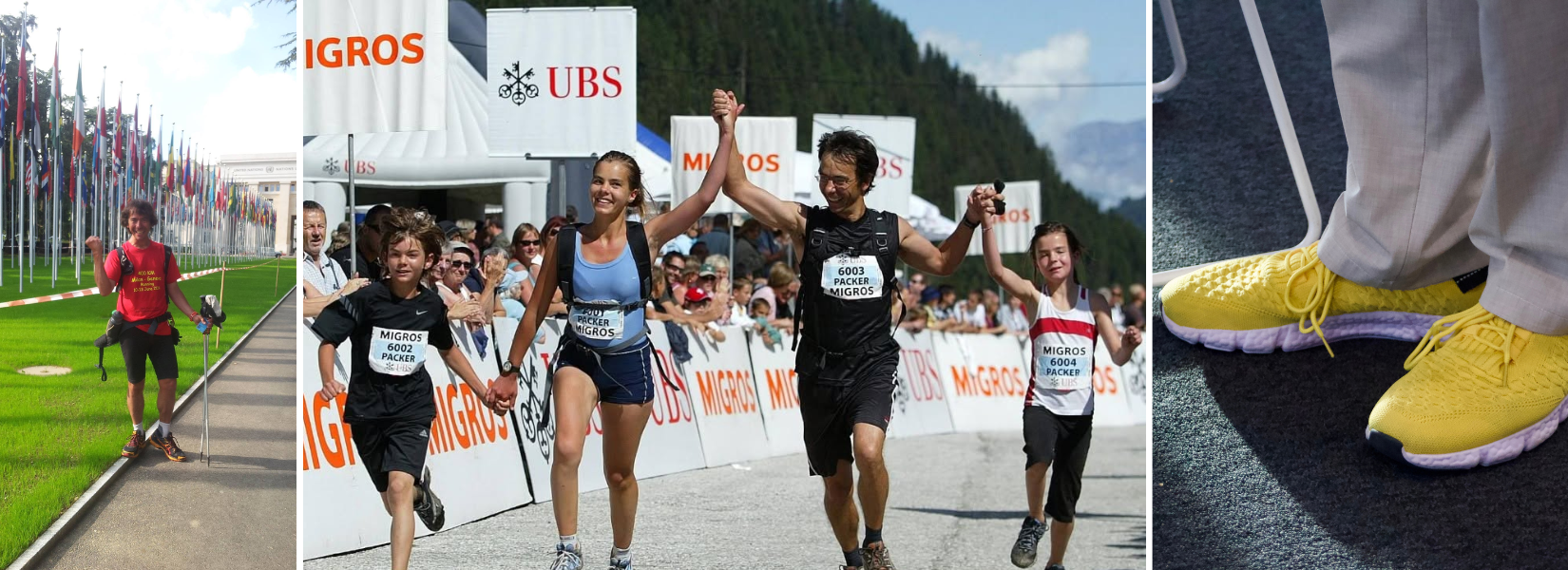
One of Ignacio’s most recognisable trademarks is something that continues to surprise people: his colourful, sometimes even fluorescent, running shoes. Partly, they reflect his passion for trail running, which led him to win the 172-kilometre Ultra NORWAY Race in 2015.
But there is a more personal story behind them, too. Almost twenty years ago, just before taking to the podium at the United Nations in New York, Ignacio wondered whether his shoes were really appropriate for the occasion. Eva Sandis, an older colleague and friend who has been a valuable mentor to him over the years, put his doubts to rest with a simple question: “So what? You’re going on stage and you’re just being yourself!” Her words stayed with him, and his colourful shoes became a symbol of something he continues to embrace: the freedom to be himself.
But running has always been more than a sport for Ignacio.
“Most of my running experiences have brought me into contact with people in sometimes very remote places, helping me better understand their lives and the contexts in which they live. Running has also connected me with nature and with myself. It gives me a freer mind, greater clarity and the distance to put problems into perspective.”
Over the years, his colourful shoes have also become a surprisingly effective leadership tool. In formal settings, a flash of colour beneath a suit can lighten the atmosphere, make people smile and offer an easy way to start a conversation. It reflects something central to Ignacio's approach: take the work seriously, but never forget the human being in the room.

And then there is what he calls la niaque - grit, determination and the refusal to give up. A door is closed? Try another. The second is closed? Try the window.
Ignacio sums up this conviction with two small pins he wears on his jacket: “Mindset is everything” and “Be kind, it’s free.” Determination is what keeps work moving forward, but in his view it should always go hand in hand with kindness and humility.
“You can be deeply convinced and still be wrong. You can be right about the substance and wrong about the timing. And saying ‘I was wrong’, ‘I'm sorry’ or ‘Let's try another way’ does not diminish authority. It makes authority human.”
Saying ‘I was wrong’ does not diminish authority. It makes authority human.
His time at Caux has also reinforced his belief that leadership and governance need one another: accountability and challenge, but also trust, dialogue and room to act. Disagreement, he believes, is not necessarily a sign that an organisation is broken. Sometimes, it is evidence that it is alive.
One of his particular sources of satisfaction has been seeing the Caux Foundation regain a more visible place within the ecosystem of International Geneva.
“Geneva is an extraordinary centre for multilateralism. But multilateralism ultimately depends on something deeply human: the ability of people who do not agree to continue talking, listening and finding ways to act together. Caux can offer something precious in that process. Just an hour from Geneva, it allows people to step away from negotiation rooms, see the person behind the position and build the trust that makes difficult conversations possible. That is profoundly Caux.”
That growing recognition is an opportunity for Geneva as much as for Caux. During Ignacio’s tenure, the Foundation has strengthened its institutional and business partnerships and deepened its links with Geneva-based organisations.
It has also made the long-term care of the Caux Palace a priority. Under Ignacio’s leadership, the Foundation secured support that has made it possible to launch ambitious restoration work, so that the building can continue to welcome people for generations to come. This support is not simply about preserving a historic building. It reflects confidence in what happens inside its walls: the Foundation’s work, and its potential to connect International Geneva with Caux as a place for dialogue and change.
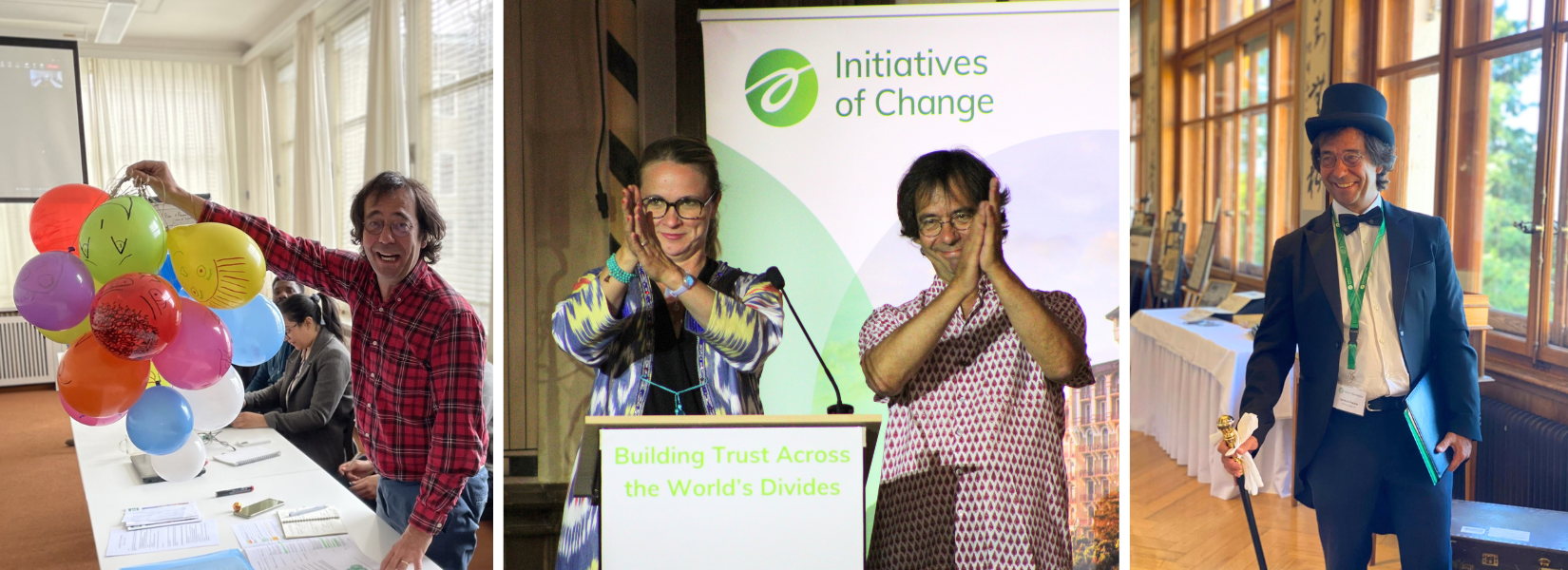
The commitment continues
Ignacio does not see his departure as an ending. “I am leaving a position, not a commitment,” he says.
His hope is that the Caux Foundation will continue to grow, strengthen its place in Geneva and Switzerland, and carry forward its work of bringing people together across differences.
He leaves with confidence in the Foundation's team, its Board, its volunteers and partners, and the wider community that makes its work at the Caux Palace and in Geneva possible.
Follow the compass
Throughout his career, Ignacio has enjoyed giving his teams small gifts that make people smile while carrying a deeper meaning. A tiny sneaker symbolises energy, action and the shared mission and journey forward as a team. A little giraffe on a key ring represents new perspectives, vision and patience. A red clown's nose stands for fun and inspiration. A key reminds people that personal and inner development can open doors and help them move forward. A small pocket watch represents the passage of time, heritage and continuity, while a bell reminds everyone that they have a voice.
And now, after forty-five years, there is the compass.
A compass does not give you the road or remove the obstacles. It simply helps you check where north lies and ask the questions that matter: Why am I here? What is right? Am I still listening? Am I still trusting? Do I still have the grit and energy to move forward?
Ignacio admits that he has not always found the right answers. But he has always tried to keep asking the right questions.
I have not always found the right answers. But I have always tried to keep asking the right questions.
On 14 October 2026, he left his role as Executive Director of the Caux Foundation. What comes next is deliberately less defined: more time, more choice, the same commitment - and, he hopes, more moments with friends, with Alicia, Gaël and Line, and with Denise.
And somewhere, as always, there will be a compass in his pocket.
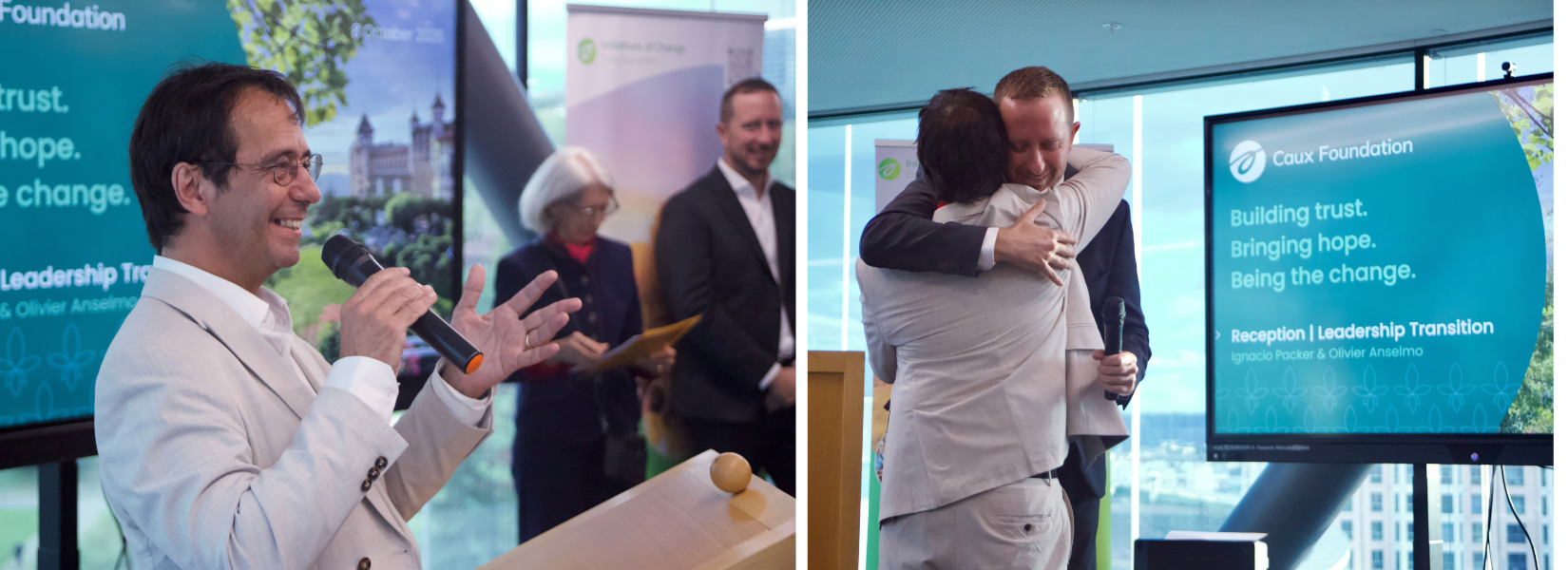
But before the next chapter begins, there was one final act: passing the baton. Ignacio's successor, Olivier Anselmo, took over as Executive Director of the Caux Foundation.
“The race continues - not along exactly the same route, but with trust in the team and in the work ahead. And because this is Caux, perhaps the baton can be more than a baton. Perhaps it can also be a little bit of magic.”
After forty-five years of following a path he never planned, Ignacio is ready to see where the compass points next.
THANK YOU, IGNACIO!