Nuclear Victims Remembrance Day 2026: When nuclear survivors warn, the world must listen
A blog by Ignacio Packer, Executive Director Caux Initiatives of Change
06/03/2026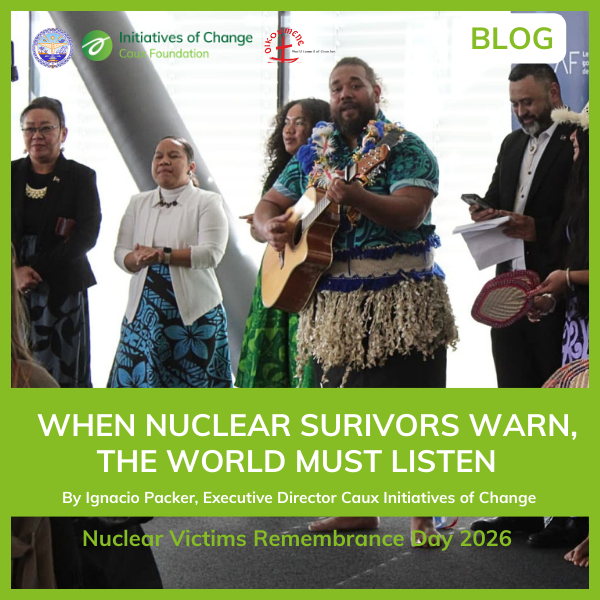
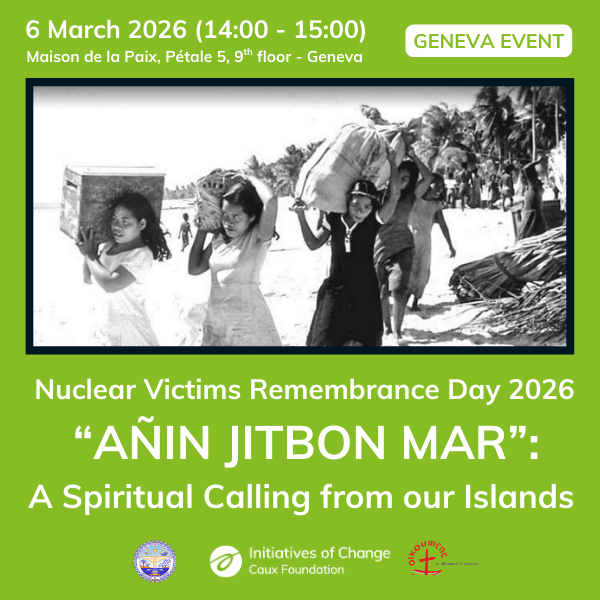
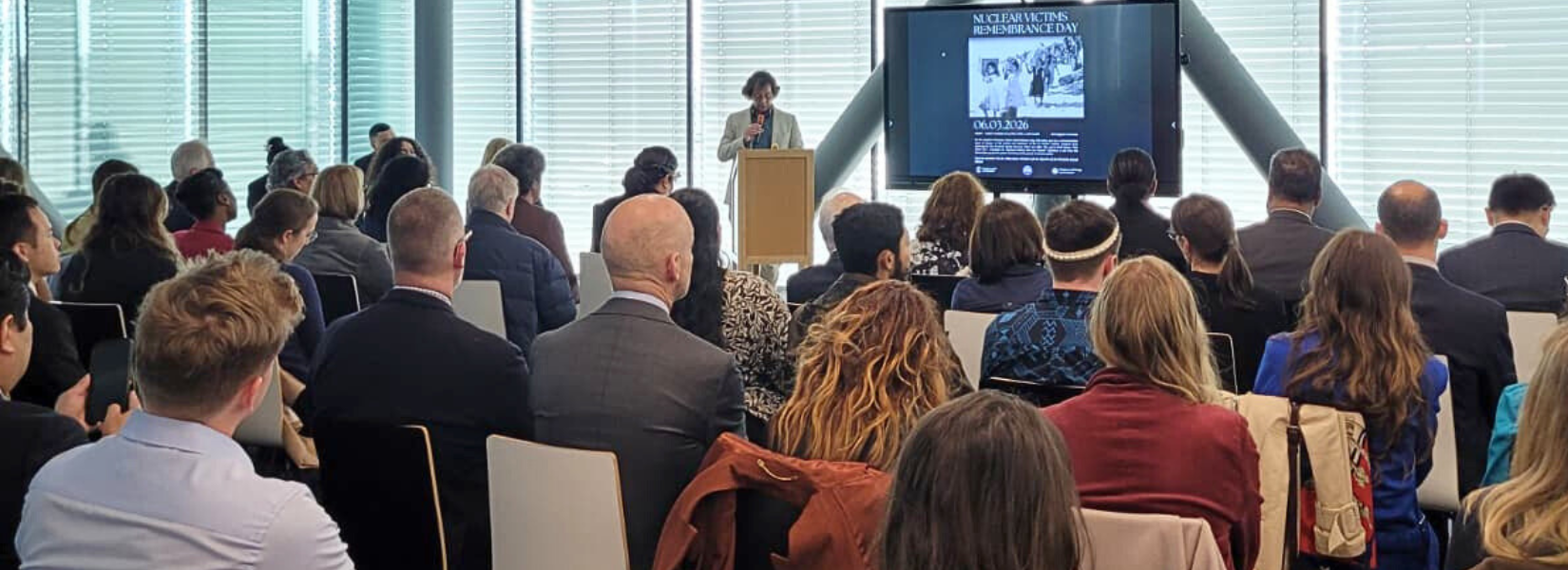
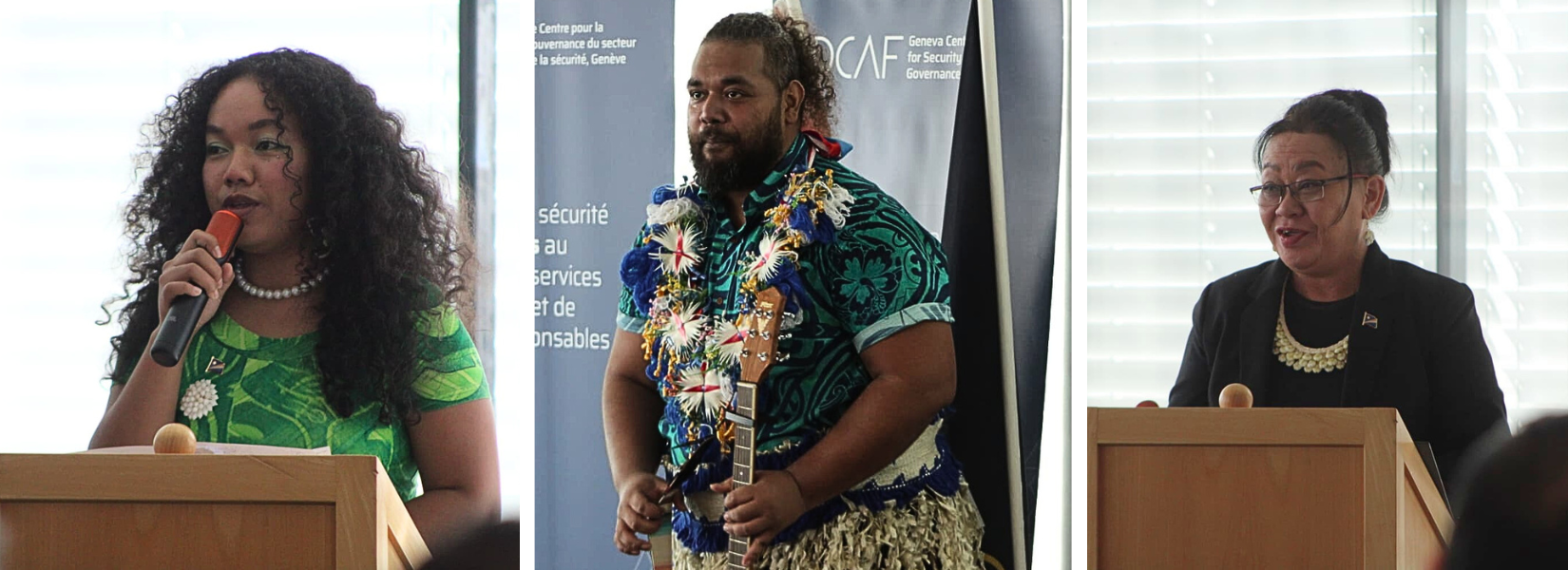
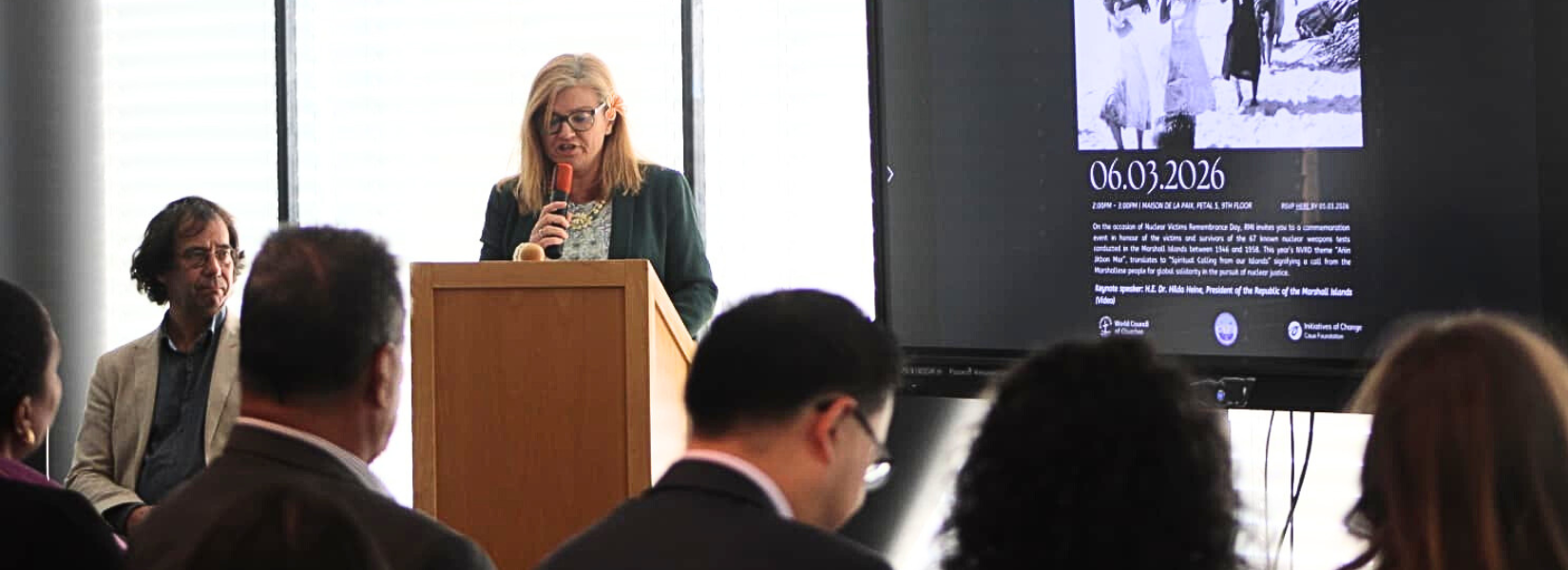
Each year on 1 March, the Marshall Islands observe Nuclear Victims Remembrance Day, honouring those affected by the nuclear testing programme conducted between 1946 and 1958. This year, the Permanent Mission of the Republic of the Marshall Islands, together with the Caux Initiatives of Change Foundation and the World Council of Churches, hosted a commemoration on 6 March 2026 at the Maison de la Paix in Geneva.
Marking the 72nd anniversary of the Castle Bravo nuclear test test — the most powerful nuclear weapon ever detonated by the United States — the event highlighted the lasting human, environmental and intergenerational consequences of the 67 nuclear tests carried out in the Marshall Islands. Under the theme “Añin Jitbon Mar” (Spiritual Calling from our Islands), the commemoration called for global solidarity in addressing the legacy of nuclear testing and pursuing nuclear justice.
Following the event, Ignacio Packer, Executive Director of the Caux Initiatives of Change Foundation, shares his reflections on the powerful warning carried by nuclear survivors and what it means for the world today:
____________________________________________________________________________________________________________
Today, I found myself listening more than speaking.
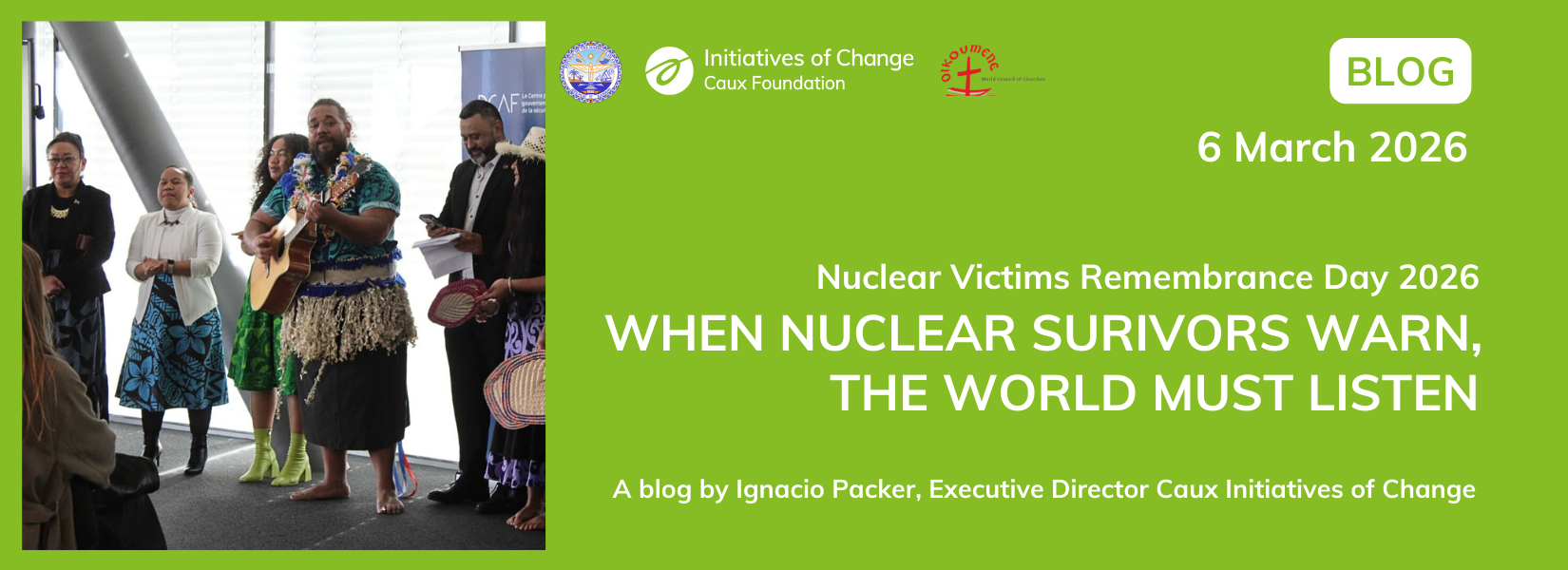
It was Nuclear Victims Remembrance Day, at the Geneva commemoration on 6 March. The room was filled not with political rhetoric, but with voices carrying memory — the memory of nuclear testing in the Marshall Islands and of the generations who still live with its consequences.
There are moments in international Geneva when you realise that diplomacy and humanity intersect in a very personal way. For me, this was one of those moments.
Between 1946 and 1958, sixty-seven nuclear weapons were detonated in the Marshall Islands. For many of us, those numbers belong to history books. For the Marshallese people, they belong to family stories — to illness, to lands that could never be returned to, and to a relationship with the ocean and the land that was deeply disrupted.
Today, we listened to those voices. And they were not speaking about the past alone.
They were warning the world.
There are moments (...) when you realise that diplomacy and humanity intersect in a very personal way.
I was born in 1962, at the height of the tensions surrounding the Berlin Wall and the Cuban Missile Crisis, when the Cold War brought humanity frighteningly close to nuclear catastrophe. For my generation, the nuclear threat was part of the background noise of childhood — something we hoped would gradually fade as the Cold War ended.
For a while, it seemed that it had.
Yet recent assessments by the UN and leading research institutes warn that the world may be entering its most dangerous nuclear moment in decades. Conflicts are intensifying, arms-control frameworks are weakening, and nuclear arsenals continue to expand.
In the past week alone, wars have escalated dramatically. Global tensions continue to rise. The language of nuclear weapons has returned to international discourse.
As I listened to the survivors today, I could not help thinking about the world that younger and future generations are inheriting. I am the father of three wonderful young adults, now between 27 and 32 years old. Like many parents, I hope they will live in a world where the lessons of the past have been learned, not forgotten.
But hope alone is not enough.
What struck me most at today’s commemoration was the dignity with which the survivors spoke. There was no anger in their words. Instead, there was determination — a quiet reminder that nuclear weapons are not abstract geopolitical tools. They are instruments capable of inflicting immense suffering on human beings and on entire ecosystems.
Survivors understand this reality better than anyone. And when survivors speak, humanity is invited not only to remember, but to learn.
When survivors speak, humanity is invited not only to remember, but to learn.
I am also conscious that I write these words from a privileged part of the world, where peace and stability are often taken for granted. Yet over the years, as a humanitarian, I have had the privilege of meeting people from many corners of the world — communities living through conflict, displacement, injustice, and extraordinary resilience.
Those encounters change how you see the world. They remind you that our planet is deeply interdependent. The suffering of one region is never truly isolated from the rest of humanity.
Today, as a devastating war unfolds in the Middle East and geopolitical tensions rise elsewhere, the warning carried by nuclear survivors feels painfully relevant. Their message is not ideological. It is profoundly human.
Remember what happened. Understand the consequences. Choose a different path.
At the Caux Initiatives of Change Foundation, we believe that peace begins with the courage to listen — especially when the stories we hear challenge our comfort.
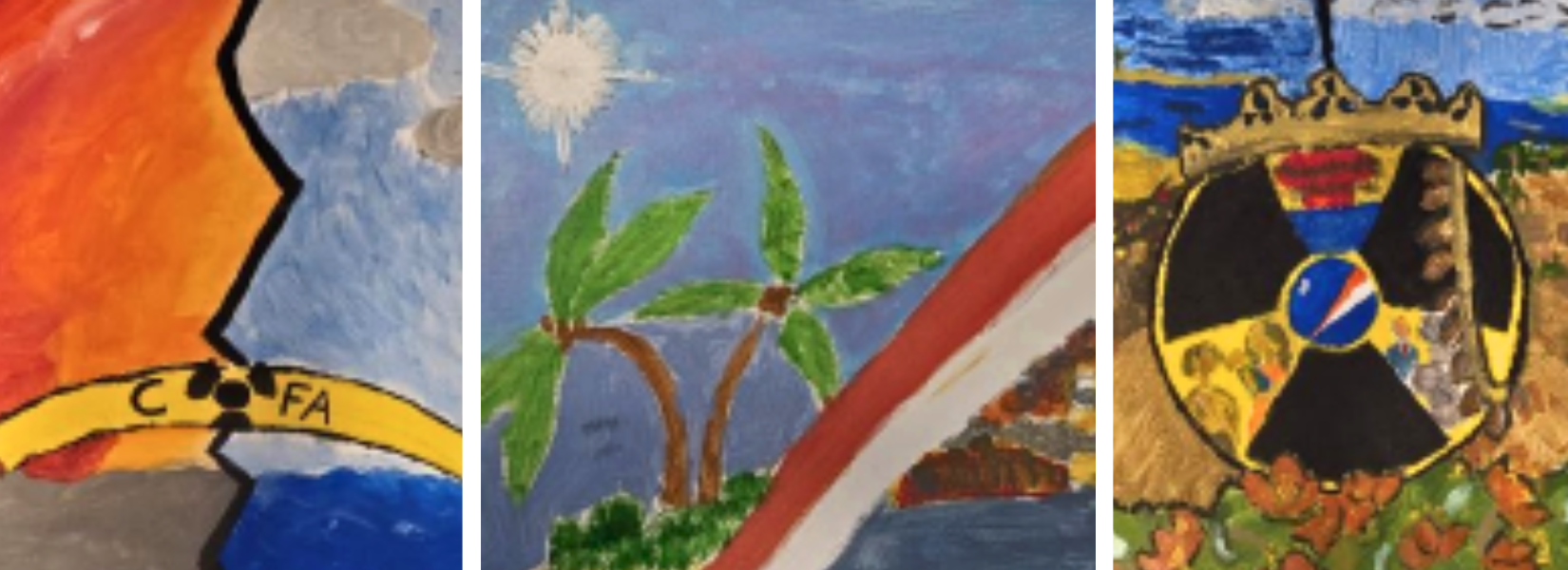
Last summer in Caux above Montreux, in the historic Caux Palace, we hosted an exhibition of drawings created by children from Pacific communities affected by nuclear testing. More than 800 visitors came to see the exhibition. Many discovered the story of the Marshall Islands for the first time.
Children often express truth with remarkable clarity. Their drawings spoke of loss, but also of hope. They reminded us that memory can become a force for responsibility.
We believe that peace begins with the courage to listen — especially when the stories we hear challenge our comfort.
This year, the Caux Foundation marks 80 years of Caux as a place dedicated to trust-building and reconciliation. Over those eight decades, people from around the world have gathered there to confront difficult histories and rebuild trust across divides.
The voices we heard today belong to that same journey. They are not voices of accusation. They are voices of warning — and of hope.
In a world where wars continue to erupt and mistrust grows between nations, the testimonies of nuclear survivors remind us of something essential: peace is not simply the absence of war. It is the result of choices we make, individually and collectively.
Choices to listen. Choices to remember. Choices to act with responsibility toward future generations.
Peace is not simply the absence of war. It is the result of choices we make, individually and collectively.
As a father, as a humanitarian, and simply as a citizen of this fragile planet, I cannot hear those voices without asking a simple question: In a world where wars spread, nuclear risks rise, and mistrust deepens between nations, what must each of us do now to protect our children’s future?
The survivors from the Marshall Islands are asking us to reflect on that question with honesty. Their call is not addressed only to governments.
It is addressed to all of us.
Read Ignacio's speech at the commemoration event in Geneva on 6 March 2026
The voices of survivors not only call us to reflect on the future we are shaping. They also remind us that democracy, peace and human security require courage, dialogue and responsibility. This summer, the Caux Democracy Forum (22 - 26 June) will bring together people from all over the globe in Caux to explore Hope, Healing and Human Security.
Be part of the conversation — learn more and register now.
____________________________________________________________________________________________________________
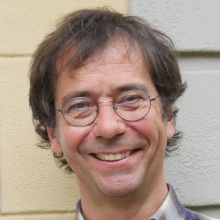
Ignacio Packer is Executive Director of the Caux Initiatives of Change Foundation, a Swiss charitable foundation committed to promoting trust, ethical leadership, sustainable living and human security. With over 30 years of experience in humanitarian and development work, he worked at the European Bank for Latin America and then at KPMG, before becoming a recognised leader of NGOs and international alliances for over 25 years. An expert in human rights and social issues, he has been particularly involved in defending protection frameworks for migrants and refugees, especially children and young people.
related stories
Nuclear Victims Remembrance Day 2025: A call for justice & collaboration
Each year, the Marshall Islands observe Nuclear Victims Remembrance Day on 1 March, honouring those affected by the nuclear testing programme that took place between 1946 and 1958. On 28 February 2025...