
From Resistance to Reconciliation: The Remarkable Century of Jens Jonathan Wilhelmsen
09/06/2026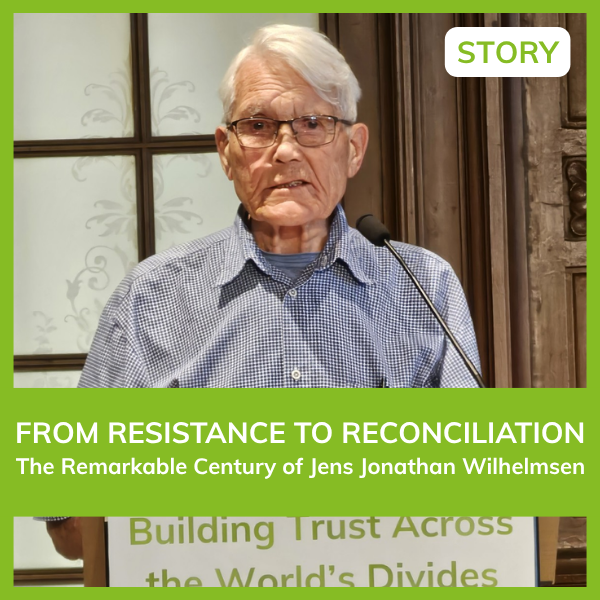
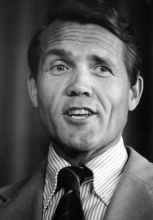
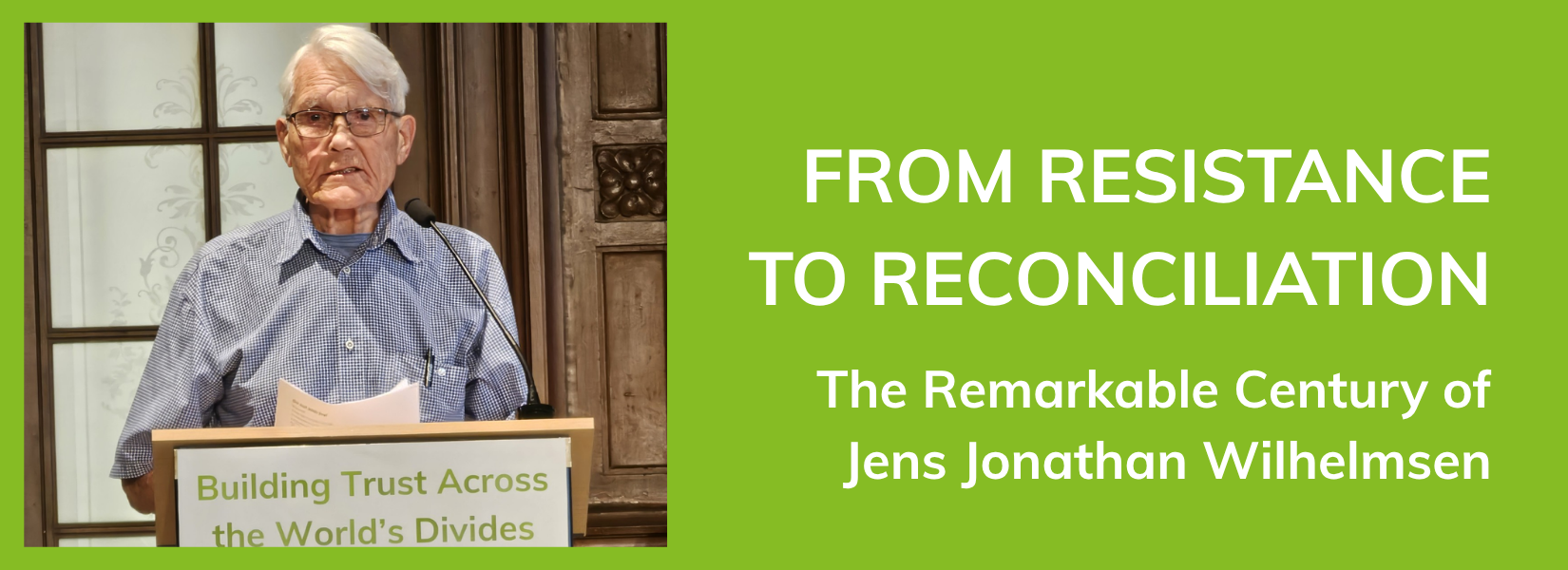
On 10 June 2026, Jens Jonathan Wilhelmsen from Initiatives of Change Norden turns 100 - a remarkable milestone for a man whose life has been shaped by some of the defining conflicts and reconciliations of the modern era. Across many decades of engagement on three continents, Wilhelmsen has remained guided by a simple but demanding conviction: that lasting change in society begins with personal change.
Born in Norway in 1926, midway between the two world wars that scarred the twentieth century, Jens Wilhelmsen came of age during the German occupation of Norway. As a young man, he took part in the clandestine resistance movement during the final months of the Second World War. Like many of his generation, the war left deep marks. In the years that followed, he experienced a period of depression and uncertainty about the future.
A turning point came when he encountered Initiatives of Change, then known as Moral Re-Armament (MRA). One particular challenge struck him with unusual force: “If you want to have a better world, the best place to start is with yourself.”
What might have sounded simplistic proved transformative in practice. Wilhelmsen later recalled how attempts to repair strained relationships within his own family produced unexpectedly positive results. The experience convinced him that reconciliation was not an abstract ideal but a practical force.
At the time, he was studying philology at the University of Oslo. In 1948, a provincial government in postwar Germany appealed to MRA for help in giving “new hope to our people.” For a young Norwegian who had lived through occupation, the invitation to work in Germany was both morally challenging and historically significant. Wilhelmsen accepted.
If you want to have a better world, the best place to start is with yourself.
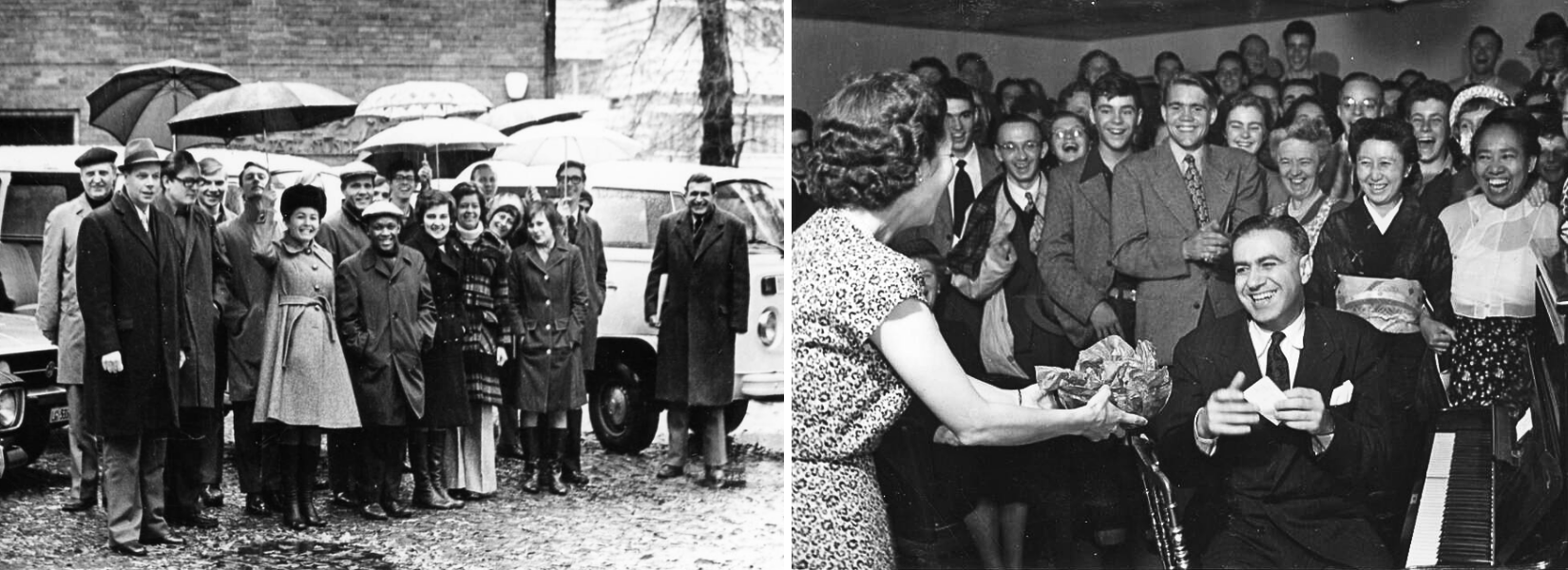
(Jens both times standing in the centre), photos: IofC
The next five years took him to the Ruhr, the industrial heartland of Germany, where the political and moral tensions of postwar Europe were sharply visible. There he witnessed a society struggling to rebuild materially and spiritually after Nazism and war. Industrial leaders with Nazi backgrounds, socialist workers and trade unionists committed to Marxism were all searching for a way forward in a divided country.
One encounter in 1949 became especially formative. Wilhelmsen stayed with the communist worker activist Max Bladeck and his wife Grethe in their modest three-room home. They offered the young Norwegian a sofa in their living room, and night after night the two men argued deep into the evening about politics, ideology and the future of Europe.
At first, the discussions led nowhere. Wilhelmsen later reflected that he spent much of his energy trying to persuade Max of everything he believed was wrong with communism. Then, during a moment of morning reflection, he experienced a change in perspective: instead of attacking the convictions to which Max had devoted his life, he should speak honestly about where he himself had failed to live up to his own ideals.
That evening, Wilhelmsen abandoned argument and spoke instead about his own shortcomings and inconsistencies. To his surprise, Max responded in the same spirit. As Wilhelmsen later wrote, “Our ideological and political viewpoints were still far apart, but a certain trust was growing between us.”
Our ideological and political viewpoints were still far apart, but a certain trust was growing between us.
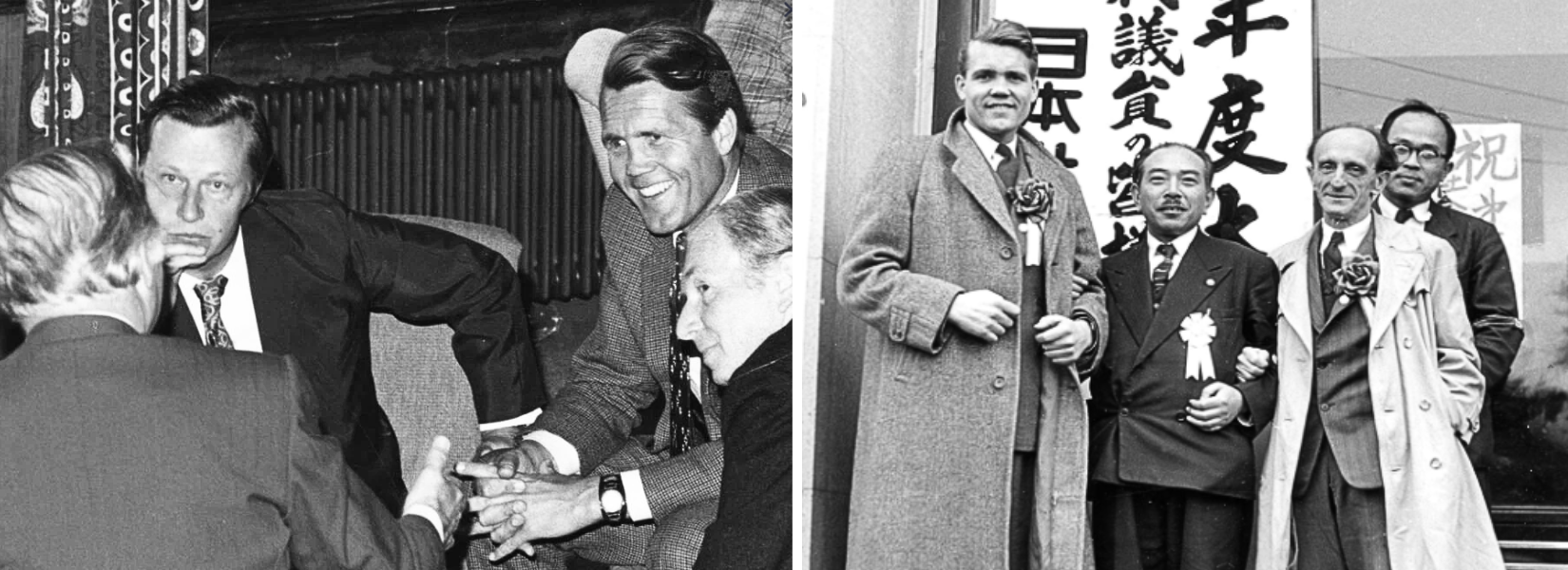
The episode became emblematic of the approach that would define Jens Wilhelmsen’s life work. He discovered that trust rarely grows through ideological victory; it grows when people risk honesty about themselves. In the deeply polarized atmosphere of postwar Europe, where bitterness and suspicion shaped political life, such encounters represented a different path - one grounded not in surrender of convictions, but in humanity and self-examination.
Wilhelmsen believes that these efforts at reconciliation contributed in their own modest way to Germany’s remarkable reconstruction. He saw former enemies, employers and workers, conservatives and socialists gradually begin to cooperate in rebuilding democratic society. The lessons he learned in the Ruhr would remain with him for the rest of his life.
In 1953, he was invited to Japan, where he worked closely with political, industrial and youth leaders. He formed particularly strong connections within Seinendan, the country’s four-million-member youth organization. When the organization decided in 1957 to send one hundred youth leaders to an MRA conference in the United States, Wilhelmsen was asked to accompany them.
The journey opened another chapter. Remaining in America for two years, he undertook a wide variety of assignments — from contacts with politicians in Washington to supporting labour leaders applying principles of dialogue and trust-building in the ports of New York and the steel towns of Pennsylvania. Throughout these experiences, he developed a distinctive understanding of leadership: that social transformation depends not only on institutions and policies, but on the moral choices of individuals.
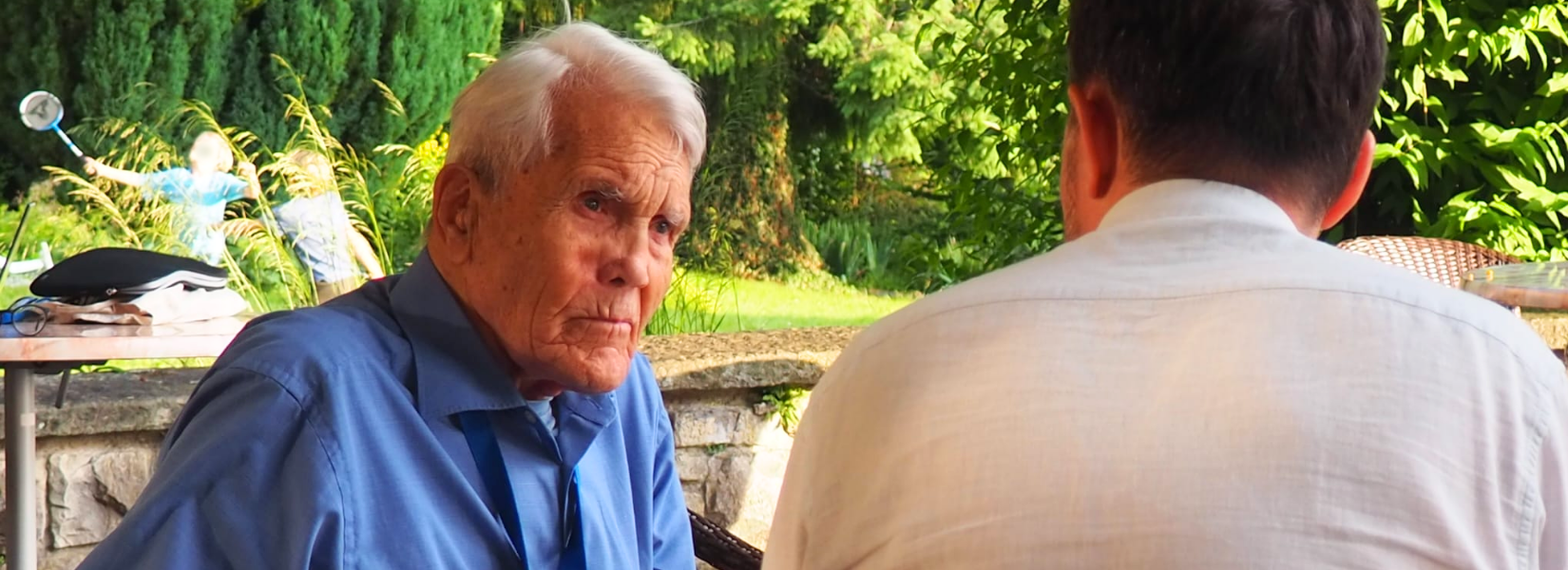
Over subsequent decades, Wilhelmsen’s work expanded across Africa, India, Eastern Europe and Western Europe. In newly independent African nations, he encountered the complex legacies of colonialism, inequality and ethnic division. His experiences in Burundi and Congo particularly deepened his reflections on Europe’s historical responsibilities and on the fragility of peace where trust has broken down.
Since 1967, he and his wife Klär Wilhelmsen made their home in Oslo. Together they raised a family while continuing an international life dedicated to reconciliation and civic engagement. Klär died in 2015, and is survived by their two daughters, sons-in-law, eight grandchildren and a great-grandson.
Alongside his practical work, Wilhelmsen also became an author. His 2016 book, Eyewitness to the Impossible, offers reflections on what he called “building trust on three continents.” The book combines memoir, political observation and moral reflection, introducing readers to ordinary people whose actions influenced the course of history: German coal miners and industrial managers, Japanese youth leaders, African independence advocates and many others. "Making history is not the monopoly of the rich and powerful", he says.
Making history is not the monopoly of the rich and powerful.
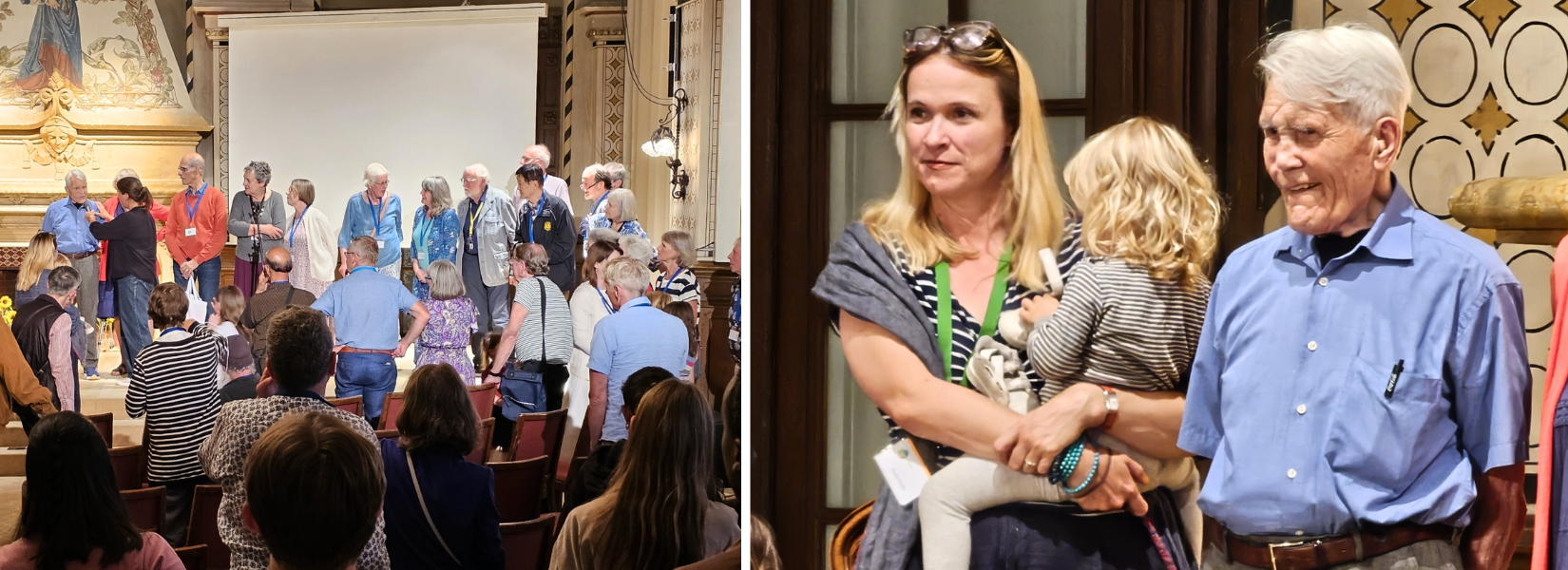
The book’s central message echoes the principle that first inspired him as a young man: “When individuals or nations deal with their own transgressions rather than those of others, powerful forces are released.” Rather than offering ideological formulas, Wilhelmsen invites us to experiment with honesty, responsibility and reconciliation in their own lives.
Reviewers in Norway recognized both the historical scope and moral seriousness of his work: “Can ordinary people make history?” and concluded that Wilhelmsen’s stories show that those who wish to change the world “must start with themselves, but not stop there.” (Vårt Land, Oslo)
Now, as he reaches his hundredth year, Jens Jonathan Wilhelmsen stands as a witness to a century marked by war, ideological conflict, decolonization and globalization — but also by extraordinary examples of human renewal. His life has been devoted not to prominence or power, but to the patient and often unseen work of building trust between people once divided by hatred, fear or injustice.
In an age still troubled by polarization and conflict where democracy is under threat, his example remains strikingly relevant. Wilhelmsen’s century-long journey reminds us that reconciliation is never naïve when grounded in courage, honesty and personal responsibility. History, he has spent a lifetime showing, is not made only by governments and generals. It is also shaped by ordinary people willing to change themselves — and in doing so, help change the world.
Happy birthday, Jens!
________________________________________________________________________________
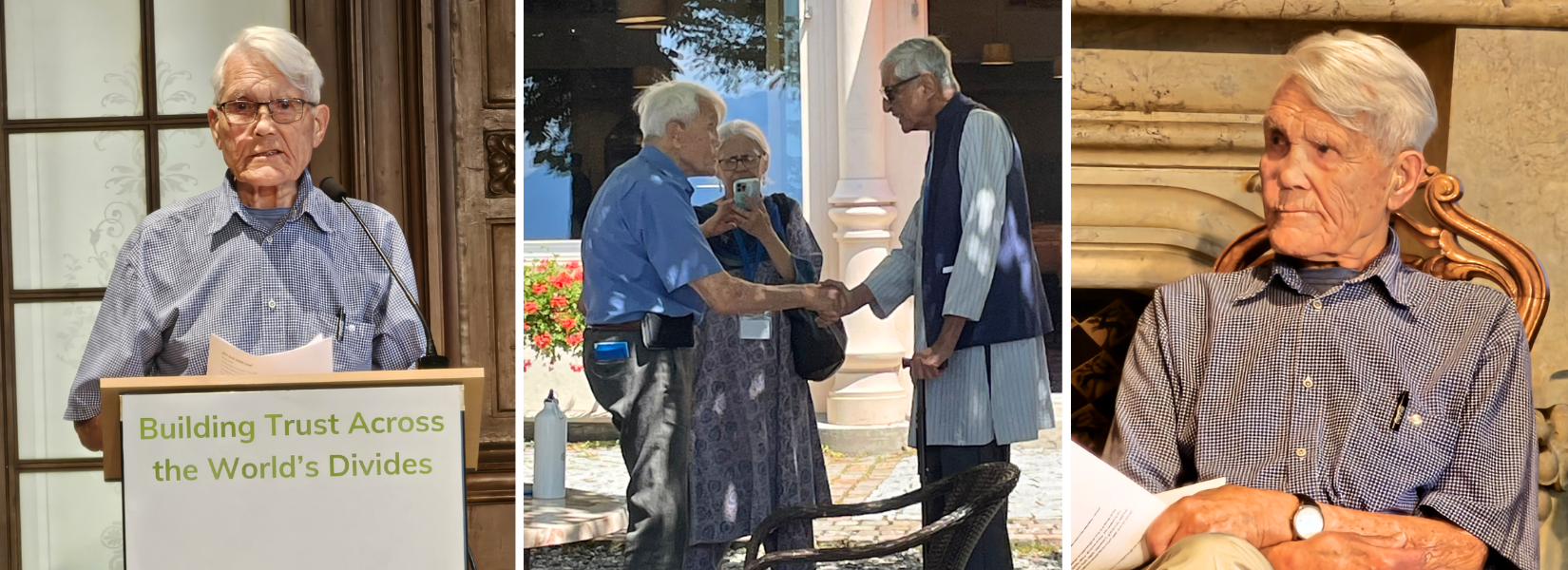
At a time when the world is facing division, mistrust and uncertainty, the convictions that have guided Jens Jonathan Wilhelmsen for nearly eight decades are more relevant than ever. The need for honest dialogue, moral courage and the rebuilding of trust across political, cultural and ideological divides remains urgent.
These are also the questions at the heart of the Caux Democracy Forum (22 - 26 June 2026) happening this summer in Caux: bringing together citizens, leaders and changemakers from around the world to explore how democracy can be renewed through responsibility, dialogue and human connection.