Olivier Anselmo joins the Caux Foundation as incoming Executive Director
14/09/2026
Featured Story
Off
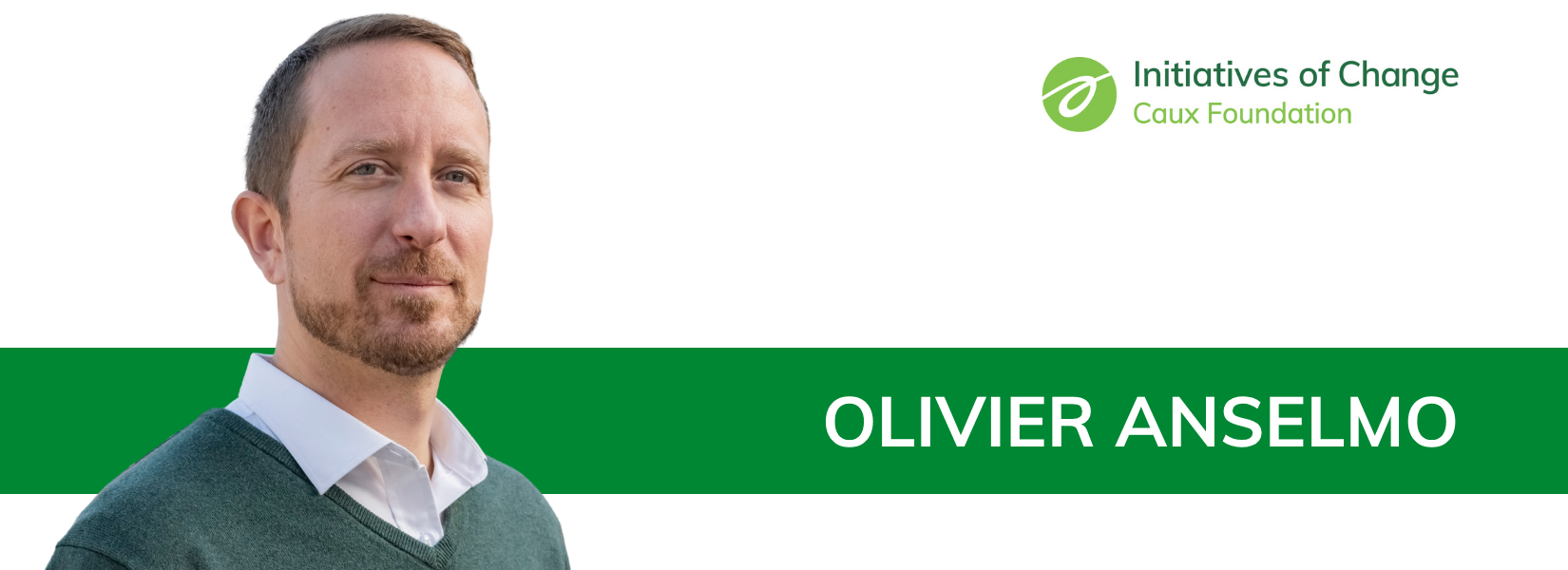
The Caux Foundation is pleased to announce the appointment of Olivier Anselmo as its new Executive Director, effective 15 October 2026. With extensive leadership and management experience across the humanitarian and international sectors, Olivier Anselmo will lead the Foundation as it continues to advance its mission of fostering dialogue, building trust and promoting ethical leadership. Olivier Anselmo joins Caux today for a one-month transition period alongside current Executive Director Ignacio Packer, who will retire in October.
Olivier Anselmo is a senior humanitarian professional with extensive leadership and management experience. Before joining the Caux Foundation, he served as Deputy Executive Director of the Switzerland for UNHCR Foundation, the UN Refugee Agency’s national partner in Switzerland. He joined the organisation when it was established in 2020 as Director of Operations and Finance, before being appointed Deputy Executive Director in January 2024.
Earlier in his career, Olivier Anselmo spent nine years with the International Committee of the Red Cross (ICRC), working both in the field in Afghanistan, Haiti, Niger, Senegal and Sudan and at headquarters. He also worked with DNDi, the Drugs for Neglected Diseases initiative, where he was responsible for human resources and administration.
Olivier Anselmo holds a degree in economics from the University of Geneva, as well as two Master’s degrees, in human resources management and in communication and media.
“Joining the Caux Foundation as its incoming Executive Director is both a great honour and an important responsibility,” says Olivier Anselmo. “I look forward to bringing my energy and commitment to the Foundation and its mission. Together with a strong and dedicated team, and with the continued support and engagement of the Board, I am confident that we can build on the Caux Foundation’s achievements and strong values to open a new and impactful chapter for the Foundation.”
“We are delighted to welcome Olivier Anselmo to the Caux Foundation,” says Jacqueline Coté, President of the Caux Foundation. “What particularly impressed us was the combination of his strong leadership, fundraising and management experience with his deep belief in the power of dialogue and trust. He is a pragmatic and energetic leader, with the determination to turn ideas into action. I very much look forward to working with Olivier Anselmo as the Caux Foundation enters its next chapter.
We are also deeply grateful to Ignacio Packer for his leadership and commitment to the Foundation over almost four years. He has made an important contribution to where the Caux Foundation is today, helping to drive progress, strengthen partnerships and put strong foundations in place for the future.”
Ignacio Packer will remain Executive Director until 15 October, working closely with Olivier Anselmo throughout the transition period.
About the Caux Foundation
The Caux Foundation is an autonomous Swiss foundation based at the Caux Palace, above Montreux. Established in 1946, it develops and hosts programmes, conferences and events focused on democracy and human security, peace and reconciliation, inner development, arts and culture, heritage and community engagement. Its activities bring together participants and partners from civil society, public institutions, international organisations, academia, business, culture and local communities. The Foundation works both in Switzerland and internationally, with the aim of creating opportunities for dialogue, exchange and collaboration across different sectors and perspectives.
The Caux Palace is central to the Foundation’s activities and serves as a venue for international gatherings, cultural events, exhibitions, heritage activities and public engagement. The Caux Foundation is a member of Initiatives of Change International.
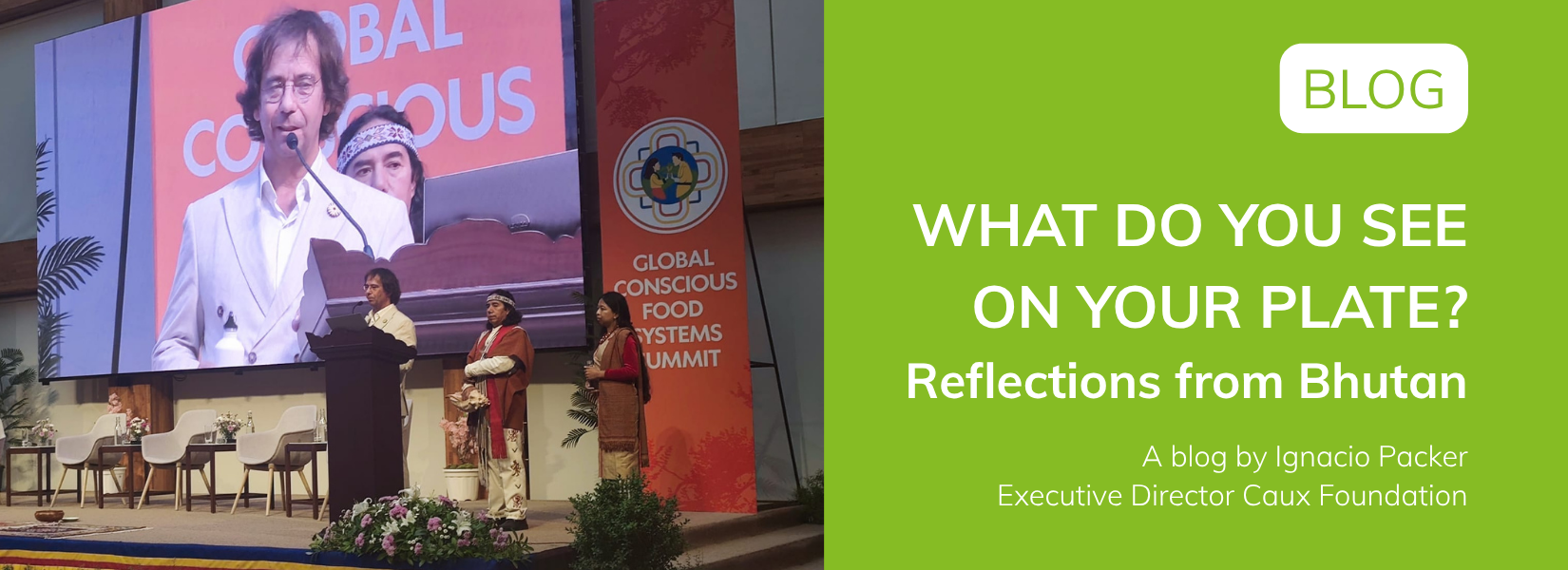
What do you see on your plate? - Reflections from Bhutan
A blog by Ignacio Packer, Executive Director Caux Initiatives of Change
07/09/2026
Featured Story
Off
A blog by Ignacio Packer, Executive Director Caux Initiatives of Change
From 31 August to 4 September, Ignacio Packer, Executive Director of the Caux Foundation, joined participants from around 70 countries at the Global Conscious Food Systems Summit in Bhutan. What began as a gathering focused on food systems became, for him, a much broader invitation to reflect on the relationships that connect food with soil, nature, livelihoods, dignity, democracy and peace. In Bhutan, agriculture, spirituality, community and human wellbeing are deeply intertwined and the Summit left him with a simple but powerful question: What do we really see when we look at our plate?
Everything on our plate has a story
I came to Bhutan for the Global Conscious Food Systems Summit with food systems not exactly as my area of expertise. I leave convinced that they are very much my business - and everybody’s business.
Perhaps I should have known this from breakfast.
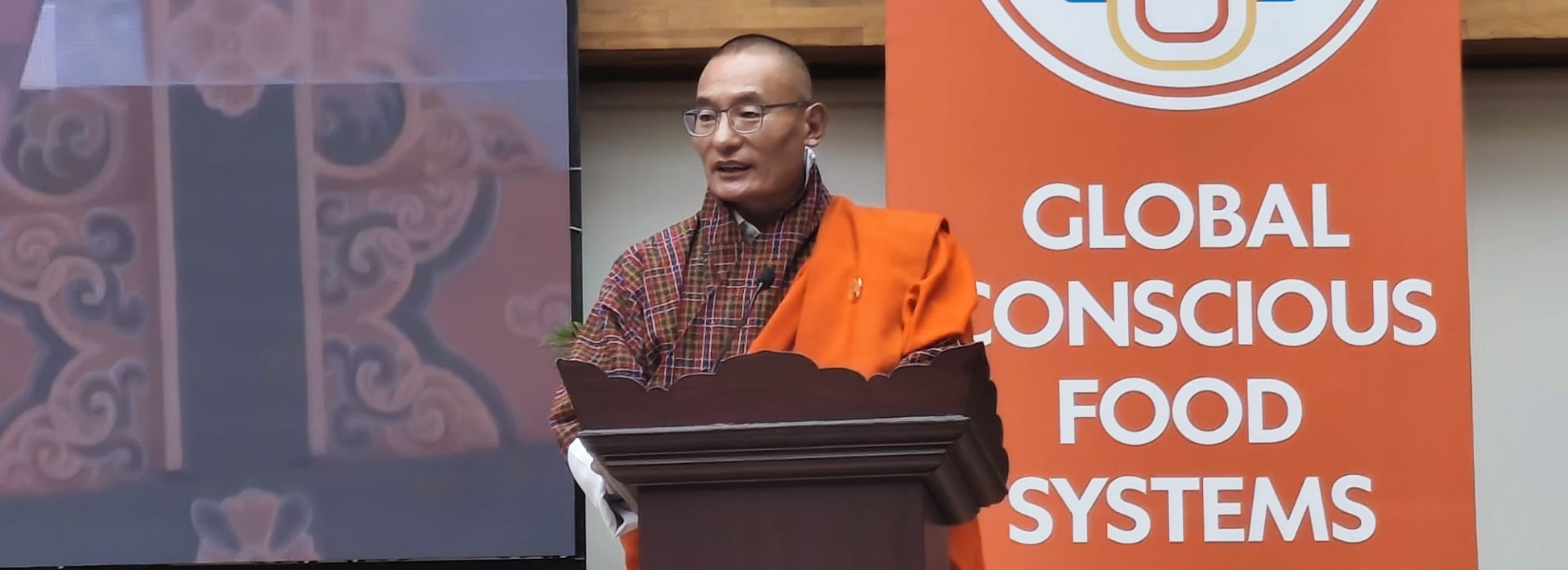
During the Summit, Bhutan’s Prime Minister, Dasho Tshering Tobgay, invited us to look beyond what is on our plates and see the people, resources and effort behind every meal.
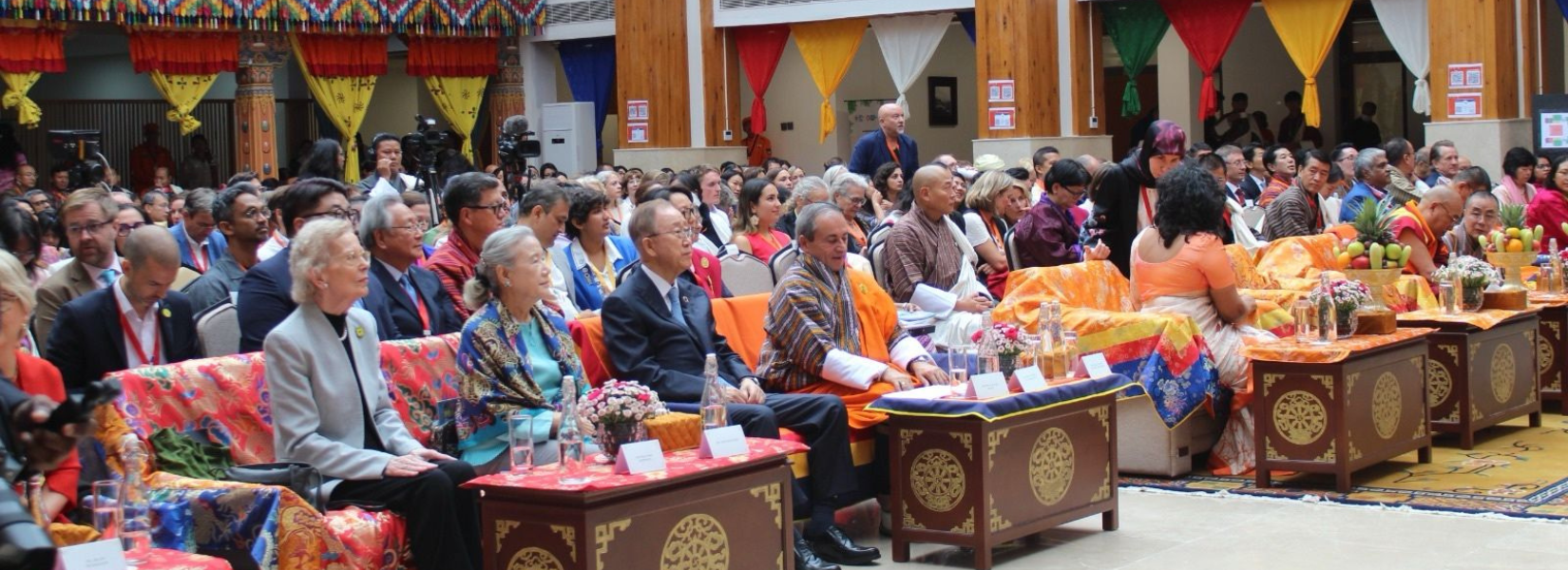
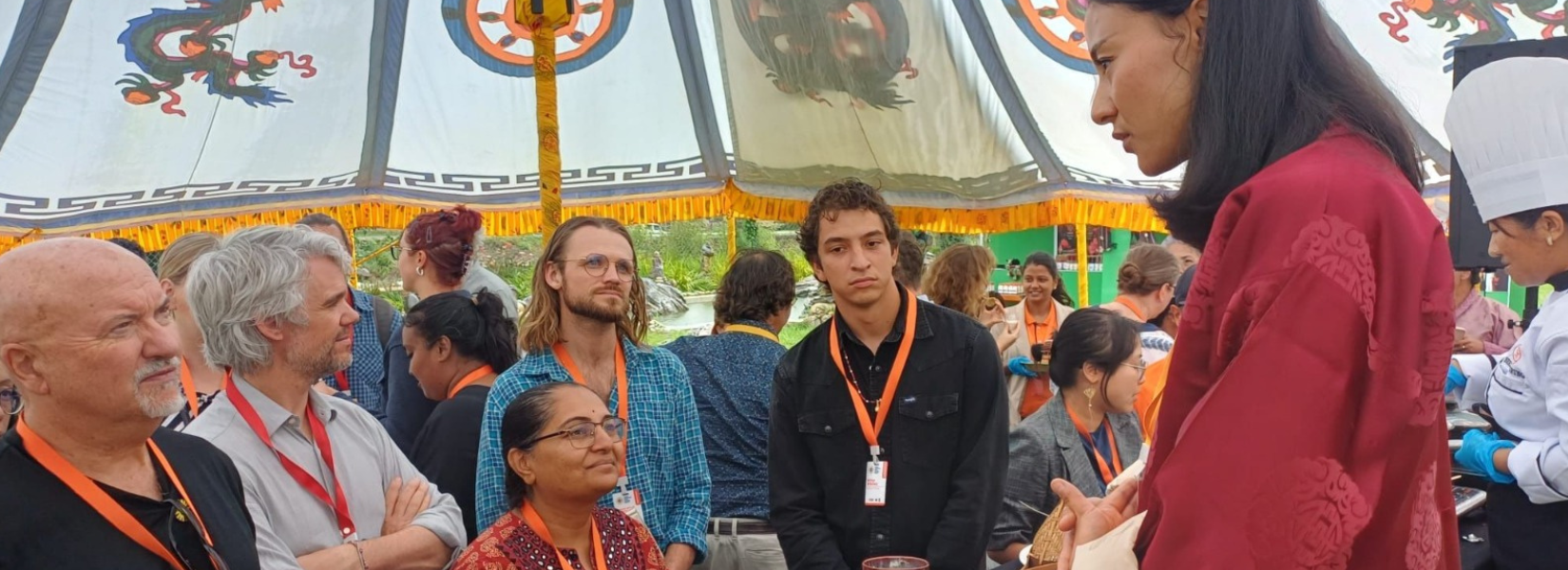
Global Conscious Food Systems Summit at Dungkar Dzong, Paro, Bhutan, with H.E. Dasho Tshering Tobgay, Prime Minister of Bhutan
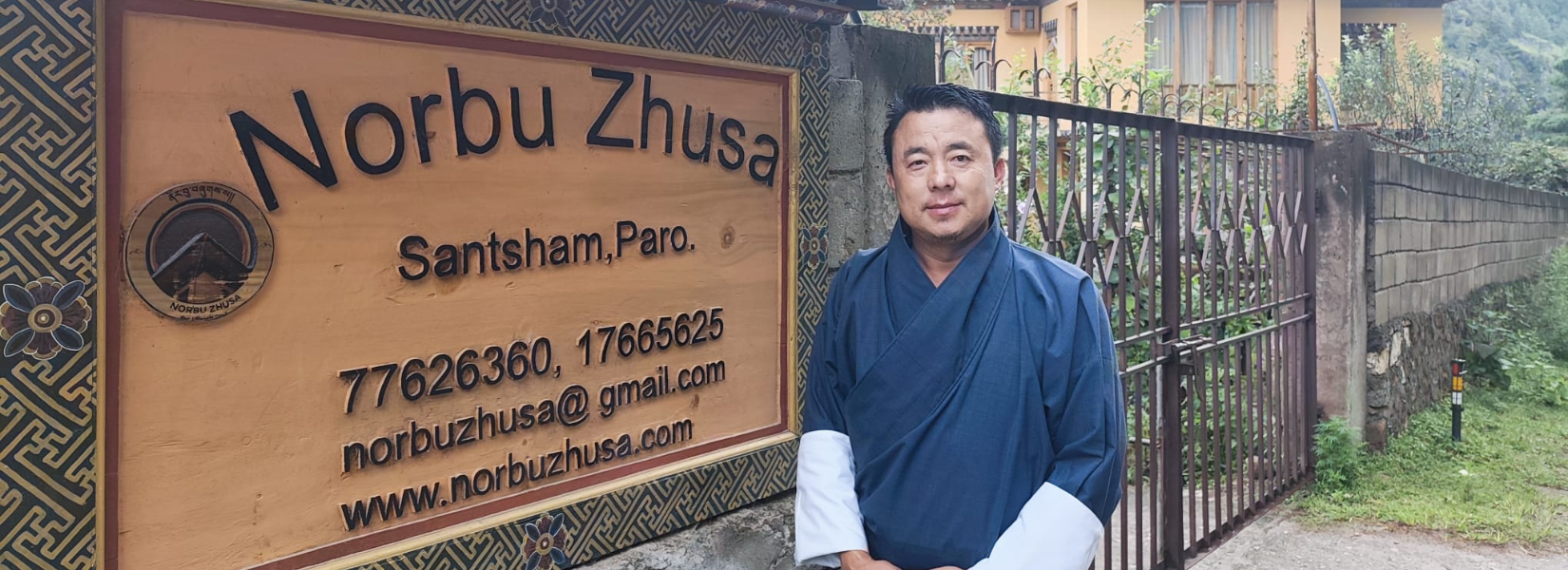
This question stayed with me, not least because I had the privilege of staying with a Bhutanese family, Norbu and Chencho and their children, in their small rural guesthouse. I arrived as their only guest and, with the extraordinary warmth of Bhutanese hospitality, very quickly became a friend.
Each morning, Chencho brought breakfast to the table with extraordinary care. My hosts would explain where the food came from, what had been grown locally, and something about the farming behind it. And suddenly, breakfast was no longer just breakfast.
Before the food, there was soil. A seed with its history. Water, sun and a climate that had to cooperate. Knowledge accumulated over generations. A farmer who planted, waited, worried and harvested. Transport. A market, perhaps. Someone who prepared and cooked the food. And finally, the hands that placed it in front of me.
All of that was on my plate. But how much of it do I normally see?
“When in doubt, go local.” said Bhutan’s Prime Minister, Dasho Tshering Tobgay. It was an invitation to see the people behind every breakfast, including Norbu and Chencho, and the warmth of Bhutanese hospitality.
We need to look beyond what is on our plates and see the people, resources and effort behind every meal.
“When in doubt, go local” said Bhutan’s Prime Minister, Dasho Tshering Tobgay. An invitation to see the people behind every breakfast.
Ignacio's host, Norbu.
Learning to see the whole
It is difficult to imagine a more meaningful setting for the Conscious Food Systems Summit than Bhutan and m deep gratitude goes to the Royal Government of Bhutan, UNDP and the Conscious Food Systems Alliance (CoFSA) for creating this remarkable gathering. Bhutan itself was part of the conversation. Mountains, forests, water, agriculture, spirituality, community and human wellbeing do not easily fit into separate boxes here. Nature is not somewhere else. And we are part of it.
And then there were the people.
There were so many wonderful encounters with people from Bhutan and participants from around 70 countries: farmers, policymakers, practitioners, entrepreneurs, researchers, investors and many others. Different cultures and experiences, but all connected through a strong sense that we were dealing with something that concerns us all.
It very much reminded me of the core of our work at the Caux Foundation for the last 80 years: create spaces where people who might otherwise not meet can encounter one another and make connections between issues too often treated separately.
Food is connected to climate. Climate to justice. Justice to dignity. Dignity to democracy. Democracy to peace. And all of them to our relationship with nature and with one another. And we urgently need to learn to see the whole.
Image
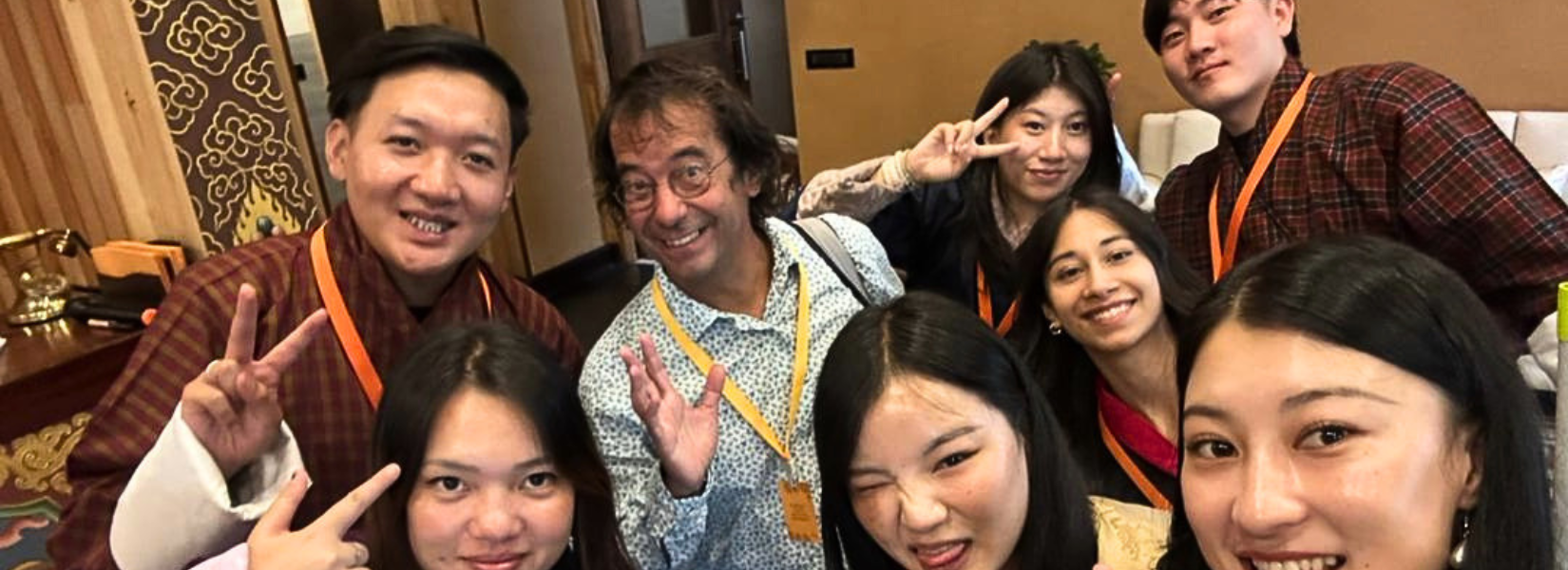
Ignacio with young participants Binchy. Khenrab. Yeewong. Pema, Tenzin, Lungten and PLT at the Summit
What does it mean to be "conscious"?
The name of the Summit in itself has been a source of reflection for me. What does it mean, to be "conscious"? For me, consciousness is seeing what we have learned not to see. It is the willingness to look again at what has become invisible through habit, assumption, conditioning, or familiarity. It is noticing the things we have stopped questioning, the perspectives we have stopped considering, and perhaps even the parts of ourselves we have learned to overlook.
I think of it as an inner compass: the values and convictions that help us find direction when there is no obvious map. I usually carry a small compass in my pocket and often find myself fiddling with it as a simple reminder to pause, question myself and ask: Am I still heading in a direction consistent with what I believe in?
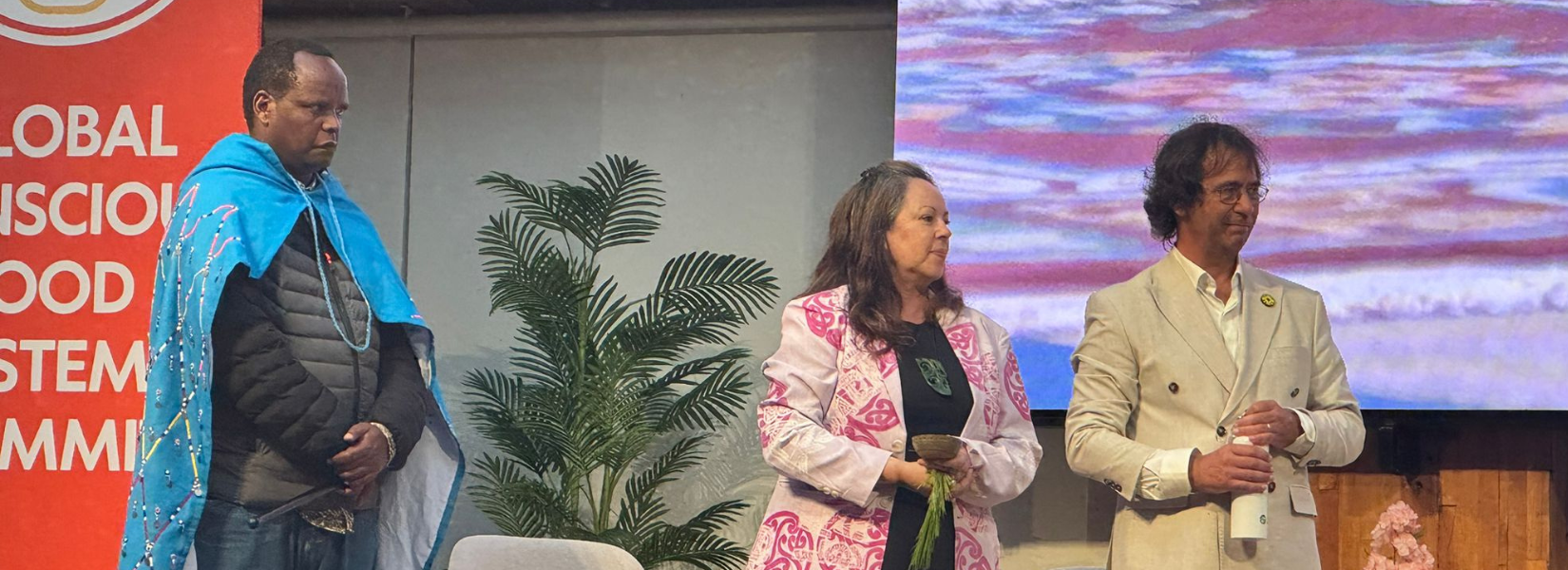
“Water knows no borders. Caring for water, food and one another is ultimately about peace.” - Ignacio bringing water from the sources of Caux to the Summit
Consciousness means recognising relationships and consequences: between my choices and somebody else’s livelihood; between what I consume and the soil; between economic decisions and dignity; between how power is exercised and whether people have agency.
Consciousness requires attention: slowing down enough to notice. It requires self-reflection, asking what part I play. It requires responsibility, because once I have seen something, I cannot entirely unsee it.
This resonates deeply with the long experience of Initiatives of Change and our activities in Caux and Geneva: change begins with oneself.
In a very practical way, I have sometimes struggled to fully understand that phrase. Our challenges are profoundly systemic. This means that climate change, inequality and dysfunctional food systems will not be solved by personal reflection. But change beginning with oneself does not mean that change ends with oneself. It means connecting inner development with outer change.
I believe that consciousness without action remains reflection. Action without consciousness risks reproducing the patterns we are trying to change. We need both.
For me, consciousness is like an inner compass: the values and convictions that help us find direction when there is no obvious map.
Opening Ceremony of the Global Conscious Food Summit on 1September.
What is a food system for?
Of course, we need better, fairer and more inclusive markets, finance, technology and policies. But I kept returning to a more fundamental question: What is the purpose of a food system? Surely it cannot simply be to produce more food. It must be to nourish people, communities, soil, nature, human dignity and future generations.
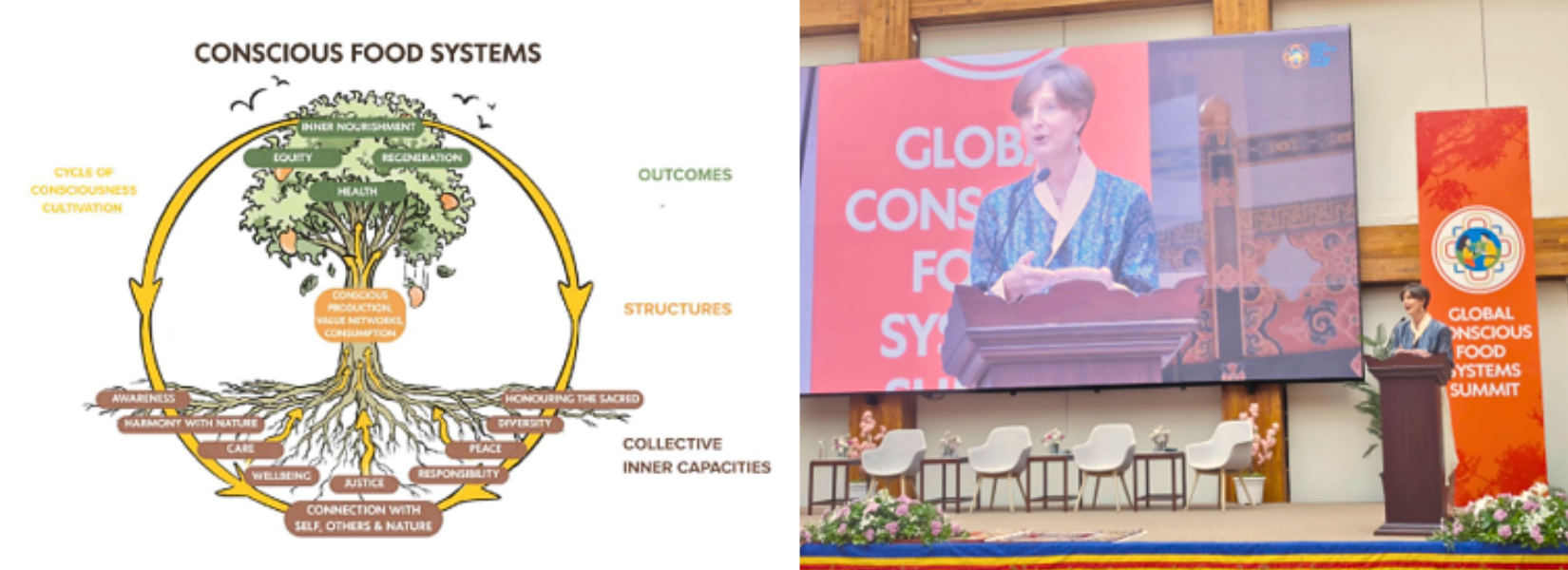
This is why an important moment in Bhutan was the launch of the Conscious Food Systems Framework, bringing together more than five years of CoFSA’s co-creation, inquiry and movement-building.
The Framework connects vision and values, conscious ways of working, inner change and systemic transformation, alongside practical experience from more than 50 initiatives.
Its value, for me, will be in what happens next: not another framework to put on a shelf, but something to work with, question, test and put into practice for a more just and sustainable future.
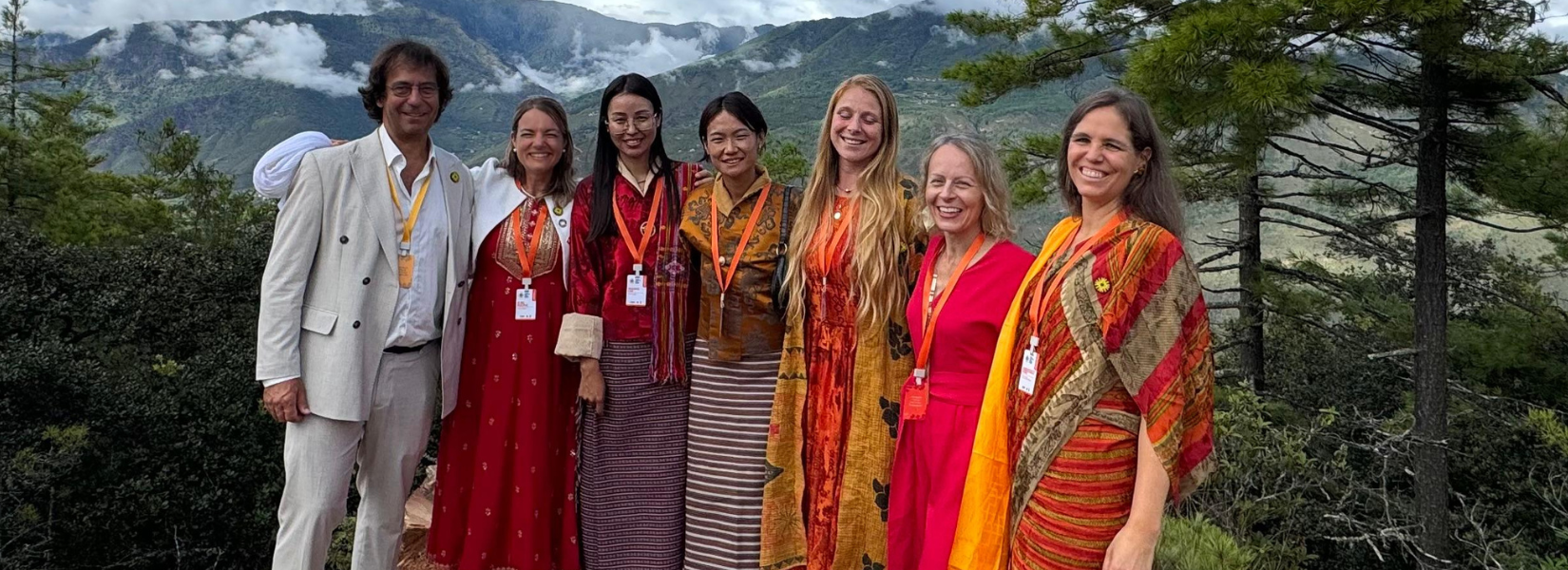
A great team to run the session “Circle of Trust: Cultivating Farmers' wellbeing from soil to soul” at the Summit: Marie-Antoinette Micheli, Jessica Bockler, Aoife Franklyn, Sonam Zam, Passang Om, Elise Buckle and Ignacio Packer (from right to left)
What does democracy have to do with breakfast?
My own professional journey has increasingly brought me into questions of democracy, trust and peace. Looking at my breakfast plate, I found myself asking: What does democracy have to do with what is on my plate? Quite a lot, I think.
Who owns the land? Who controls seeds? Who decides what is grown? Who has access to finance and technology? Who receives the value created? Who carries the risks when the climate changes? Whose knowledge counts? And fundamentally: Who has a voice?
These are food questions, but they are also questions of power, participation, justice and dignity. They are democratic questions.
This is the reason why our democracy work at Caux Foundation does not only focus on institutions and elections, important as they are. It also focuses on trust, relationships and our capacity to live with difference. Democracy depends on people believing they have agency, that their voice matters and that they belong. The same is true of food systems.
When farmers struggle to make a living, when soil is exhausted for short-term returns, or when decisions are taken far from those who live with their consequences, dignity, agency and trust are affected.
This is where food systems, democracy and peace meet. Peace is not simply the absence of war, as we hear repeatedly. Peace also grows from dignity, fairness, belonging, trust and the possibility of imagining a future.
Democracy depends on people believing they have agency, that their voice matters and that they belong. The same is true of food systems.
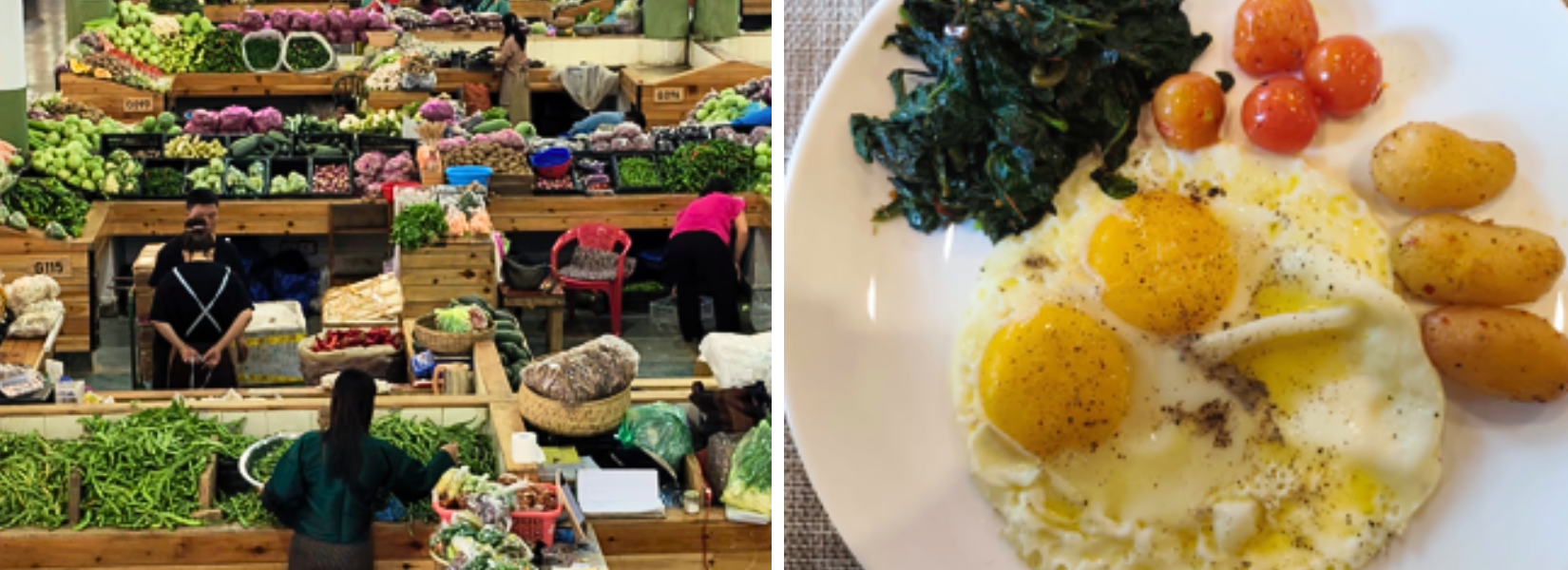
Thimphu vegetable market & breakfast in Bhutan: where soil, livelihoods and community meet on the way to our plates.
Pain, hope and small islands of leadership
One thought in particular stayed with me throughout the Summit: pain and hope can coexist.
Soils are being degraded. Climate change is disrupting livelihoods. Farmers are struggling or abandoning the land. Inequalities persist. Democracies are under strain and trust is declining. We should not minimise this pain. But recognising pain does not require surrendering to despair.
Bhutan gave me plenty of energy to continue choosing hope over cynicism and despair. Among the people gathered from 70 countries were so many already doing things differently: restoring soil, recovering knowledge, experimenting with new models, rethinking finance and reconnecting food with health, community and nature.
A farmer restoring exhausted soil. An investor accepting a different understanding of return. A policymaker genuinely listening to those who cultivate the land. A chef choosing ingredients with care, honouring where they come from and turning them into nourishment. A community reclaiming agency over how it feeds itself. I think of these as small but crucial islands of positive leadership.
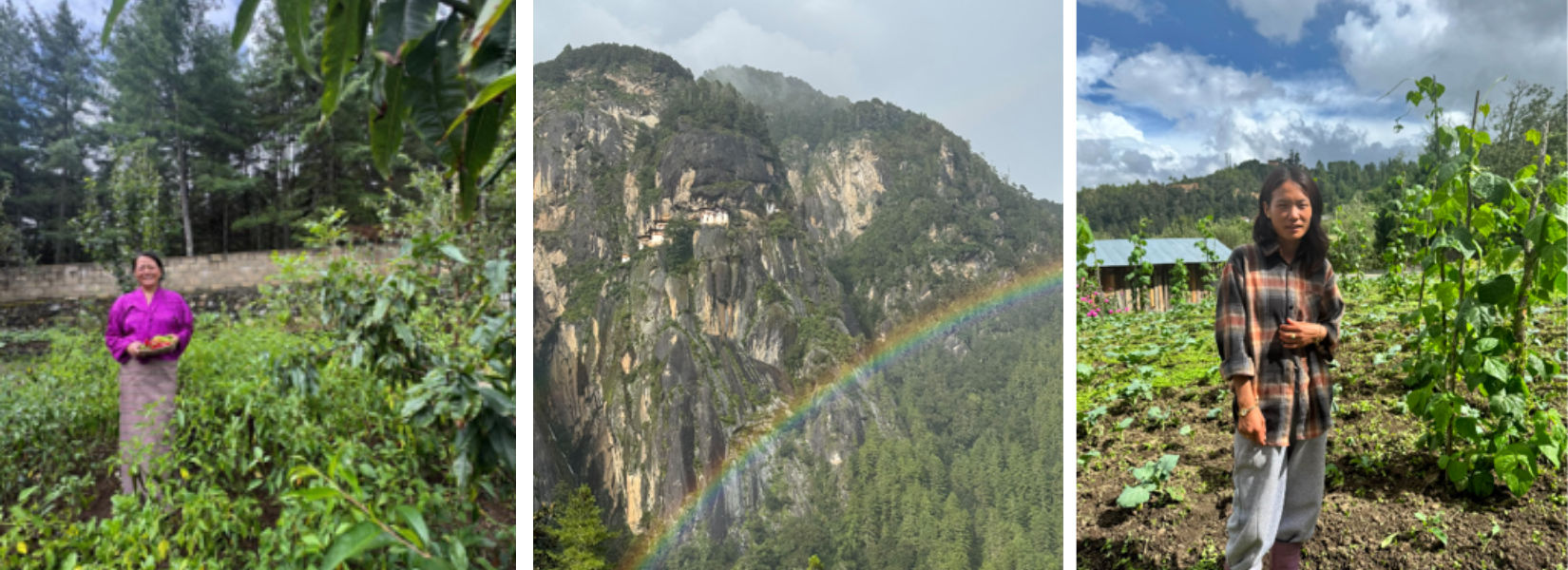
Food systems, democracy and peace all begin with dignity, belonging and the possibility of a shared future. Chencho, Ignacio's host (left) and Sonam Zam (right) at her farm in Paro, Bhutan.
This also echoes the long experience of Initiatives of Change’s Farmers’ Dialogue, bringing farmers together across countries around our relationship with land, food and one another. It recognises farmers not simply as producers, but as custodians of soil, knowledge and our common future.
None of these actions transforms a global system alone. But each shows that another way is possible. Perhaps systemic change starts with enough people, in enough places, behaving differently - and then finding one another.
Our task is to connect these islands of leadership.
What comes after the Summit?
CoFSA partnered with the Caux Foundation for the 2024 Caux Inner Development Goals Forum, particularly around the SDG 2 workstream, and right from the start, this connection has felt natural: creating spaces where people can slow down, build trust, see differently and return to the world better equipped to act. I am also proud to have served, since the beginning of this year, on CoFSA’s International Advisory Committee. After Bhutan, I hope to deepen my contribution.
What Andrew Bovarnick, Charlotte Dufour, Thomas Legrand and the fantastic CoFSA team have helped guide feels quite unique: a deeply collective endeavour, engaging many people and perspectives, and connecting knowledge, consciousness and action across boundaries that too often keep us apart.
Launch of the Conscious Food Systems Framework by Charlotte Dufour, Practice Advisor, Conscious Food Systems Alliance (CoFSA), UNDP
But a Summit should not end when the Summit ends. So, what will I do differently after the Summit in Bhutan?
First, I will never look at my breakfast in quite the same way again. Where did it come from? Who produced it? What soil, water and human labour made it possible? What remains hidden from my view?
Second, I will use and promote the new Conscious Food Systems Framework, including in conversations beyond food systems around democracy, peacebuilding, humanitarian action and leadership.
Third, I will keep making connections. Food, climate, democracy and peace are not separate agendas. Questions of land, resources, agency, participation and dignity concern the kind of societies we build.
And I will try to connect those small islands of leadership. One of the privileges of my professional life has been moving between communities that do not always meet. I hope to continue doing that.
Leadership in practice: Chefs from Bhutan, Nepal, India and Sri Lanka showing another way is possible at the CoFSA Summit.
Everything is urgent: climate, soil degradation, farmers’ livelihoods, democratic decline, war and polarisation. Yet both, Caux and Bhutan, remind me of the importance of giving ourselves permission: not to act less urgently but to see more deeply.
So tomorrow morning, perhaps we could pause before taking that first bite. Look at the plate. And see beyond it. The soil. The seed. The farmer. The rain. The market. The cook. The choices. The relationships. The extraordinary web of cooperation between people and nature that allows us to eat.
Then ask: What do I really see on my plate?
Perhaps consciousness begins there: seeing more of what is there, recognising that we are part of it, and accepting that what we see asks something of us.
Because the purpose of a food system should not simply be to feed the world. It should help us nourish the world: people, nature, dignity, democracy and peace.
Consciousness begins there: seeing more of what is there, recognising that we are part of it, and accepting that what we see asks something of us.
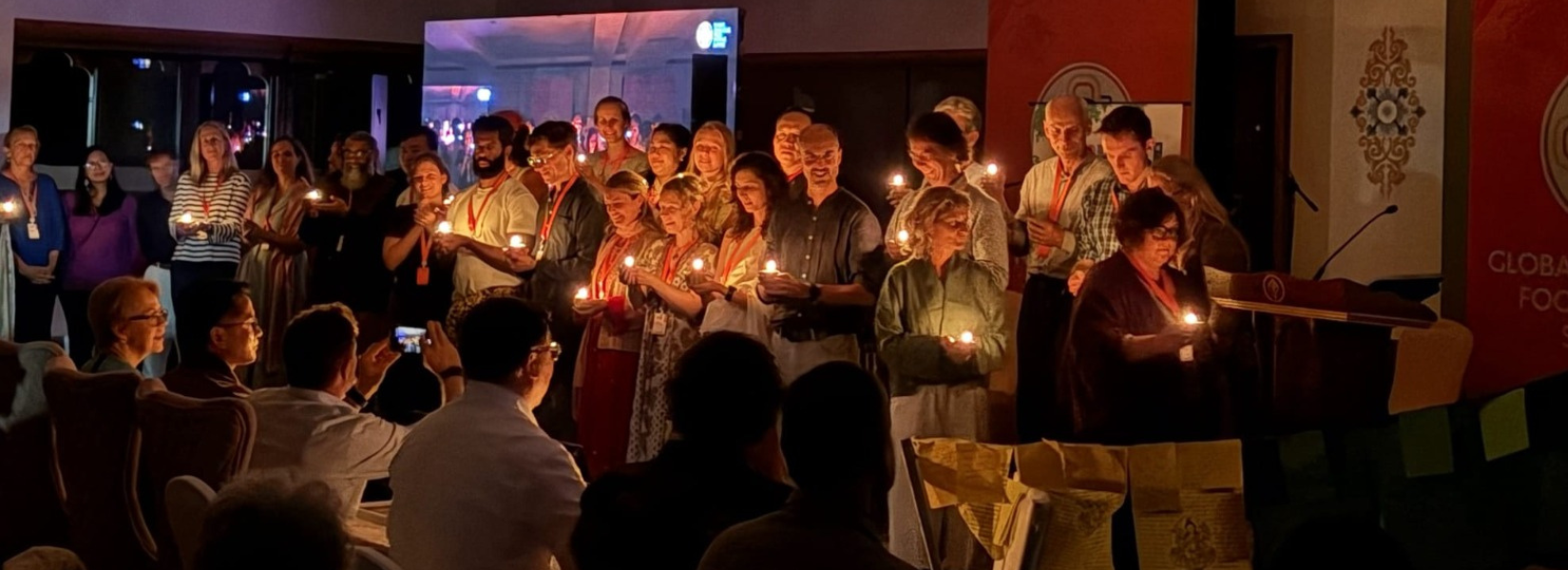
The “Sharing Circle” facilitators (inspired by Initiatives of Change's community groups) were invited to bring the lights of the Summit for its closing
Ignacio Packer is Executive Director of the Caux Foundation, a Swiss charitable foundation committed to promoting trust, ethical leadership, sustainable living, and human security. With more than 30 years of experience in humanitarian work and development, he worked at the Development Bank of Latin America and at KPMG before becoming a recognized leader of NGOs and international alliances for over 25 years. An expert in human rights and social issues, he has been particularly engaged in advocating for the protection of migrants and refugees, especially children and young people.
Fiona Harvey, “Bhutan hosts first ‘conscious food summit’ amid threats to global supplies,” The Guardian, 31 August 2026. Read the article
Explore the Conscious Food Systems Framework - CoFSA’s framework for bringing consciousness and inner capacities into food-systems transformation. Explore the Framework
“How the Inner Development Goals can help shape Conscious Food Systems: reflections from the Caux IDG Forum”, 2024, Charlotte Dufour, Nadene Canning and Ignacio Packer. Read the article
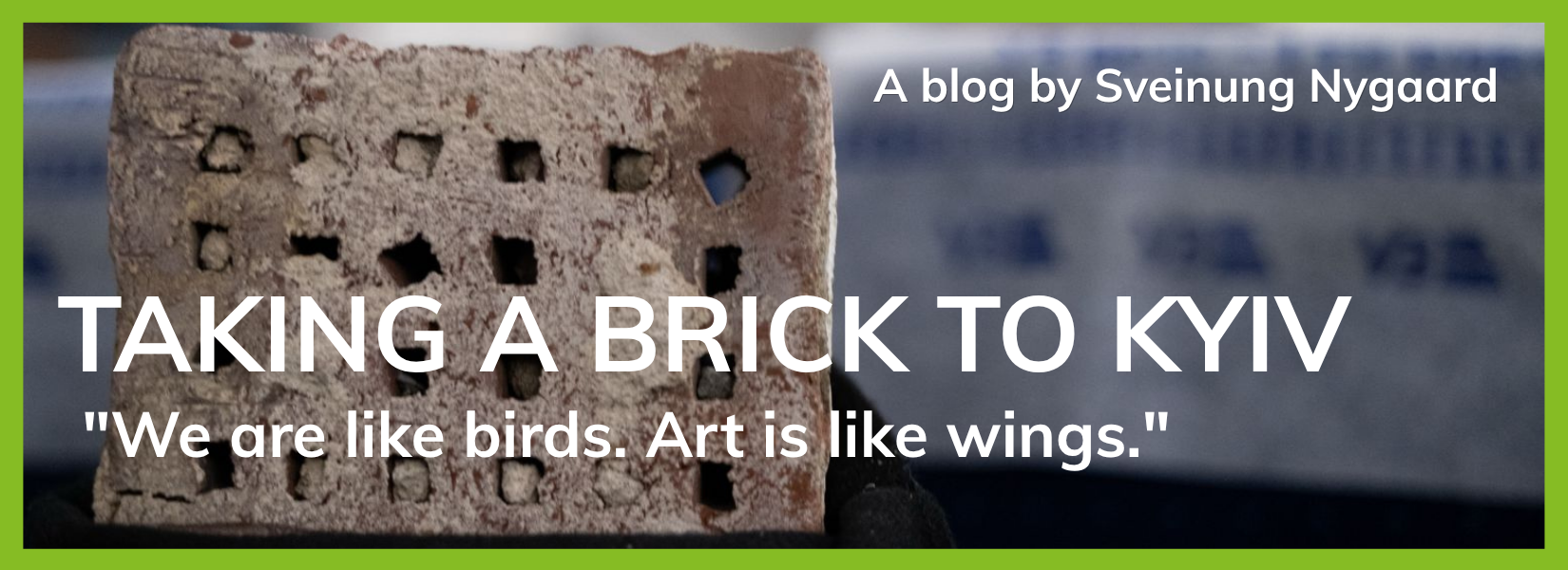
"We are like birds. Art is like wings." - A blog by Sveinung Nygaard
10/07/2026
Featured Story
Off
"We are like birds. Art is like wings." - A blog by Sveinung Nygaard
Sveinung Nygaard is a composer, musician and artistic facilitator who helped shape the creative vision of the Caux Democracy Forum 2026 as part of its arts team. Working to integrate the arts as an inclusive and democratic element throughout the Forum, he contributed to designing an artistic journey that accompanied participants at the Caux Democracy Forum through each day of the conference, creating space for reflection, dialogue and shared experience.
For Sveinung, the arts are not a luxury but an essential part of peacebuilding and of strengthening and reimagining democracy. He believes that artistic expression should be woven into the democratic mindset, enabling everyone to participate, contribute and help shape the communities they belong to. By balancing artistic participation with moments of shared experience, the Forum sought to demonstrate how the arts can foster empathy, inspire values-led engagement without becoming propaganda, and create the emotional and human connections that sustain democratic life.
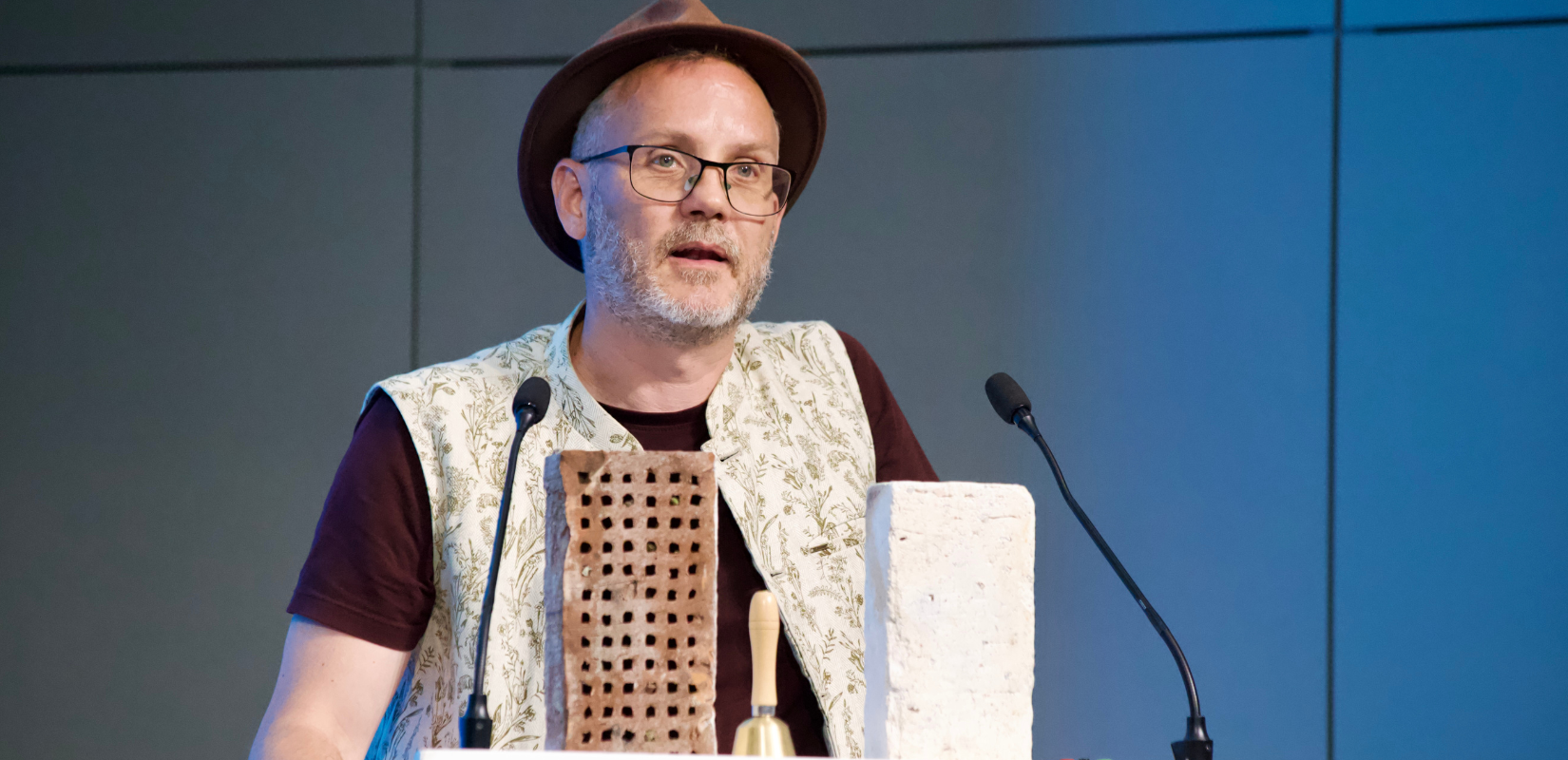
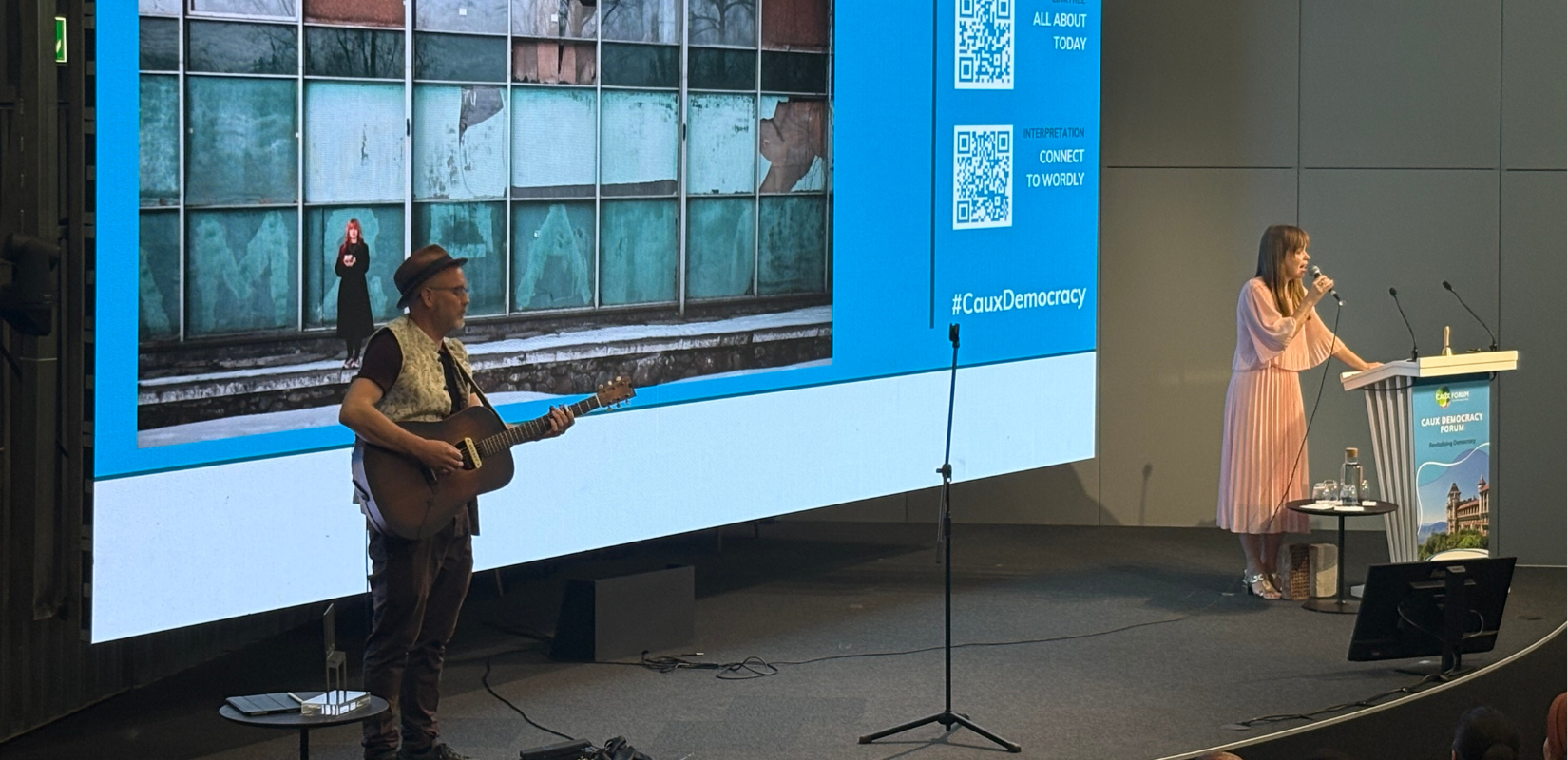
At the Opening Ceremony on 22 June, Sveinung spoke about this vision and performed music alongside Ukrainian Member of Parliament Lisa Yasko. Throughout the Forum, his musical contributions created an emotional and reflective thread across the programme, inviting participants into a shared journey that encouraged dialogue, imagination and renewed commitment to democracy.
photo: Sveinung Nygaard
He writes:
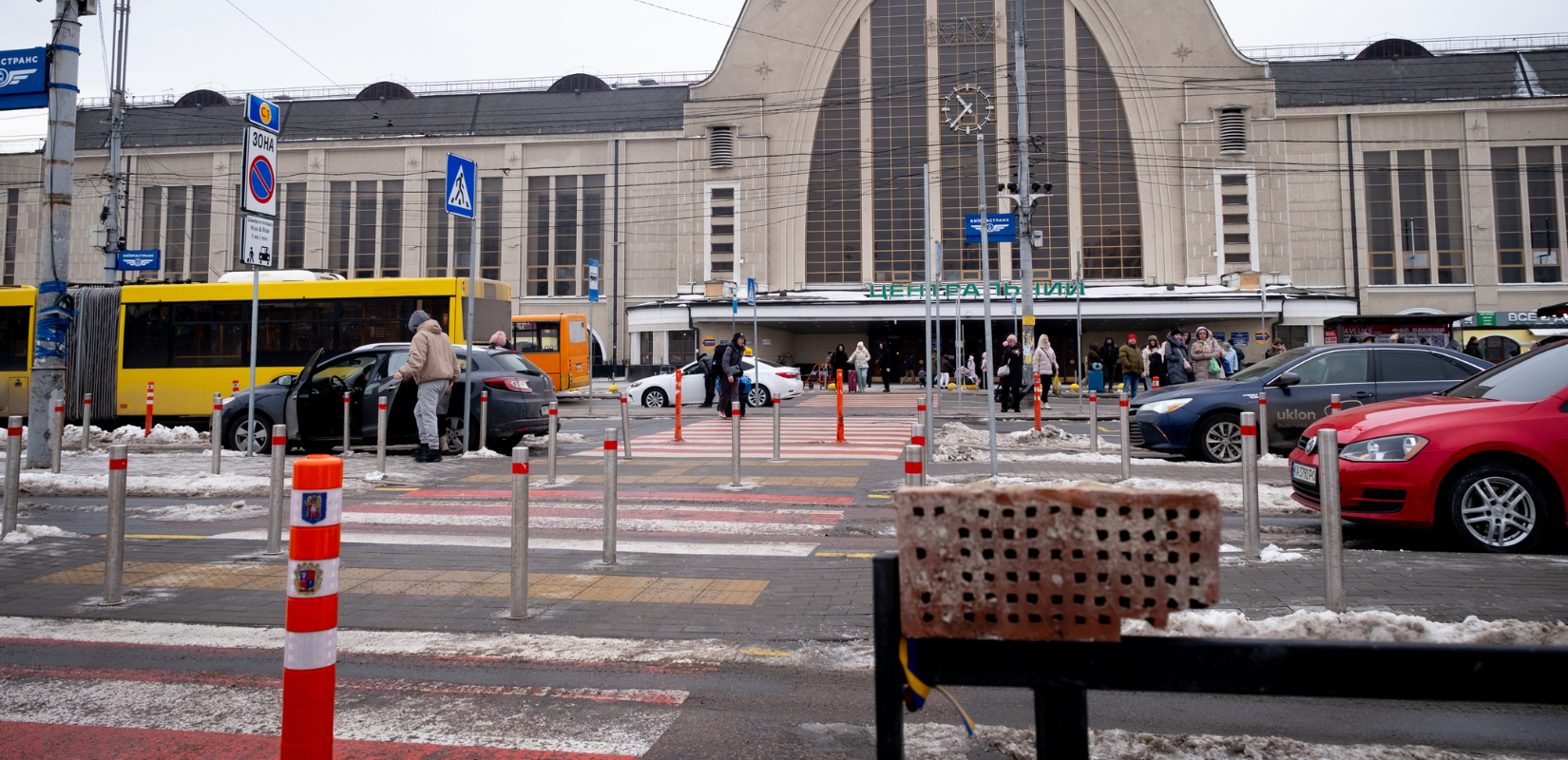
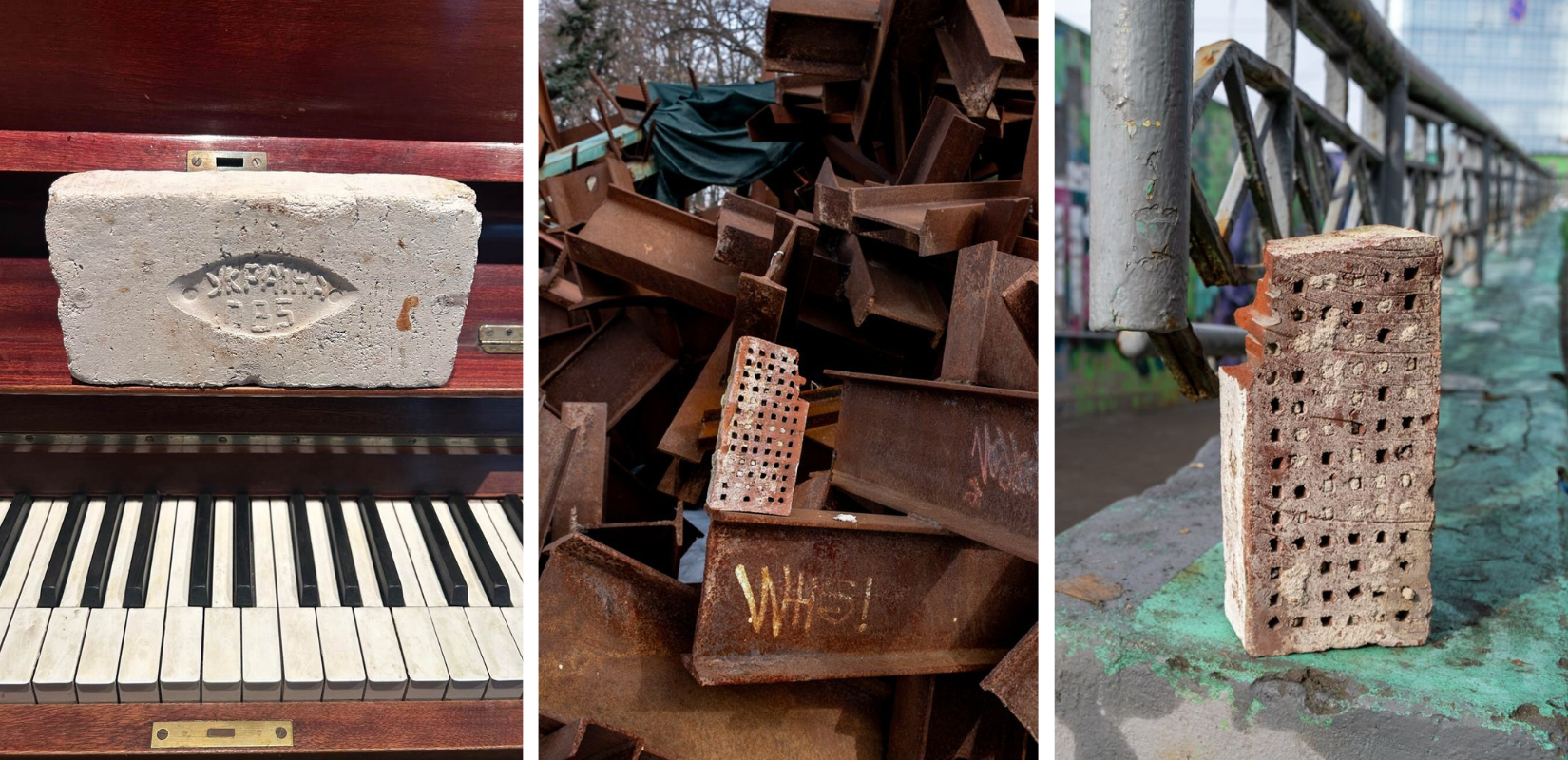
"I brought a brick to Kyiv by train this winter. I didn’t know quite why but I knew it was the right thing to do. It was a kind of statement, an open ended question, I intuitively felt I should do it.
There are things that can’t be proven, that can’t be put into spreadsheets and reports. They are not quantifiable, but they still matter. Art, in all its forms, is one of these things. At the Caux Democracy Forum last week we attempted to let the artistic mindset have a part in a conference dedicated to democracy. Why?
We believe that art represents and guides the stories we tell each other, and that we tell ourselves, about who we are, where we come from, where we are headed, and where we want to be heading. This is both applicable as individuals and as a society as a whole. Underneath every constitution is a collective pool of stories and values. Art speaks to this, and reflects this.
Underneath every constitution is a collective pool of stories and values. Art speaks to this, and reflects this.
Sveinung speaking at the Caux Democracy Forum opening ceremony on 22 June 2026.
If you look at a coin or note, you see a number, a value. But you also see items of national narratives, buildings, famous persons, items of identification, even certain colours and pictures of artwork. These are reminders of the underlying story beyond the face value of the coin or note. Art is communal storytelling and memory.
At this conference we wanted to open a door, to extend an invitation to understand and engage the artistic mind in all of us. Art is not just about an end product, it is just as much a mindset, a process, a journey, a way of living, and of seeing. We wanted to highlight and re-kindle this artistic mindset as much as the end artistic expression, in order to inspire new insights and pathways for all of us.
True art helps us see longer, go deeper, be braver, become more resilient, constructive, have more empathy and to challenge ourselves and our society to be better. Like birds (the artistic theme of the Caux Democracy Forum) we need to find our wings and soar, to reach higher altitude, to see further and travel farther. The wings of art interact with the currents of the air, with the surrounding we find ourselves in. Intuition and inspiration have real significance.
True art helps us see longer, go deeper, be braver, become more resilient, constructive, have more empathy and to challenge ourselves and our society to be better.
photos: Sveinung Nygaard
I remember all the times I saw those paintings, when I heard those songs, when I felt those connections and insights that were so tangible yet hard to pin down. I remember the feeling of importance of an action I just had to do, a chord, a colour and a path that I was compelled to pursue out of curiosity, and of duty. I remember the look in people’s eyes when they felt the intention in my music. I remember being lost for words for what to say to a person in despair once and instead I picked up the guitar to express it in music.
The artistic mindset is open to new possible futures, it wants to find and create meaning and coherence. It seeks new paths as well as uncovering old ones. It often is the work of an individual, and at the same time cannot not be removed from its context within society. It does not always know for certain. Art is guided by intuition and values, and at the same time shapes values. Art explains reality, art is discovery as well as pedagogy.
Art is guided by intuition and values, and at the same time shapes values. Art explains reality.
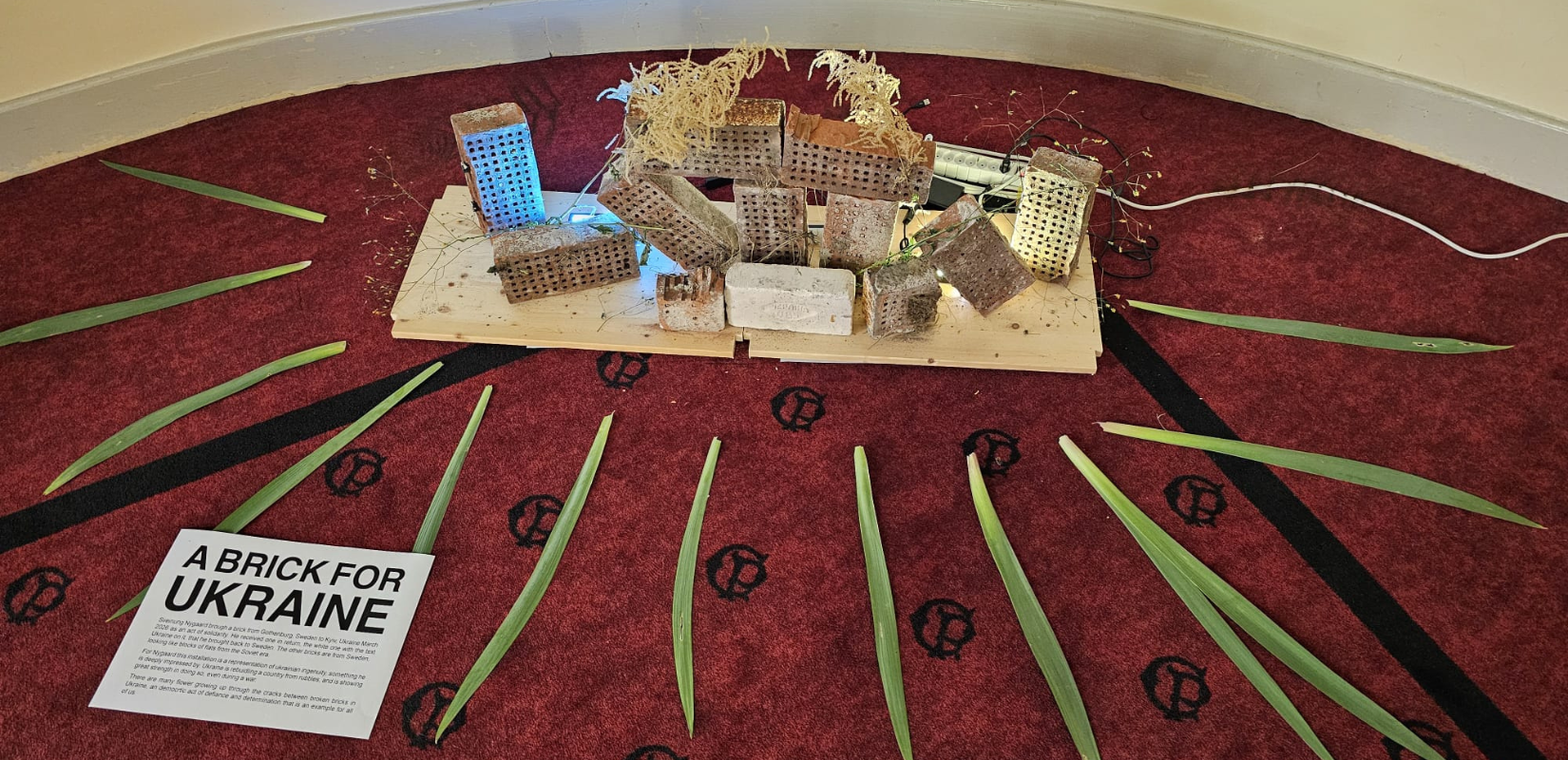
Sveinung's arts installation at the Caux Democracy Forum 2026
Art provides a platform for different perspectives, and is not afraid of subjectivity. Art gives us all a voice of expressing what we see and carry in our hearts. Art is a window to a landscape beyond us and within us.
The artistic mindset is not afraid of chaos for it knows a time of chaos is a time of putting things together in new ways. The artistic mindset is not afraid of emotions because it knows they are signposts to new insights.
Art seeks common knowledge of what it means to be human. It is a spiritual discipline. It reminds us of the past and connects it with the present as well as the future. Art is weaving with purpose, art asks open-ended questions. Art is listening deeply, art is communicating intentionally. It shows a link between me and we. Art widens the perimeter and strengthens the core. And it’s for each and every one of us not just a select few.
Democracy is not a technicality (...). It rests upon a collective commitment, understanding and story that needs to be approached and expressed in artistic terms. Art is a river that constantly flows to keep these truths fresh and relevant.
Sveinung and Lisa Yasko, Member of the Ukrainian parliament, performing in Geneva on 22 June 2026.
Democracy is not a technicality, it is not pre-eminent nor self-evident, rather it rests upon a collective commitment, understanding and story that needs to be approached and expressed in artistic terms. Art is a river that constantly flows to keep these truths fresh and relevant. In this age when storytelling is key we need to embrace and understand the artistic mindset. If we do not we will not capture hearts, and we might be captured by a storm of aggression and lethargy. Art is a necessity, not a luxury. Art is prophecy, art is soaring, art is seeing.
I brought a brick to Kyiv by train this winter. I gave it to a friend and she gave me one to bring back home. I often ask myself if I am a tourist when I travel in Ukraine as a Norwegian, as a foreigner. The friend I gave the brick to said “If you were a tourist you wouldn’t be bringing a brick here.” Let’s embrace the role of arts in all its forms as well as the artistic mindset.
We are like birds. Art is like wings."
Let’s embrace the role of arts in all its forms as well as the artistic mindset.
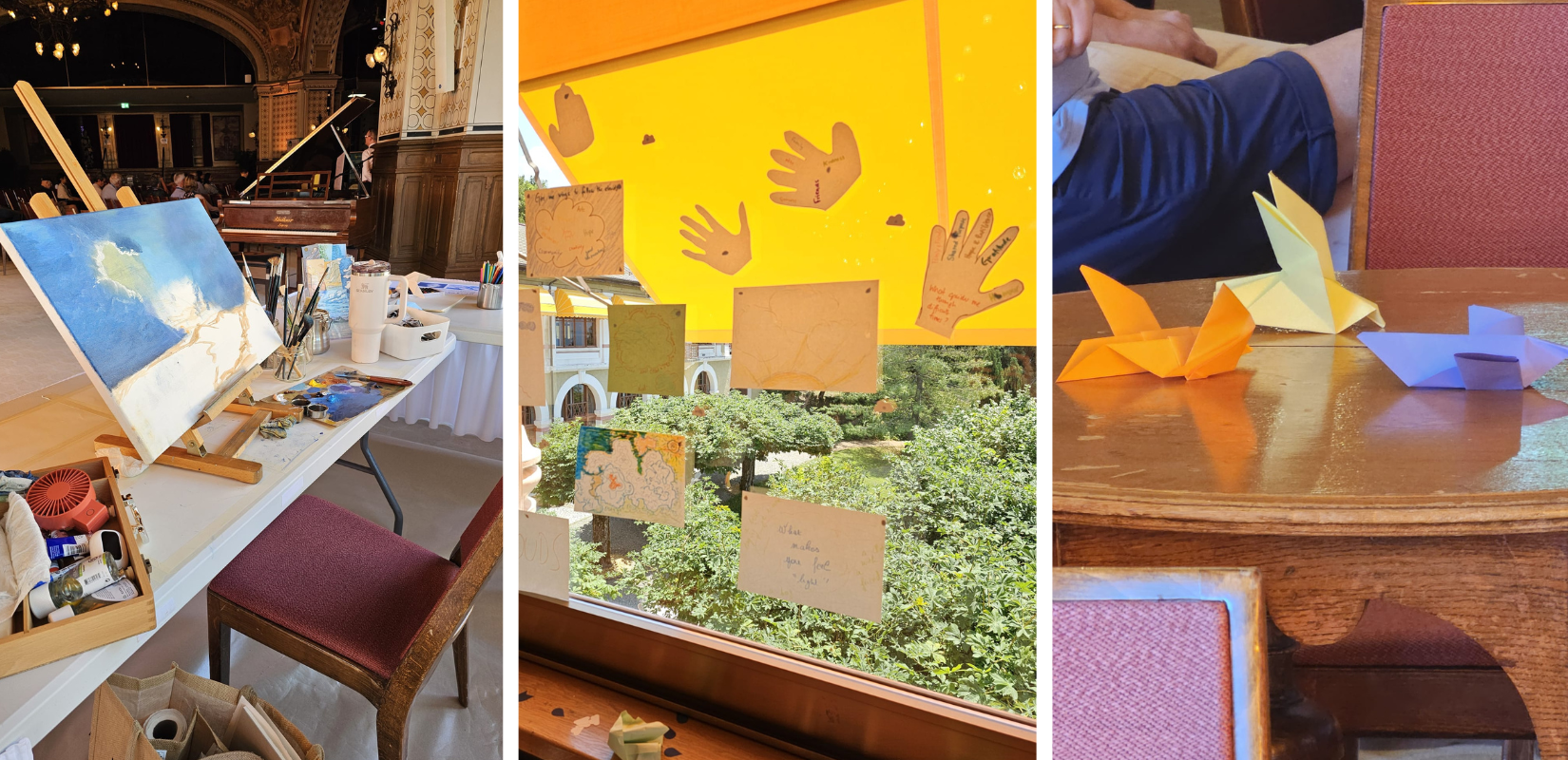
Glimpses into creative moments at the Caux Democracy Forum 2026
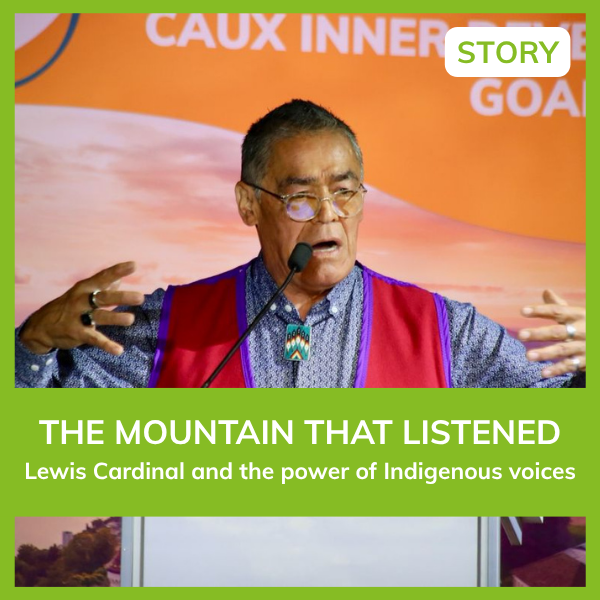
Sometimes the moments that shape our lives arrive unexpectedly. For Lewis Cardinal, one such moment began with a midnight drive up a mountain and grew into a lifelong journey of listening, belonging, ...
Would you like to share your inspiration, ideas, and skills with other participants at the Caux IDG Forum this summer on the theme “The Alchemy of Forgiveness”? We look forward to receiving your appli...
After participating in the World Economic Forum Annual Meeting in Davos on 22 January 2026, Ignacio Packer, Executive Director of the Caux Initiatives of Change Foundation, reflects on the question th...
Discover the full report of the Caux Democracy Forum 2025 which brought together more than 350 participants from over 45 countries at the Caux Palace to reflect and act on the theme “Revitalizing Demo...
Call for workshops! You would like to give share your inspiration, ideas and skills with other participants at the Caux IDG Forum this summer? We look forward to your application! Applications will be...
On 29 March 2025, the Bonn-Copenhagen Declarations of 1955 mark their 70th anniversary—a milestone that resonates far beyond Denmark and Germany. While often overshadowed by other post-war reconciliat...
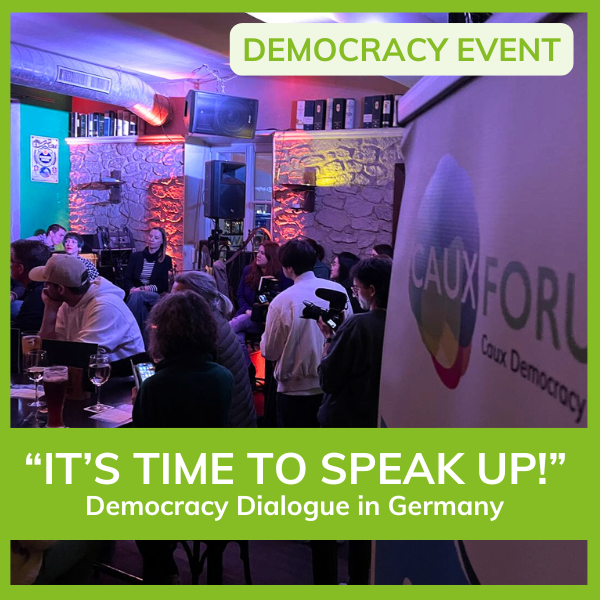
In the presence of a local TV channel, 65 people joined a democracy dialogue on 21 February 2025 in Augsburg, Germany, to listen to panelists from politics, academia and civil society and local artist...
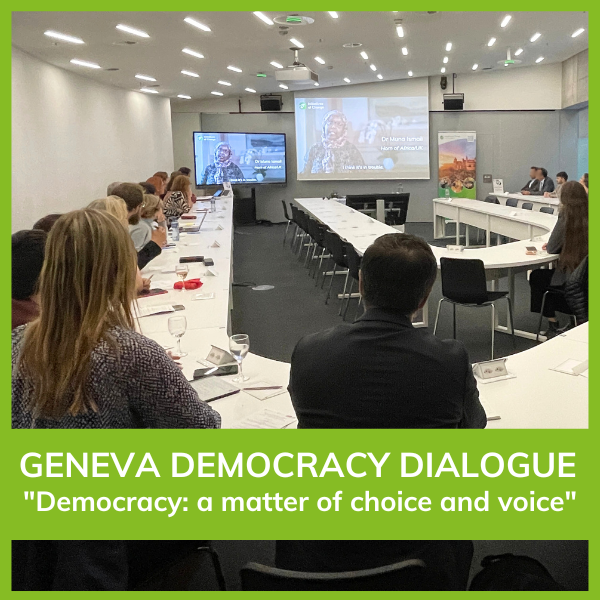
"In a democracy, each of us carries the responsibility to engage, listen and to contribute. It is more than a political system. It is about choice and voice. How does this resonate with you?" With the...
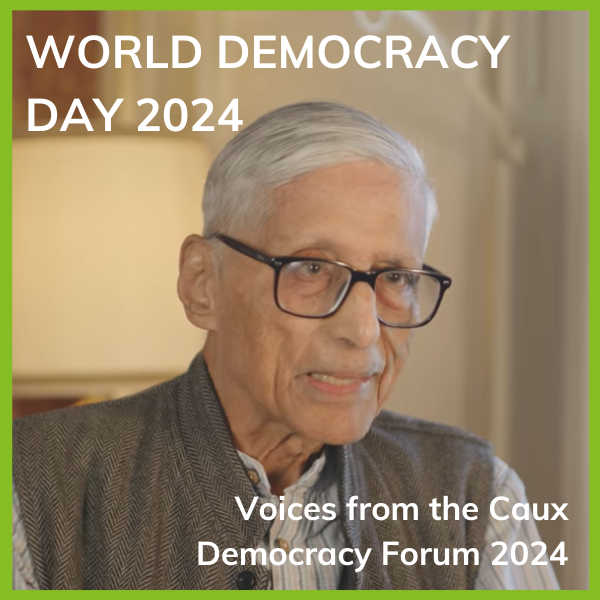
On the occasion of today's World Democracy Day 2024, we bring you conversations from participants at this summer's Caux Democracy Forum on the state of democracy and the importance of embodying its va...
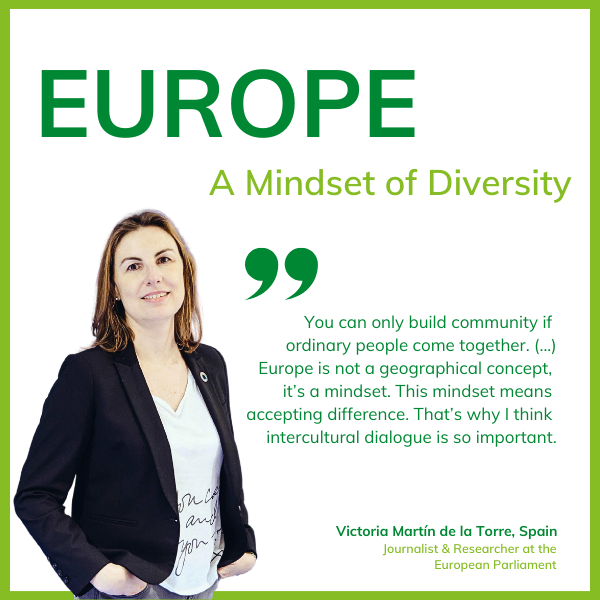
Spanish journalist Victoria Martín de la Torre is passionate about Europe, diversity and interfaith relations. Here she reflects on different aspects of Europe, based on her PhD research which led her...
Amid escalating conflicts worldwide, the arts emerge as a potent force to challenge misconceptions and foster positive perspectives. The pivotal role of artists in creatively raising awareness has nev...
On 25 - 28 January, some 60 CEOs and other senior staff came together under Chatham House Rules to share personal experiences on how to balance a sustainable business with integrity and trust. Executi...
Save the date for the Caux Forum 2024! This summer Caux Initiatives of Change, in partnership with Initiatives of Change International and supported by other civil society networks, UN agencies, phila...
The Caux Forum 2023 Opening Ceremony set the tone for the conference with the theme, ‘Strengthening Democracy: The Journey from Trauma to Trust.’. Discover the report and relive the highlights of this...
Corinne Momal-Vanian served as the Executive Director of the Kofi Annan Foundation from 2020 until May 2026. Prior to this, she worked in various senior positions and a variety of countries for the United Nations, including as Director of Conference Management (2015-2020) and Director of the Information Service (2010-2015) at the United Nations Office at Geneva. Ms.