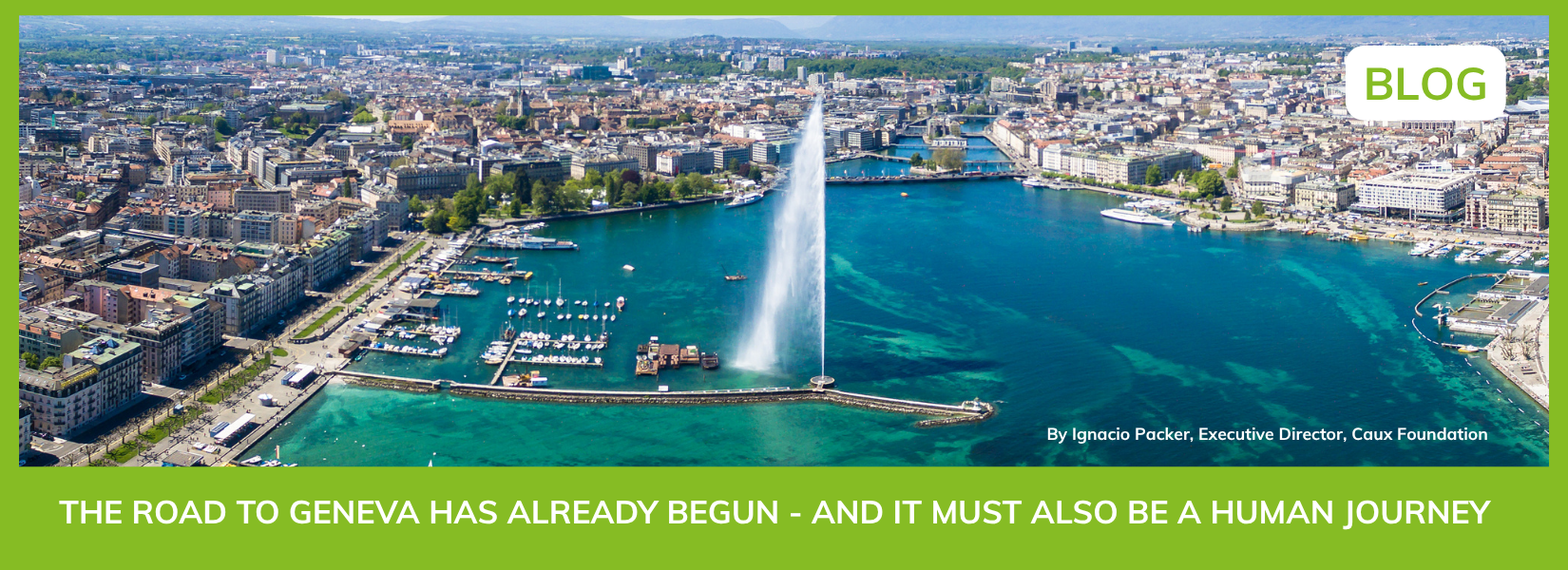
The Road to Geneva has already begun - and it must also be a human journey
A blog by Ignacio Packer, Executive Director at the Caux Foundation
07/10/2026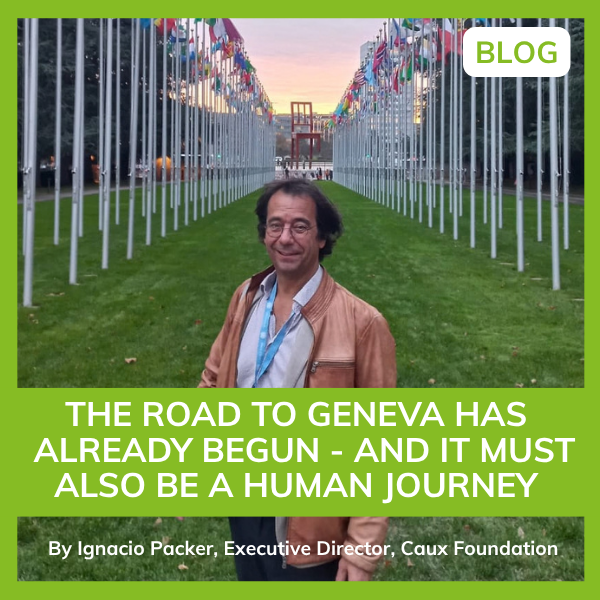
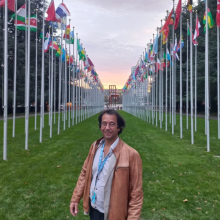
What happens when artificial intelligence begins to shape decisions that affect our work, opportunities and democratic life? In his latest reflections, Ignacio Packer, Executive Director of the Caux Foundation, explores what it means to navigate an age of AI - and what is at stake for trust, democracy and our shared responsibility.
Drawing on a recent interactive workshop at Geneva Democracy Week, he reflects on youth employment, the importance of bringing different generations and perspectives into the conversation, and the role Caux can play on the "Road to Geneva". His central question is simple but far-reaching: as AI expands what we can do, how do we ensure that the choices we make remain genuinely human?
An unusual format - and the discomfort of decision-making
Yesterday at the Geneva Democracy Week, we asked a room full of people of different generations and backgrounds a simple question: What should we never delegate entirely to artificial intelligence?
Should a company recruit ten young graduates instead of twenty because AI can now perform half the tasks traditionally given to juniors? Should an AI system recommend not only how a company restructures, but who should lose their job? And at what point does a perfectly rational business decision become a question of wider public interest?
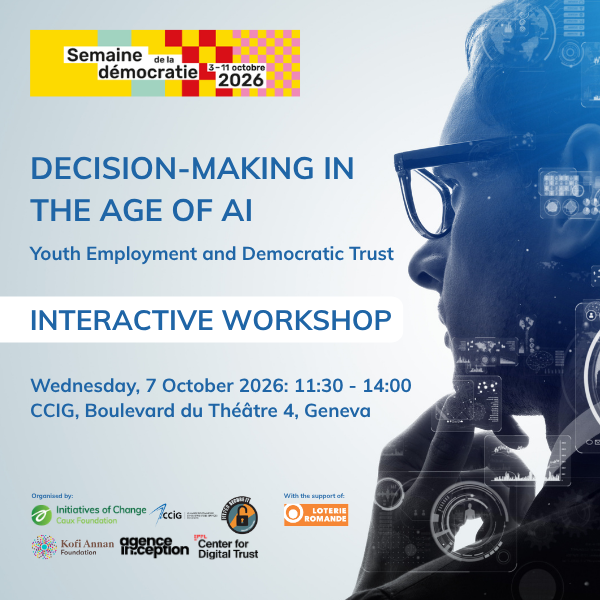
These were some of the dilemmas explored at the interactive workshop, “Decision-making in the Age of AI: Youth Employment and Democratic Trust,” held at the Geneva Chamber of Commerce and Industry (CCIG) as part of Geneva Democracy Week and organised in collaboration with the Kofi Annan Foundation, Centre for Digital Trust (EPFL), In.ception Marketing and HyperSecureIT.
Our objective was not to organise another conference about AI. Instead, we put people in the somewhat uncomfortable position of having to make a decision. But most importantly, the conversation was not only about young people. We were delighted to have more than 20 students from Geneva’s Collège Calvin taking an active part at the event, bringing into the room the voices of a generation that will live directly with the choices we are making today.
The format was deliberately unusual. Participants became citizens and shareholders. Some took on the roles of CEO, HR director, young employee, workers’ representative, civil society - and even artificial intelligence itself. The rest became the shareholders-citizens who ultimately had to decide.
What interested me most, though, was not whether people voted yes or no. It was what happened between the votes: People listened. They disagreed. They changed perspective. Sometimes, they changed their minds.
That may sound rather ordinary, but in today's polarized society, I increasingly think it is anything but ordinary.
People listened. They disagreed. They changed perspective. Sometimes, they changed their minds - in today's polarized society, this is anything but ordinary.
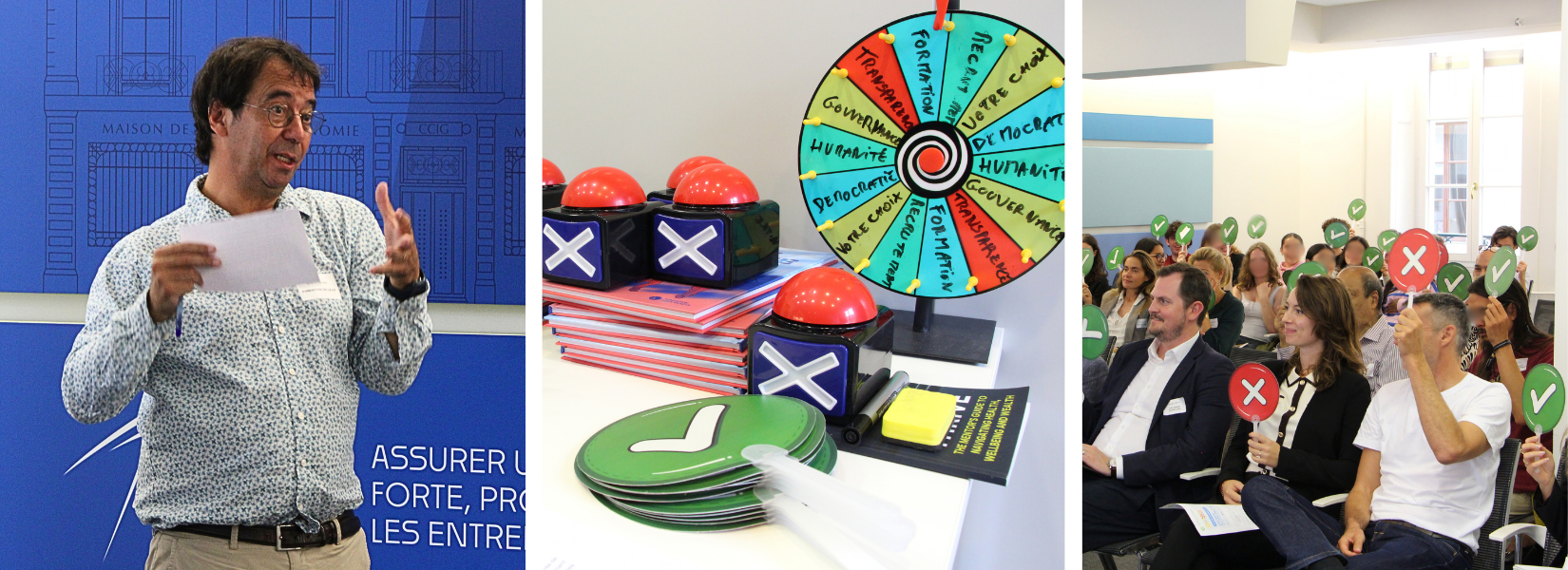
(photos: Eve Brenot & Mélanie Lam)
From Geneva Democracy Week to the Road to Geneva
There is a larger reason why conversation like these matters now. On 21–22 June 2027, Switzerland will host the Geneva AI Summit. Led by the Swiss Confederation, the Summit forms part of the international sequence of AI summits that began in 2023. Its overarching theme, “Bridging Innovation and Trust”, could hardly be more relevant to the questions we have been exploring at Caux.
But what particularly interests me is what happens before next June.
The "Road to Geneva" is more than a centrally organised programme. It is a global series of decentralised events and multi-stakeholder consultations leading up to the main summit, providing space for organisations and networks to contribute through recognised pre-events, a Call for Issues (launched in autumn 2026) and, later, independent side events. In other words, there is a road to the Summit - and many people can help build it.
The International Geneva ecosystem is already mobilising around questions of innovation, digital trust, governance and security. For me, this raises another question: What might the Caux Foundation and its activities contribute to this journey? Perhaps more than we initially imagined.
The summit theme, “Bridging Innovation and Trust” could hardly be more relevant to the questions we have been exploring at Caux.
Trust Is Not Primarily a Technological Question
The Caux Palace, our centre for dialogue and peacebuilding near Montreux, is not an AI research centre. Nor should we try to become one. Our contribution lies elsewhere. For 80 years, Caux has been concerned with questions of trust, peace, responsible leadership and the capacity of people with profoundly different perspectives to meet and engage with one another.
AI makes those questions more urgent, not less. During a recent conversation for CARAC TV, I tried to express this through three simple ideas:
- The more intelligent our tools become, the more we need to invest in our human intelligence.
- Trust does not mean promising people that nothing will change. It means not abandoning them while everything changes.
- AI increases our capacity to act. It does not reduce our responsibility.
The discussion at yesterday's event brought these ideas home very concretely.
If AI removes many of the entry-level tasks through which young professionals traditionally learn their craft, how will they acquire the experience needed to become tomorrow’s experts?
A young lawyer beginning by researching case law and preparing initial analyses. A young finance professional building tables and analysing data. A young communicator writing first drafts. Juniors learning by observing, trying, making mistakes and being corrected by more experienced colleagues.These are precisely some of the tasks AI is increasingly capable of performing.
The question of AI is therefore not simply an HR question. It becomes a question about inclusion, opportunity and, ultimately, trust in our economic and democratic institutions. A generation that feels technological and economic decisions are constantly being made about them, but without them, may eventually lose confidence not only in employers but in the institutions around them.
That is where AI becomes a democracy question. It is why having students from a local collège inside the conversation that happened in Geneva yesterday - voting, challenging assumptions and questioning the choices being made - mattered.
And it is also why the Caux Foundation has been consistently promoting and hosting events on democracy, like Reimagining Democracy(ies), in collaboration with the Caux Foundation's youth programme Creative Leadership, and the Caux Democracy Forum.
The question of AI is therefore not simply an HR question. It becomes a question about inclusion, opportunity and, ultimately, trust in our economic and democratic institutions. It also becomes a democracy question.
We are not travelling this road alone
One thing has become increasingly clear to me over the past year: Caux does not need to become an AI expert to be involved in the AI discussion. It needs to work with those who are experts, while bringing to the table what Caux knows about trust, dialogue, democracy and human relationships.
That is already happening. Yesterday's workshop was itself the result of collaboration across different worlds.
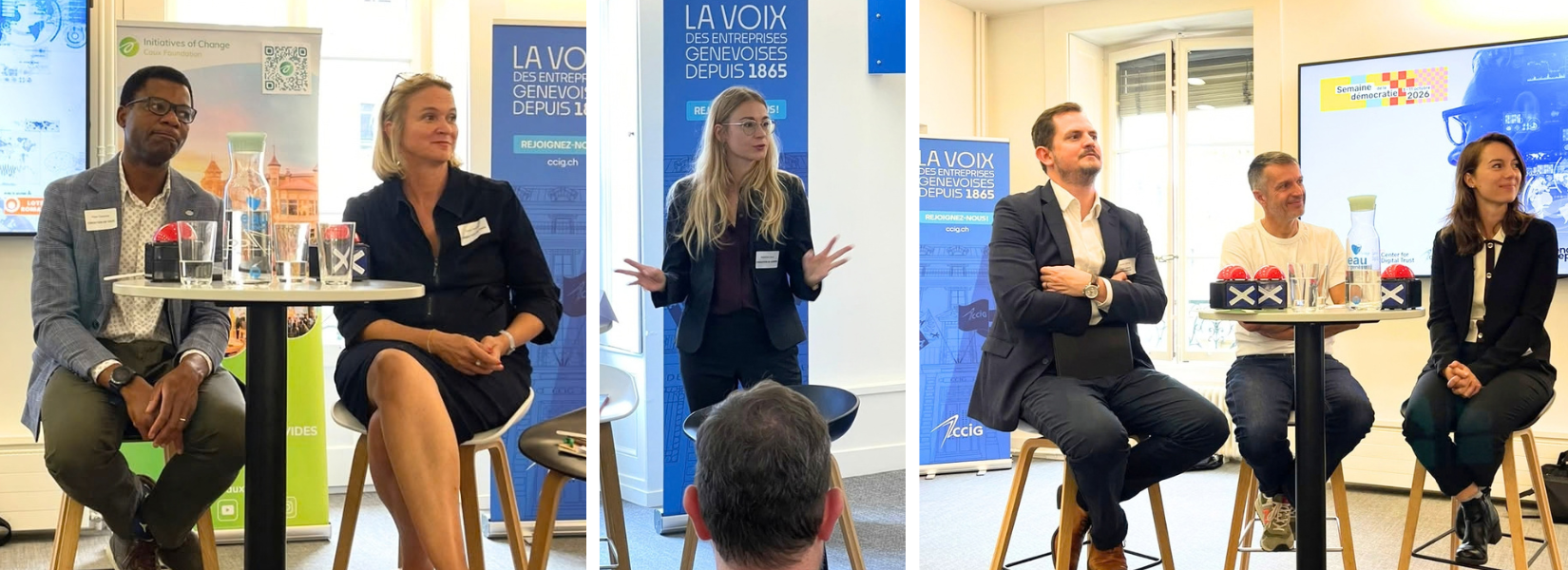
Olivier Crochat from the Center for Digital Trust (EPFL) brought perspectives on digital trust, research and future skills. Declan O’Brien from the Kofi Annan Foundation brought the questions of democracy and governance. Peter Osazuwa from HyperSecureIT explored the opportunities and challenges of AI. Inès Bekkis from In.ception Marketing brought the expectations of a younger generation. My colleague Sarah Noble focused on how our decisions can remain profoundly human.
The collaboration also extended beyond the panel. Bénédicte Casaï from Fondation pour Genève, through the comic book Code Critique, brought another essential dimension: critical thinking and our capacity to question what technology tells us.
This network matters, as do the other relationships Caux is developing in this field, including its partnership with PoliSync on the AI for Social Good learning programmes.
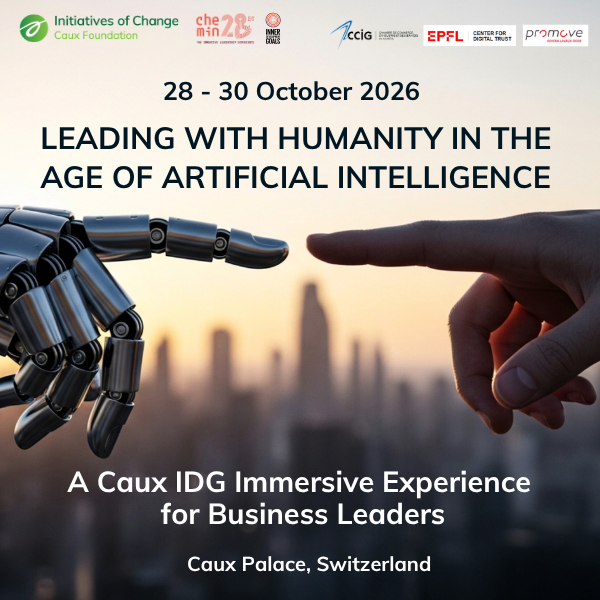
And the journey continues. From 28–30 October, at the Caux Palace, our residential immersion “Leading with Humanity in the Age of Artificial Intelligence” will again connect different forms of expertise. Co-organised with Chemin 28, we are working with the Center for Digital Trust (EPFL), PROMOVE, the CCIG and the Inner Development Goals Foundation, alongside business leaders and international perspectives.
Caux does not need to become an AI expert to be involved in the AI discussion. It needs to work with those who are experts, while bringing to the table what Caux knows about trust, dialogue, democracy and human relationships.
From asking what AI can do to asking what we want to do
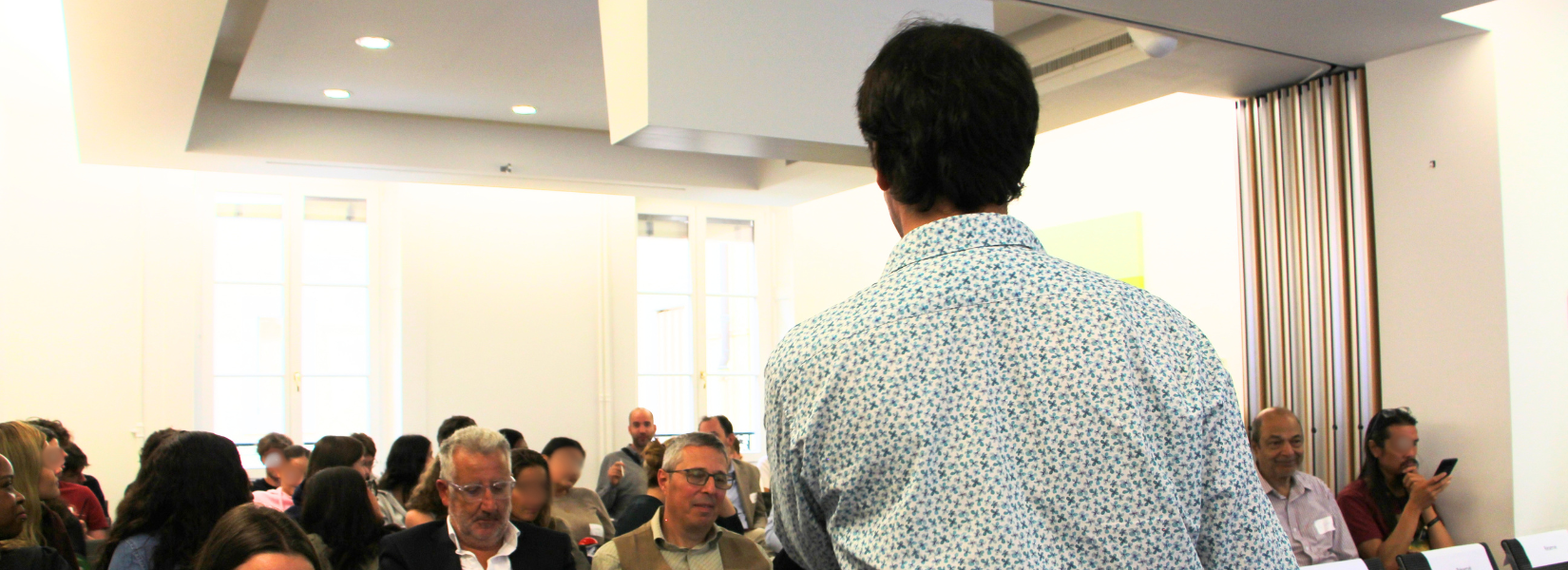
Trustworthy AI will not be built by technologists alone, just as it will not be built by civil society, governments or businesses acting separately. It requires spaces where these different forms of expertise - and different generations - can meet. Perhaps that is precisely where the Caux Foundation can contribute to the "Road to Geneva".
Working in partnership with others reinforces something I have increasingly come to believe: Our contribution is not to duplicate the technological, regulatory or business expertise that already exists in the Geneva–Leman ecosystem. It is to connect that expertise to the human questions that technology alone cannot answer.
The question is therefore not simply: What can AI do? It is: Now that we can do it, what do we want to do? Who should be part of that decision? And what responsibility are we prepared to assume for its consequences? That distinction may become increasingly important on the "Road to Geneva".
Trust will not be created by regulation, algorithms or technical standards alone. Trust is also created - or destroyed - through relationships. Through whether people feel heard. Through whether they understand why decisions are made. Through whether those affected by transformation have some agency in shaping it. And sometimes through something increasingly counter-cultural: slowing down long enough to think before deciding.
At Caux, we have long attached importance to these moments of reflection and even deliberate silence. In a world of AI and instant answers, that may seem strangely old-fashioned.
I think the opposite is true. In a world that accelerates, knowing when to slow down before an important decision may become a strategic capability. For 80 years, the Caux Foundation has experienced the value of creating space for reflection and silence - helping individuals and organisations find clarity and guidance for the decisions they make and the actions they take.
In a world that accelerates, knowing when to slow down before an important decision may become a strategic capability.
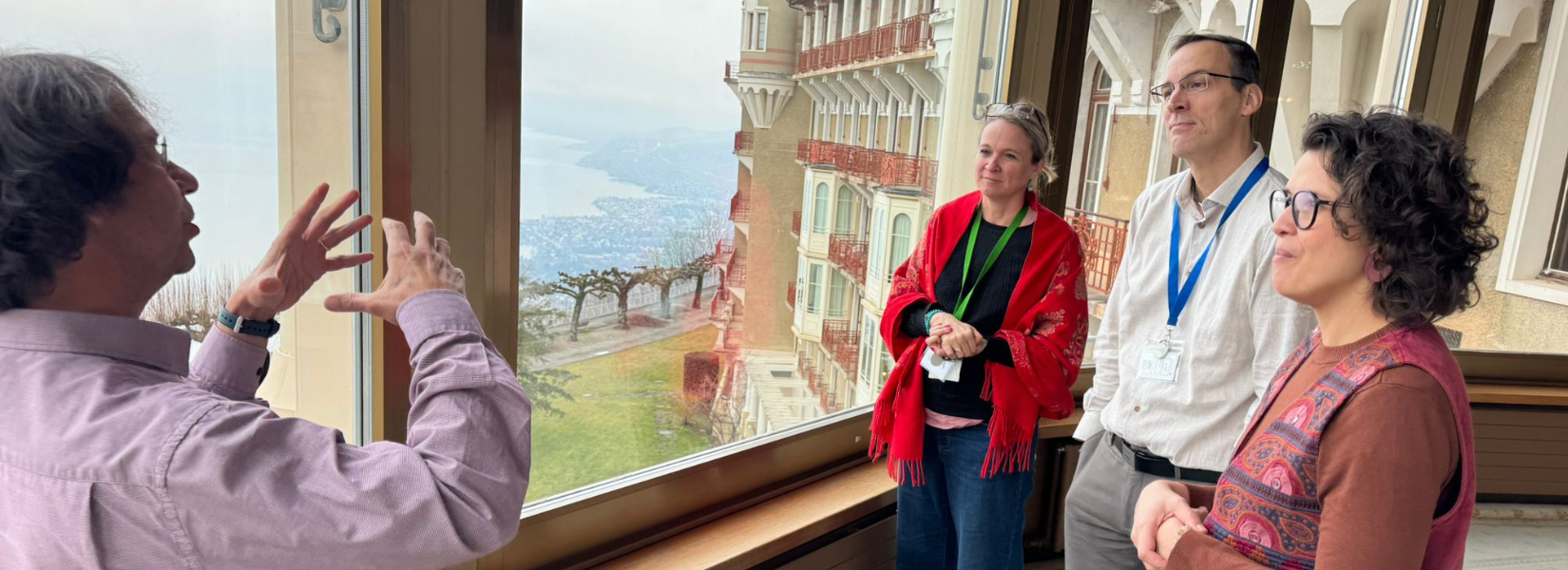
A road worth joining
As I prepare to leave my role as Executive Director at the Caux Foundation, I have included the "Road to Geneva" in my handover, as I see it as a valuable opportunity for Caux to continue connecting its existing work with this wider journey. There are already strong links with themes such as youth employment, responsible leadership, inner development, trust, dialogue, democracy and citizen participation. Building on these connections could offer meaningful ways for Caux to contribute to the conversation in the years ahead.
And who knows - perhaps there is room somewhere along the way for a gathering at Caux itself. Not another conventional AI conference, but a residential space where people who do not normally have enough time or opportunity to be together can step away from their institutional roles, listen, disagree and think. That, after all, is something Caux knows how to do.
On 7 October, we ended our workshop with a question: In five years, which decision taken today will we still want to be able to say was ours - and that we accept responsibility for?
That question seems to me worth carrying all the way to Geneva. Because an augmented democracy is surely not one in which artificial intelligence makes better decisions for us. It is one in which we become better at making decisions - together.
In five years, which decision taken today will we still want to be able to say was ours - and that we accept responsibility for?
______________________________________________________________________________________
Ignacio Packer is Executive Director of the Caux Foundation, a Swiss charitable foundation committed to promoting trust, ethical leadership, sustainable living and human security. With over 30 years of experience in humanitarian and development work, he worked at the European Bank for Latin America and then at KPMG, before becoming a recognised leader of NGOs and international alliances for over 25 years. An expert in human rights and social issues, he has been particularly involved in defending protection frameworks for migrants and refugees, especially children and young people.
related stories
Technology and Humanity: Finding a New Balance
Dr. Eleftheria Egel, an entrepreneur and researcher in sustainable leadership, consultant, and active member of several foundation boards, has built a career at the intersection of entrepreneurship, l...
Leading fairly: where social justice begins
À l’occasion de la Journée internationale de la justice sociale, et dans le prolongement d’échanges récents à Caux avec des responsables d’entreprises, Ignacio Packer, directeur exécutif de la Fondati...
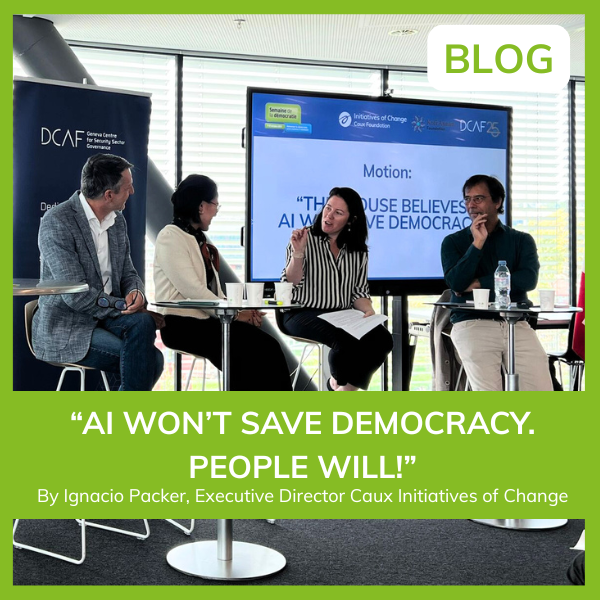
"AI won’t save democracy. People will!"
Ignacio Packer reflects on last Friday's Oxford-style debate on the motion: “This house believes AI can save democracy.” The conversation was inspiring, lively—and ultimately sobering. Because the tru...