Technology and Humanity: Finding a New Balance
An interview with Dr.Eleftheria Egel
29/09/2026

Dr. Eleftheria Egel, an entrepreneur and researcher in sustainable leadership, consultant, and active member of several foundation boards, has built a career at the intersection of entrepreneurship, leadership consulting, and academia. Bridging idealism and pragmatism, she places people and dignity at the heart of her thinking on organisational transformation and sustainability. Drawing on a wide range of experiences, her approach highlights the importance of leaders’ inner development in addressing today’s challenges.
Ahead of our upcoming seminar, ‘Leading with Humanity in the Age of Artificial Intelligence’, she has agreed to answer a few questions about her vision of sustainable entrepreneurship.
_____________________________________________________________________________________
What, in your own journey, convinced you that sustainability begins first and foremost with the inner development of leaders?
Eleftheria: I have a broad, generalist background. I started out in entrepreneurship, then worked in finance before moving into academia. I am currently a consultant for start-ups and actively involved in several foundation boards.
When I first started out as an entrepreneur, I was very young. For me, the most important thing at work was to feel safe and to thrive. It seemed natural that this should be at the foundation of any business. After all, unhappy employees do not contribute positively to a company, and this inevitably affects customers. This cannot have positive effects, neither for leaders nor for the organisation!
But when I started working for a company, I realised that my perspective was the exception rather than the rule. This affected me deeply: I began to doubt myself and to become wary of others. I felt anxious going to work because making money was the company’s sole objective. Eventually, I left…
Today, I believe that all these experiences are valuable in helping us understand what we want for ourselves and how we wish to live our lives, both as individuals and as professionals.
These experiences led me to pursue a PhD in spiritual leadership and management. In this context, “spiritual” does not have a religious meaning, but rather refers to human dignity.
In the context of SMEs, this means that employees are treated as individuals with fundamental dignity and intrinsic worth, regardless of their role or status. This attitude has a ripple effect throughout organisations and leads to positive outcomes.
We invest heavily in technology, public policy and strategies. Why isn’t this enough to address the major crises of our time? What is missing?
Eleftheria: We talk about deep tech and AI as if these technologies operated independently of human life, whereas their purpose should be to improve humanity. There is a sense that human beings no longer matter, as if we wanted to do away with them altogether, as if we had forgotten that our purpose was to flourish, both individually and collectively, to connect with one another and to create beautiful things. This obsession with technology diminishes the value of humanity, and that is very dangerous. What is missing is a fundamental reflection on the very foundations and purpose of these technologies.
Peter Drucker, one of the most influential thinkers in modern management, reflected on the purpose of business. In his view, creating a business means thinking about the customer — and therefore understanding people’s real needs before trying to meet them.
Yet many of these new technologies do not focus on the genuine needs of human beings and societies. On the contrary, they create artificial needs. As a result, these technologies often generate more problems than solutions. From an environmental perspective, these technologies also raise many questions.
We are encouraged to make individual efforts and asked to reduce the number of showers we take, while very little is said about the enormous amount of energy consumed by artificial intelligence.[1]
A single AI query may consume only a few watt-hours of electricity, but billions of queries every day require gigawatt-hours of energy, turning seemingly insignificant digital actions into energy consumption on a scale comparable to that of entire cities.
Not to mention the electricity required to power new generative AI models!
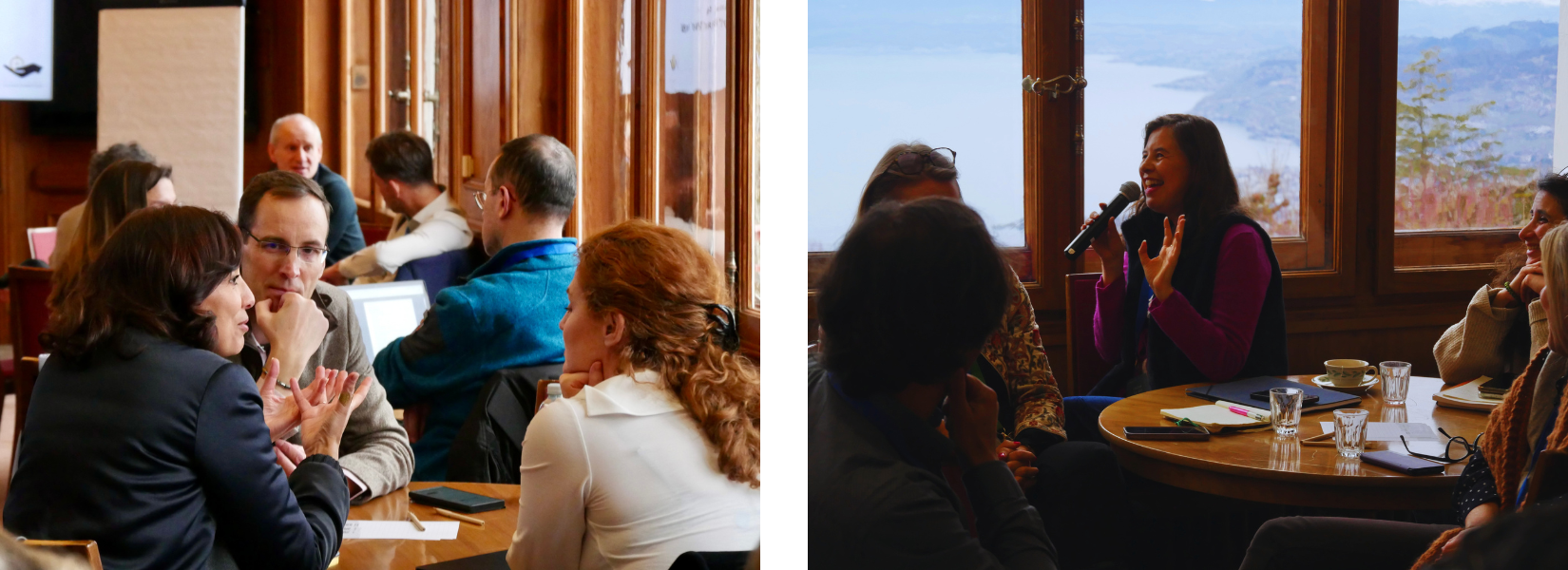
We are here at the Caux Palace, a historic place dedicated to dialogue. Why do we need spaces “away from everyday life” to engage in inner work and develop these individual capacities?
Eleftheria: First of all, Caux is a beautiful place. It is truly exceptional: we are surrounded by nature, with a breathtaking view of Lake Geneva below us. Being here gives us a different perspective. For leaders who spend every day in their offices and who are often caught up in reacting and managing problems rather than taking considered action, this provides an opportunity to step outside their daily routine.
Here, they can come together in a safe environment, which is very important for communicating more freely and learning from one another. They can take the time to turn inward, reflect, and explore different ways of addressing problems that are more closely aligned with human values.
I think places like Caux help us remember that we also have an inner voice and an inner life. After all, we cannot separate our professional selves from our personal selves. Our professional lives are, or at least should be, grounded in our personal values.
A lack of alignment between the two leads to difficulties we know all too well: a poor organisational culture, mental health problems, conflicts — all because people do not feel well in themselves.
Indeed, nearly two-thirds of SMEs in Switzerland are affected by mental health-related absences, resulting in additional costs, loss of productivity, and negative impacts on other staff members.[2]
When you are in a leadership position, you develop a certain persona within your organisation. But outside that role, you can allow yourself to be vulnerable. You have the right to say, “I don’t know,” or "I want to do the right thing, I just don’t know how.” When you find yourself surrounded by other people at the same level of hierarchy, you feel less alone and realise that others are facing similar challenges.
I think places like Caux help us remember that we also have an inner voice and an inner life. Indeed, we cannot separate our professional selves from our personal selves. Our professional lives are, or at least should be, grounded in our personal values.
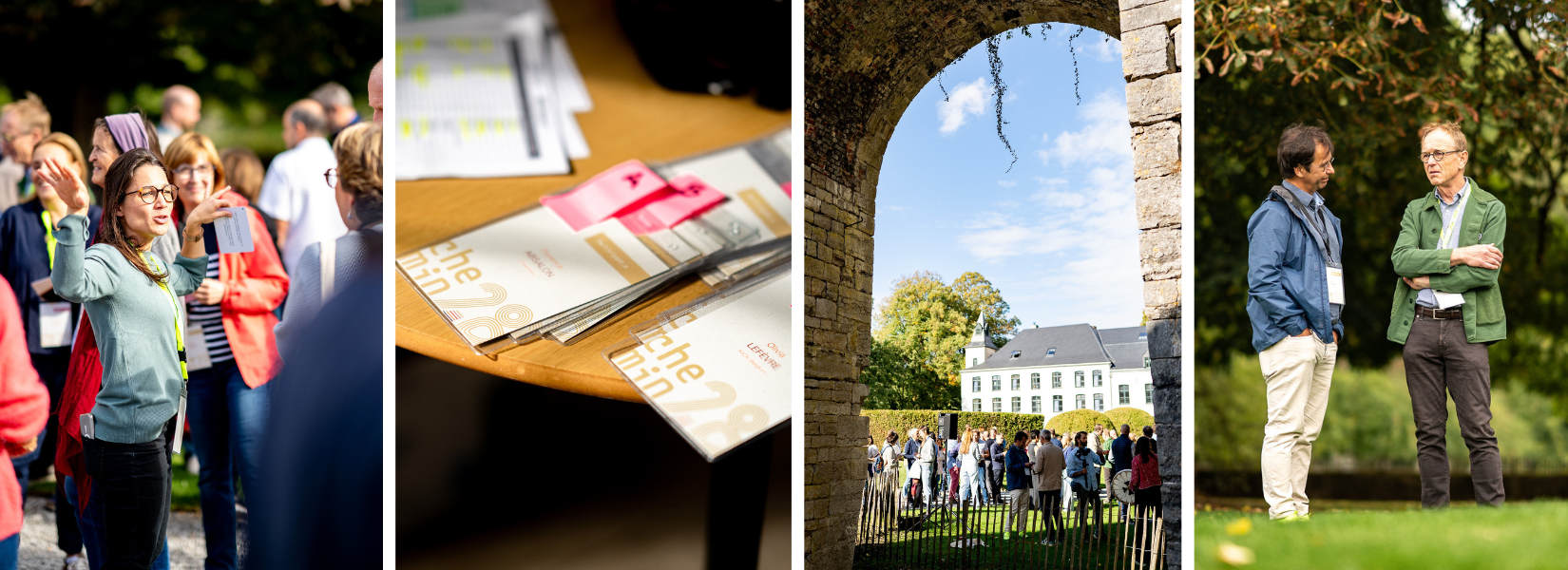
Many SME leaders say, “We don’t have time to reflect — we need to survive.” What would you say to them, and how can you show them that reconnecting with our humanity can actually become a competitive advantage?
Eleftheria: On the one hand, it is enough to look at the cost of recruiting and training someone new when an unhappy employee leaves.[2]
On the other hand, we know that an employee who is simply doing the bare minimum is insufficient to deliver truly excellent customer service. And in a saturated market, excellent customer service can be a competitive advantage for a small business. We can see how important this is with new technologies: customers are getting tired of chatbots, where they do not feel valued and where the service is not centred on their needs.
By contrast, an employee who feels good at work genuinely feels part of the company because their voice is heard, and their opinions and concerns are taken into consideration. They know that their superiors have their back, that we are working together to create a product or service that meets customers’ needs and enables all of us to make a living. This shared sense of humanity also creates resilience in difficult times.
SMEs are particularly well placed to foster this kind of culture, partly because they are rooted in their local communities, and their leaders are part of the same community as their employees.
This is very different from the situation in large, faceless corporations, where decisions are made at headquarters in another country and then cascaded down to us. It can also foster a sense of internal competition, because employees who do not instinctively put themselves forward, even when they do an excellent job, are not necessarily recognised by those in leadership.
Despite the tensions and complexity of the crises we are facing today, what gives you hope about leadership?
Eleftheria: What a crisis reveals is that things are not working well.
What gives me hope is seeing that many people are realising that perhaps we need to return to fundamental human values. More and more people are speaking up, reflecting, and coming together to take action at different levels of society.
I see this in academia as well, where there is a growing body of engaged, activist-oriented research.
Globalisation has not delivered what it promised. I think that simplicity, at the local level, is very important when it comes to finding solutions to the complexity of the world and discovering new ways of living and working together.
What gives me hope is seeing that many people are realising that perhaps we need to return to fundamental human values. There are many more voices speaking up, reflecting, and coming together to take action at different levels of society.
_____________________________________________________________________________________
[1] According to a 2022 study by the insurance company AXA, the direct and indirect costs of mental health conditions are estimated at around CHF 19 billion per year — more than 3% of Switzerland’s GDP.
Source: https://www.kmu.admin.ch/kmu/fr/home/actuel/news/2023/les-absences-dues-aux-maladies-psychiques-augmentent.html
[2] The most common repercussions include overtime and increased workloads for remaining staff (54%), costs associated with recruiting additional personnel (38%), lost production or disruptions to services (37%), and the costs of continuing to pay salaries (30%).
Source: https://www.shkudo.org/en/post/macroeconomic-costs-of-mental-illness-across-all-sectors
_______________________________________________________________________________
Does this perspective resonate with you? Join us in Geneva for an interactive workshop on democracy and youth employment in the age of AI, or find out more about our upcoming seminar in the unique setting of the Caux Palace, “Leading with Humanity in the Age of Artificial Intelligence”, a residential experience featuring an exceptional panel bringing together leading academic institutions, international and Swiss CEOs, technology journalists, and experts in inner transformation.
related stories
The Road to Geneva has already begun - and it must also be a human journey
What happens when artificial intelligence begins to shape decisions that affect our work, opportunities and democratic life? In his latest reflections, Ignacio Packer, Executive Director of the Caux F...
Leading fairly: where social justice begins
À l’occasion de la Journée internationale de la justice sociale, et dans le prolongement d’échanges récents à Caux avec des responsables d’entreprises, Ignacio Packer, directeur exécutif de la Fondati...
Getting down to business with human rights
On 25 October 2024, the Caux Round Table (CRT) - Japan hosted the 13th Business and Human Rights Conference in Tokyo with 225 corporate leaders, executives and experts from several Asian countries par...
Creating a network and strengthening resilience in business
Annika Hartmann de Meuron, Managing Director of Ethical Leadership in Business (ELB), looks back on four exciting years of developing ethical leadership in business in Switzerland. ELB aimed to increa...
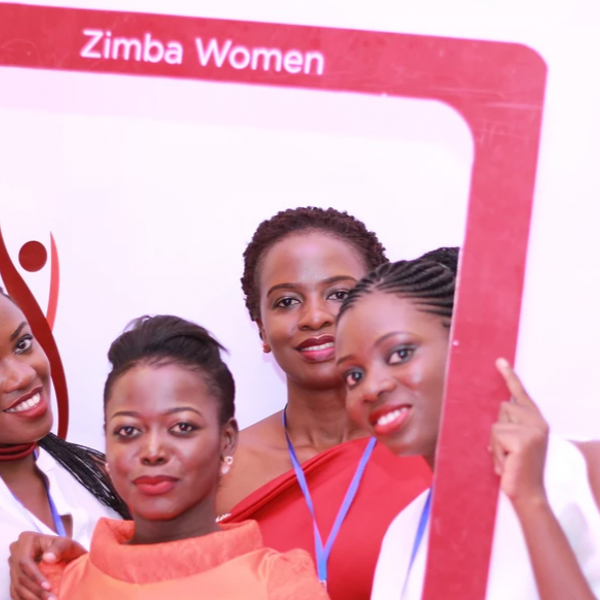
Empowering women to enter the market
The Co-founder of Zimba Women, Peace Kuteesa, is passionate about providing women with the tools and resources to participate in their economies and develop their communities. She spoke at last year's...

How to make video calls more human and successful
A year ago, video conferencing became the new normal in our work lives. It was the safest place for us to meet and collaborate. It seemed so easy: just invite someone to join the call and continue as...
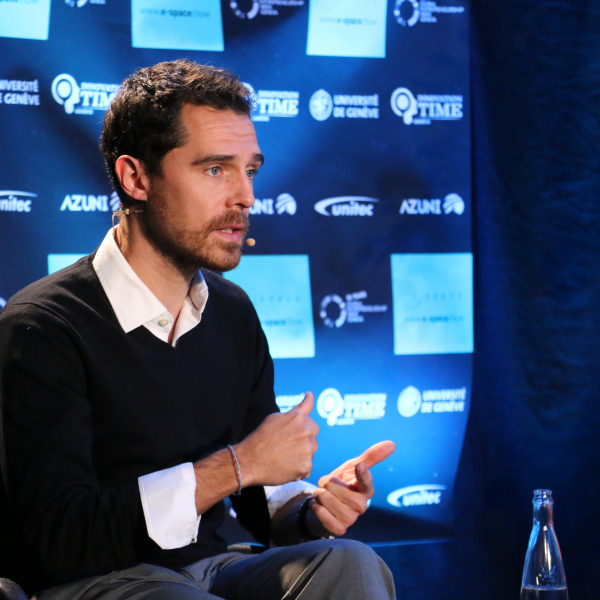
What does it take to be an entrepreneur?
Global Entrepreneurship Week in November 2020 included e-space, a three-day hybrid event, which offered a range of master classes and conferences. Rainer Gude, Co-Director General of Initiatives of Ch...
Tools for surviving a crisis
During Global Entrepreneurship Week in November 2020, Initiatives of Change Switzerland took part in e-space, a three-day hybrid event, which offered a range of master classes and conferences. Annika ...
Swiss Digital Days 2020 - Online Workshop: Update your digital soft skills
Initiatives of Change Switzerland held a one-hour online workshop on 3 November 2020 on the topic of soft digital skills....
Ethical Leadership in Business – Leadership for a resilient economy
The Ethical Leadership in Business conference, on 25 and 26 June 2020, kicked off the first Caux Forum Online. It offered a diversified experience with panels livestreamed from the Caux Palace, networ...
My Learning Story: Nazrene Mannie
Nazrene Mannie is the Executive Director of the Global Apprenticeship Network (GAN) and talks about her learning experiences. Our interview series 'My Learning Story’ hopes to become a global learning...
My Learning Story: Danièle Castle
Our interview series ‘My Learning Story’ hopes to become a global learning experience, connecting people around the world as they share their stories of what we all do every day: learning to build a b...
My Learning Story: Christine Beerli
Discover our interview with Christine Beerli, President of the IofC Switzerland foundation, as part of our series ‘My Learning Story’....
My Learning Story: Bram Jonker
‘My Learning Story’ hopes to become a global learning experience, connecting people around the world as they share their stories of what we all do every day: learning to build a brighter future. Disco...