Leading fairly: where social justice begins
A blog by Ignacio Packer, Executive Director of Caux Initiatives of Change
19/02/2026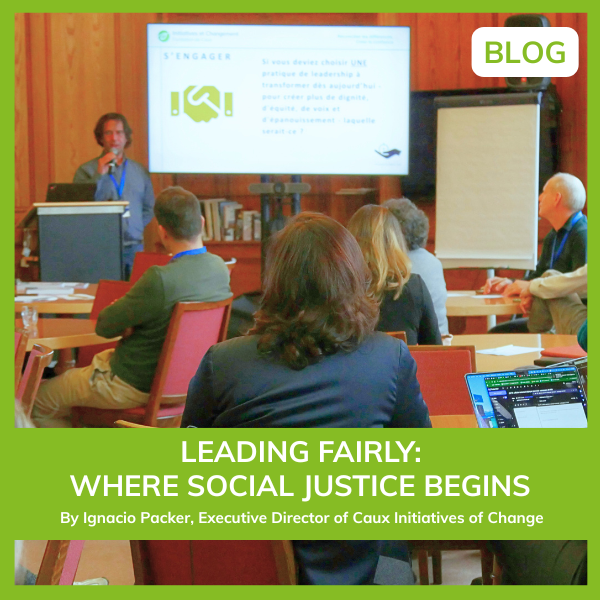
Leading today means navigating a world of uncertainty, rapid change and growing human expectations. Between economic performance and social responsibility, many leaders feel a new tension, often silent but very real. On the occasion of the International Day of Social Justice, and following on from recent discussions in Caux with business leaders, Ignacio Packer, Executive Director of the Caux Foundation, offers his thoughts on what it means to lead with justice in our time. An invitation to take a step back and reflect on the role of leadership in a changing world.
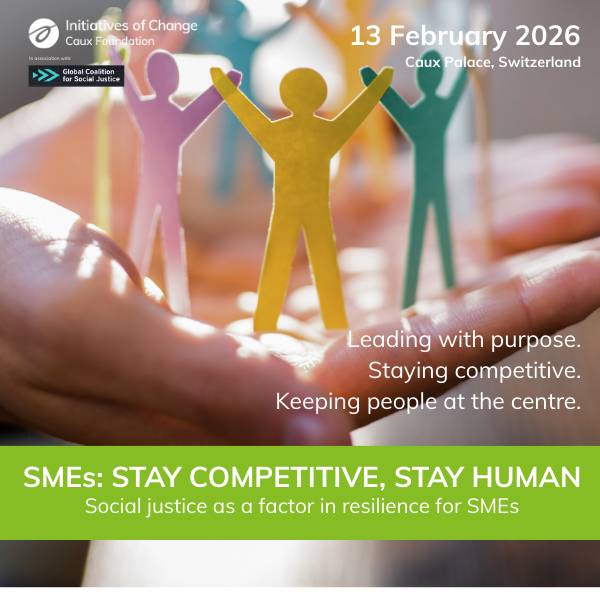
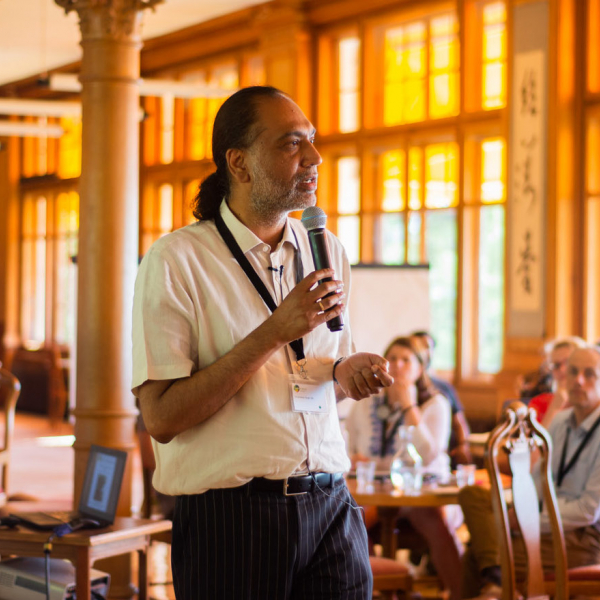
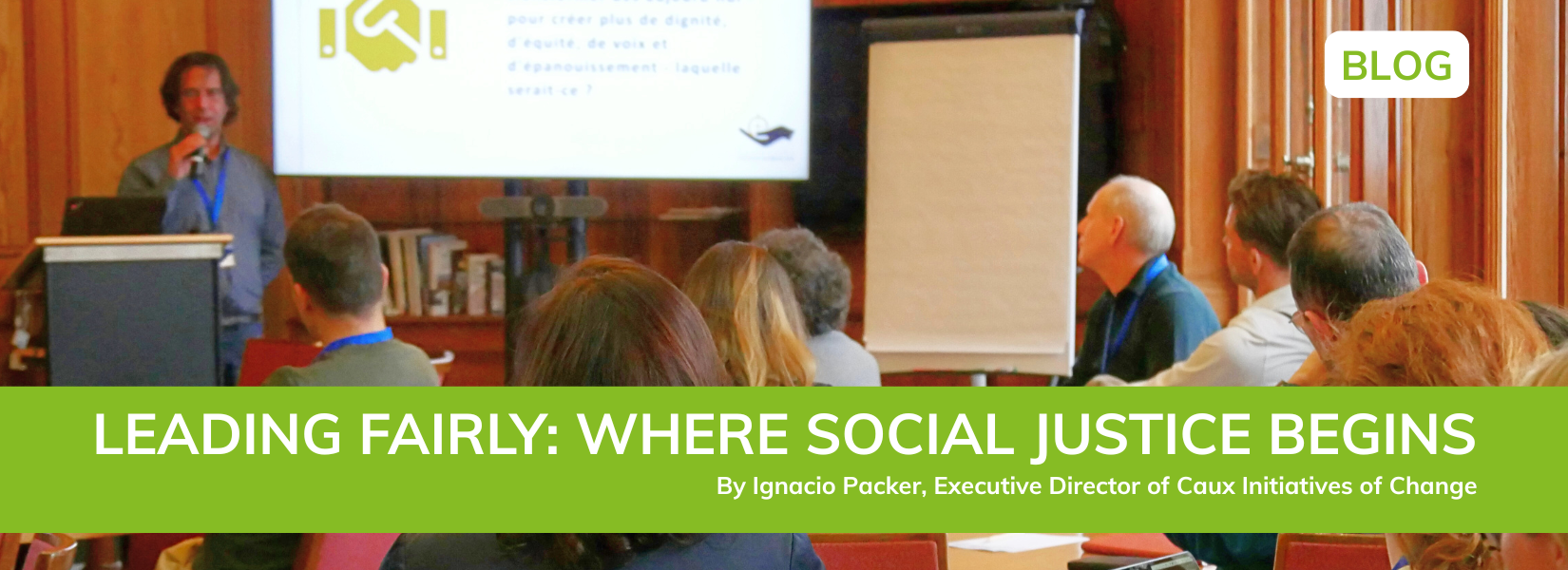
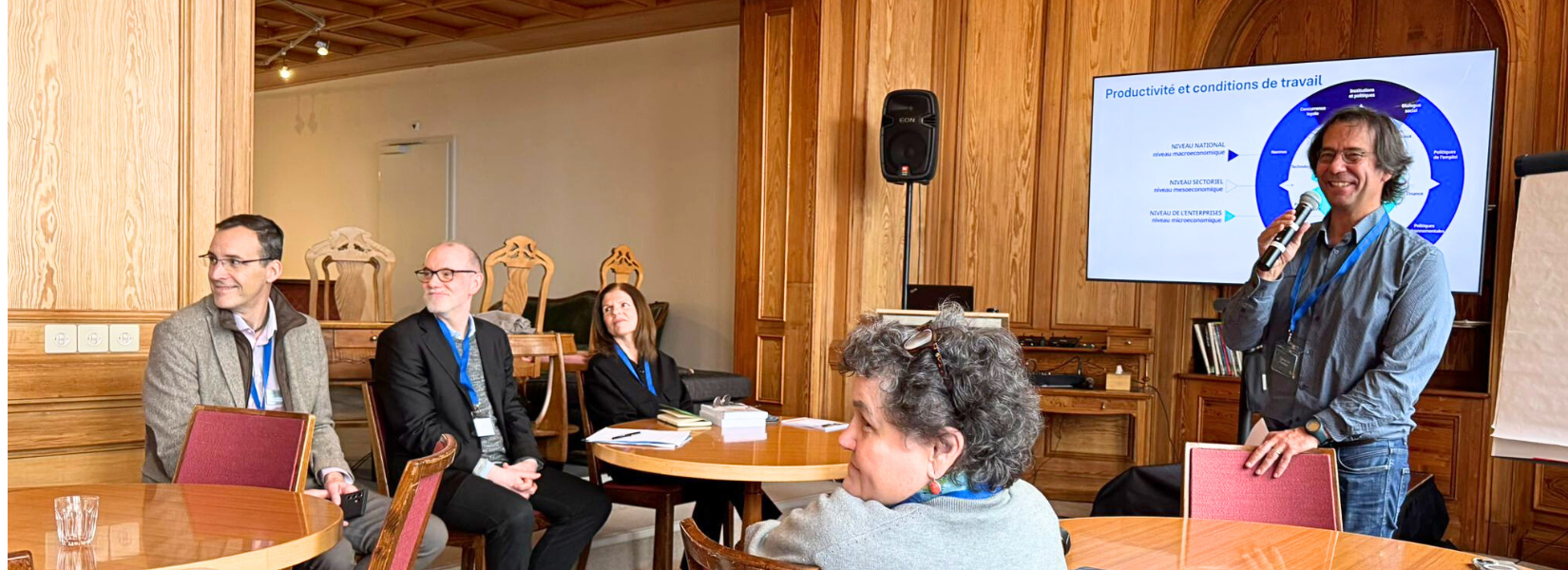
On 13 February, at the Caux Palace, we spoke with business leaders about a paradox that has become almost commonplace: their companies are still holding on... but their teams are getting tired.
No one mentioned AI at first.
We talked about difficult management meetings. About competent employees who are not leaving but who no longer make suggestions. About economically sound decisions that leave a vague sense of unease.
And at one point, one executive summed up what many were thinking: "I have to transform my company, but I don't want to be the one who hurts people."
For me, this sentence is at the heart of World Social Justice Day, which we celebrate on 20 February. Today, social justice is no longer just about laws or redistribution. It is about the daily decisions made by thousands of executives. It is about very concrete choices: reorganising, automating, cutting jobs, asking for extra effort... or waiting.
Today, social justice is the daily and very concrete decisions made by executives.
A new silent responsibility
Today, many leaders are experiencing the same tension. On the one hand: costs, skills shortages, market instability, and AI. On the other: human fatigue, loss of meaning, and fragile commitment. Swiss insurance companies confirm that exhaustion has become a major cause of long-term absenteeism.
But managers do not have the luxury of waiting. And that is where something is changing profoundly.
Businesses are no longer just facing an economic crisis; they are at the crossroads of technological, social, ecological and human transformations. In this context, leadership is no longer just about optimising an organisation. It's about staying the course in uncertain times without losing people along the way.
AI is changing less the work... than the role of leaders
There is a lot of talk about what AI will replace. But the real question is: who will bear the human responsibility for decisions optimised by machines? AI will analyse better. It will often decide faster and more economically. But one question will remain human:
Is this decision fair to the people concerned?
The role of leaders is shifting from performance manager to architect of human trajectories.
Leadership is no longer just about optimising an organisation. It is about staying the course in uncertainty without losing people along the way.
Ignacio Packer
What we learned in Caux
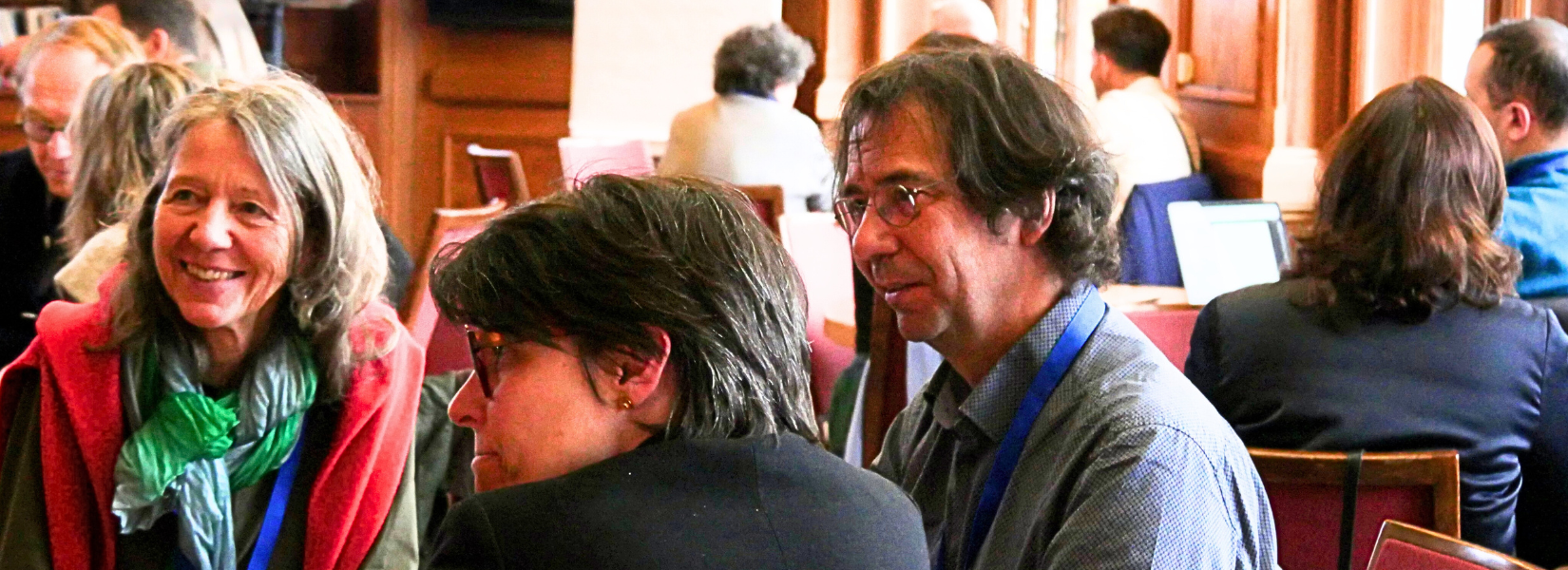
After several discussions with leaders, one thing became clear: the problem is not primarily technical. It is internal.
Many know what to do, but are unsure how to do it without breaking trust. What is missing is not a tool. It is a space to think clearly. A space where we can step out of emergency mode and become fully responsible again.
An experience, not a training course
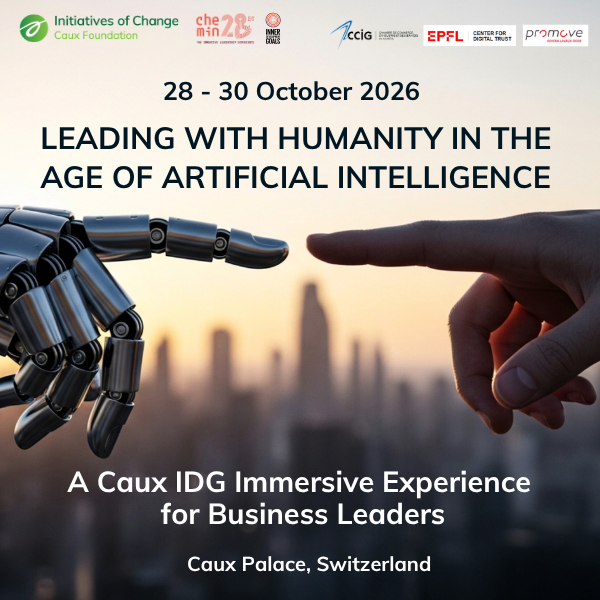
That is why we have designed an immersion programme with Chemin 28 in Caux, from 28 to 30 October 2026, to explore the question of how to lead with humanity in the age of artificial intelligence.
This choice is part of a long tradition: since 1946, the Caux Palace has been an international venue for dialogue and reflection on ethics, responsibility, and the role of decision-makers. From the Principles for Business, launched in 1994 by the Caux Round Table, to the current programmes on ethical leadership and people-centred economics, this approach has for decades supported those who see people as the key to sustainable performance.
It is not about learning AI, but about learning how to make decisions when everything is changing. A time to rediscover our inner compass, understand what needs to change and what needs to be protected, articulate performance and dignity, and transform without betraying our values.
Leaders will not come here looking for recipes. They will come here to rediscover their stance. Because, ultimately, sustainable competitiveness today depends on a rare quality: the ability to transform an organisation without creating injustice.
Social justice in practice
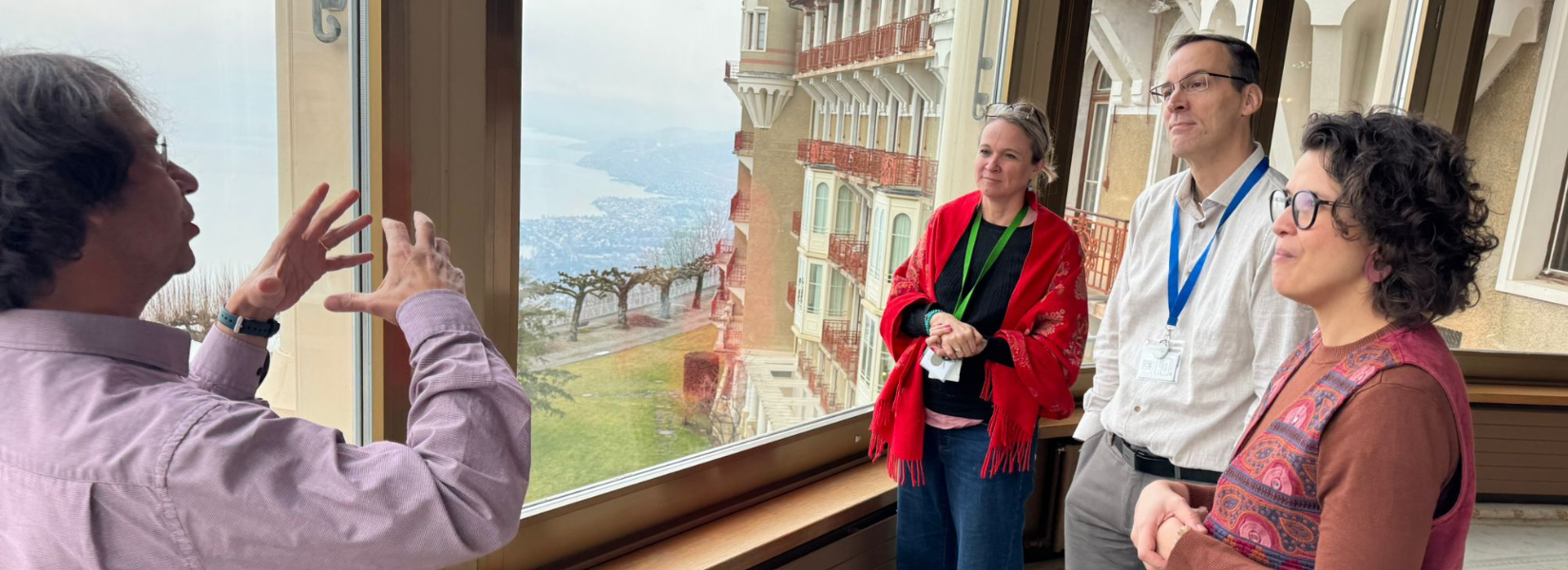
Social justice is no longer an abstract concept. It comes into play when a leader announces change without humiliating, automates without abandoning, reduces without destroying, explains without manipulating.
In a world marked by multiple crises and AI, the company should be a place of social stability. And every managerial decision becomes a societal decision.
At Caux, we seek to enable leaders to experience:
- the security of a space of trust,
- the clarity of deep reflection,
- the hope that comes from having a clear direction
- and the ability to take concrete action.
Then something can change.
It's not about being kinder, but about being fairer. Because it is this inner requirement that makes it possible to transform the company without sacrificing either its performance or its people.
A conviction
We are entering an era in which machines will optimise decisions. But social cohesion will depend on those who give them meaning. Leading tomorrow will not primarily be a technical skill; it will be a human responsibility.
And perhaps, ultimately, a deeply social responsibility.
Our event ‘Leading with humanity in the age of artificial intelligence’ interest you? Immerse yourself in the magnificent natural setting of the Caux Palace and explore with us how to accompany technological transitions in a fully conscious, democratic and respectful manner.
It is not about being kinder, but about being fairer. Because it is this inner requirement that enables us to transform the company without sacrificing either its performance or its people.
Ignacio Packer
____________________________________________________________________________________________________________
Ignacio Packer is Executive Director of the Caux Initiatives of Change Foundation, a Swiss charitable foundation committed to promoting trust, ethical leadership, sustainable living and human security. With over 30 years of experience in humanitarian and development work, he worked at the European Bank for Latin America and then at KPMG, before becoming a recognised leader of NGOs and international alliances for over 25 years. An expert in human rights and social issues, he has been particularly involved in defending protection frameworks for migrants and refugees, especially children and young people.
Photos: Olivia Chollet & Christophe Koninckx
related stories
The Road to Geneva has already begun - and it must also be a human journey
What happens when artificial intelligence begins to shape decisions that affect our work, opportunities and democratic life? In his latest reflections, Ignacio Packer, Executive Director of the Caux F...
Technology and Humanity: Finding a New Balance
Dr. Eleftheria Egel, an entrepreneur and researcher in sustainable leadership, consultant, and active member of several foundation boards, has built a career at the intersection of entrepreneurship, l...
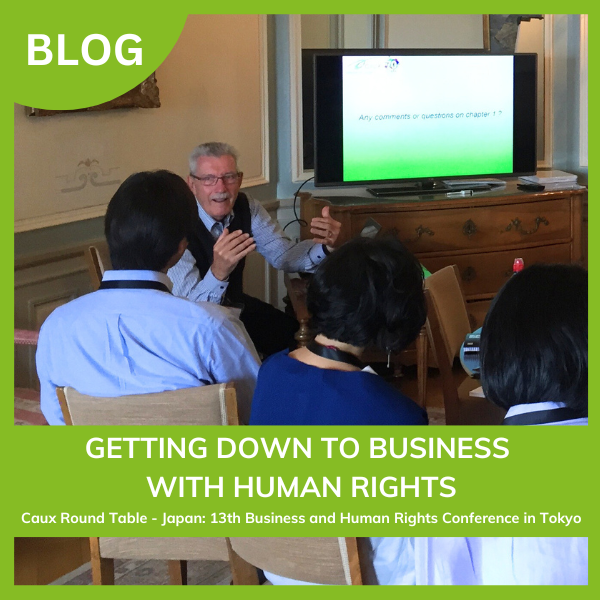
Getting down to business with human rights
On 25 October 2024, the Caux Round Table (CRT) - Japan hosted the 13th Business and Human Rights Conference in Tokyo with 225 corporate leaders, executives and experts from several Asian countries par...
Creating a network and strengthening resilience in business
Annika Hartmann de Meuron, Managing Director of Ethical Leadership in Business (ELB), looks back on four exciting years of developing ethical leadership in business in Switzerland. ELB aimed to increa...

Empowering women to enter the market
The Co-founder of Zimba Women, Peace Kuteesa, is passionate about providing women with the tools and resources to participate in their economies and develop their communities. She spoke at last year's...

How to make video calls more human and successful
A year ago, video conferencing became the new normal in our work lives. It was the safest place for us to meet and collaborate. It seemed so easy: just invite someone to join the call and continue as...
What does it take to be an entrepreneur?
Global Entrepreneurship Week in November 2020 included e-space, a three-day hybrid event, which offered a range of master classes and conferences. Rainer Gude, Co-Director General of Initiatives of Ch...
Tools for surviving a crisis
During Global Entrepreneurship Week in November 2020, Initiatives of Change Switzerland took part in e-space, a three-day hybrid event, which offered a range of master classes and conferences. Annika ...
Swiss Digital Days 2020 - Online Workshop: Update your digital soft skills
Initiatives of Change Switzerland held a one-hour online workshop on 3 November 2020 on the topic of soft digital skills....
Ethical Leadership in Business – Leadership for a resilient economy
The Ethical Leadership in Business conference, on 25 and 26 June 2020, kicked off the first Caux Forum Online. It offered a diversified experience with panels livestreamed from the Caux Palace, networ...
My Learning Story: Nazrene Mannie
Nazrene Mannie is the Executive Director of the Global Apprenticeship Network (GAN) and talks about her learning experiences. Our interview series 'My Learning Story’ hopes to become a global learning...
My Learning Story: Danièle Castle
Our interview series ‘My Learning Story’ hopes to become a global learning experience, connecting people around the world as they share their stories of what we all do every day: learning to build a b...
My Learning Story: Christine Beerli
Discover our interview with Christine Beerli, President of the IofC Switzerland foundation, as part of our series ‘My Learning Story’....
My Learning Story: Jowan Oesterlund
Discover our interview with Jowan Oesterlund, Founder & CEO at Biohax International, as part of our series ‘My Learning Story’....