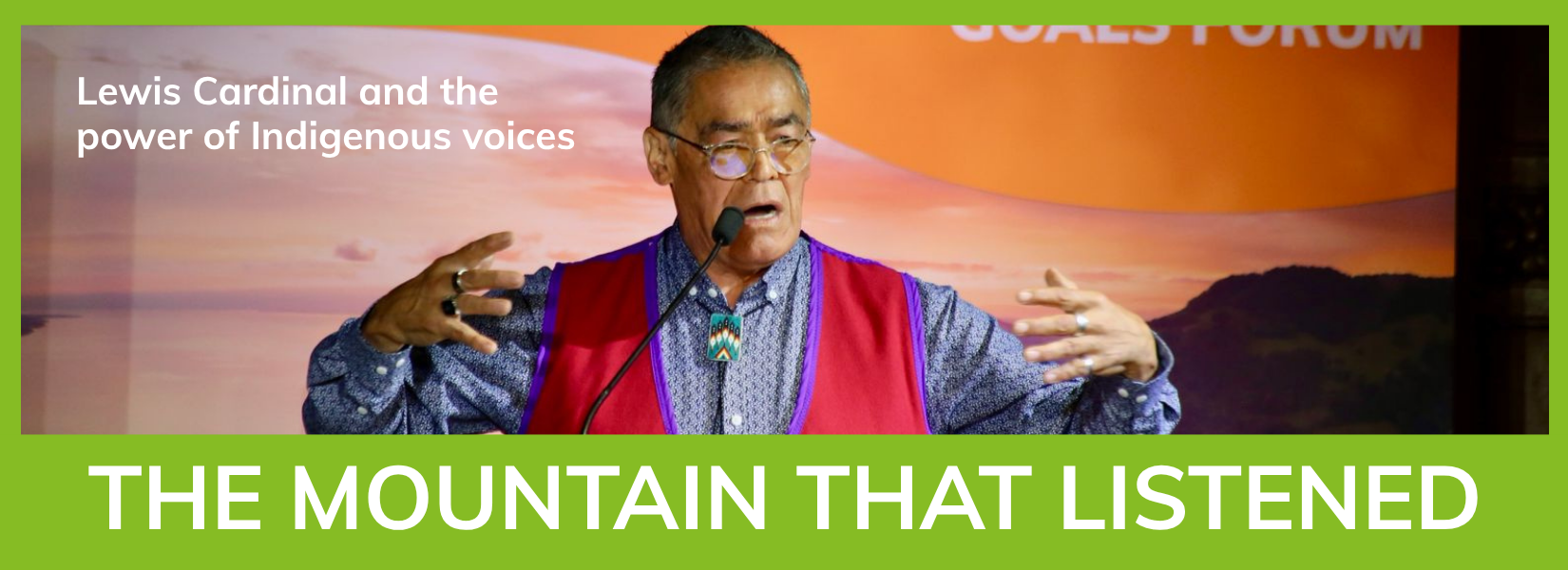
Lewis Cardinal: The Mountain That Listened
The Power of Indigenous Voices
02/06/2026
Sometimes the moments that shape our lives arrive unexpectedly. For Lewis Cardinal (Canada), one such moment began with a midnight drive up a mountain and grew into a lifelong journey of listening, belonging, and human connection - and a deeper understanding of the wisdom we carry and the quiet ways change begins.
When Lewis Cardinal arrived at Caux Palace for the first time in 2004, the mountain did not welcome him gently.
It was past one in the morning when their car began its slow climb above Montreux. Rain hammered the windshield so hard the wipers could barely keep time. Lightning cracked across the sky, throwing the dark alpine trees into sharp white relief for a heartbeat before they vanished again.
Beside him, his wife tried to laugh through her fear of the steep drops at the edge of the road. In the back seat, his daughter pressed her face to the window. When they finally pulled up to the Caux Palace, Lewis remembered thinking: "It looks like Frankenstein's castle."
Then the front door opened, and he was welcomed into the warmth.
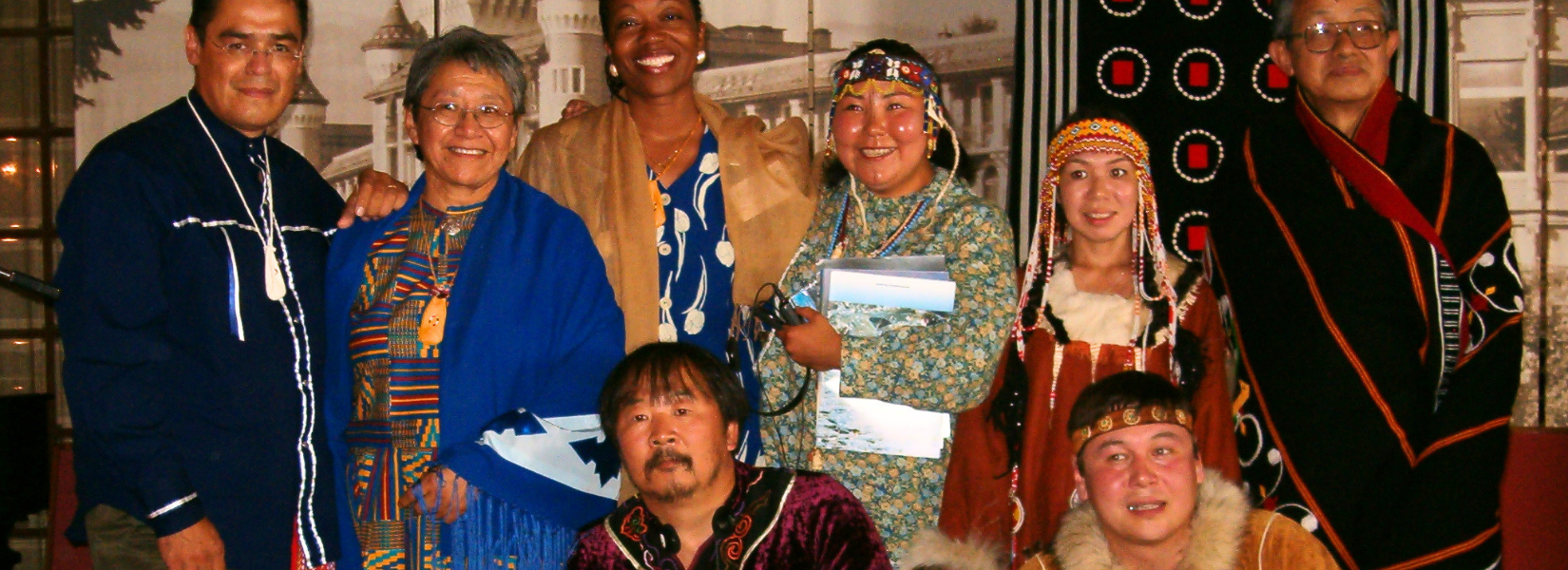
Years later, Lewis would still remember that moment - not the storm, not the surreal feeling of finding a palace on a mountainside in the middle of the night. What stayed with him was simpler: kindness. After a lifetime of knowing what it felt like to stand outside the circle looking in, kindness still had the power to catch him off guard.
Lewis comes from the Woodland Cree people of northern Alberta, Canada. His grandfather taught him that success meant little unless you turned back and helped someone else rise with you. His grandmother taught him that even a garden was meant to nourish more than the one who planted it. Those teachings stayed with him when he sat with heads of state, when he shared meals with royalty, when he spent time with the Dalai Lama and realized that even a spiritual giant could still be wonderfully human.
And they stayed with him that first time at in Caux.
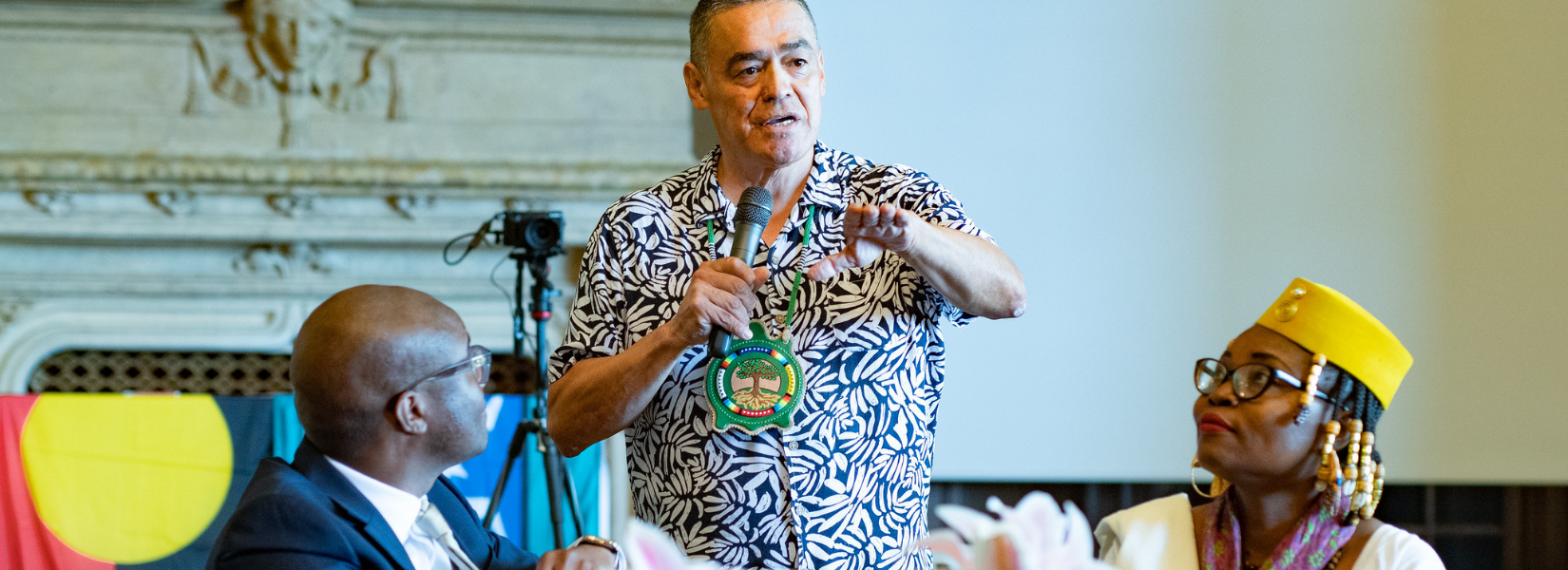
As Lewis stepped inside, he felt something unexpectedly familiar beneath the polished floors and European history. Sacred places, he knew, are not made by stone. They are made by the spirit people bring into them.
Caux, he sensed, was a place where people came to listen - not the polite kind of listening that waits for its own turn to speak, but something deeper. The kind Indigenous peoples have practiced for generations: listening for the quiet voice beneath the noise.
Whenever Lewis came to Caux after his first visit, he sat with elders and leaders from every corner of the world. Their songs were different, their ceremonies were different, their histories had taken different paths. Yet beneath those differences, the foundations were the same: respect for the earth as something living, the belief that human beings exist in relationship rather than isolation, and the knowledge that healing begins when people are willing to listen - not only to each other, but to the stillness within themselves.
That was what changed him. He began to understand that his role was not simply to speak on behalf of Indigenous people, but to help create spaces where people could truly meet one another.
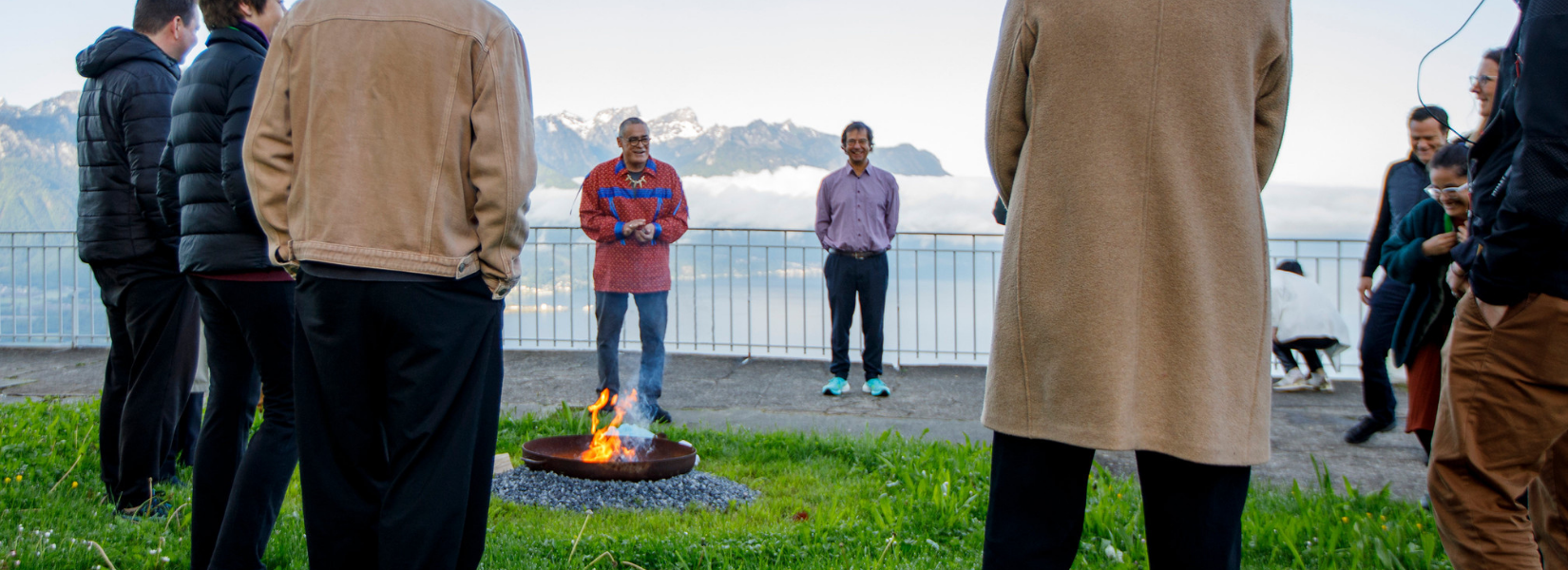
At the Caux Forum 2023, Lewis introduced morning ceremonies rooted in Indigenous knowledge and wisdom. Moments of reflection that had always been part of Caux’s tradition, but now they went hand in hand with sacred songs and quiet gatherings around a fire.
Since then, these ceremonies have become a regular part of the summer conferences as a reminder that we are all one humanity. In the summer of 2025, Lewis brought an original Cree tipi to Caux, where it quickly became one of the highlights of the summer in the gardens of the Caux Palace*.
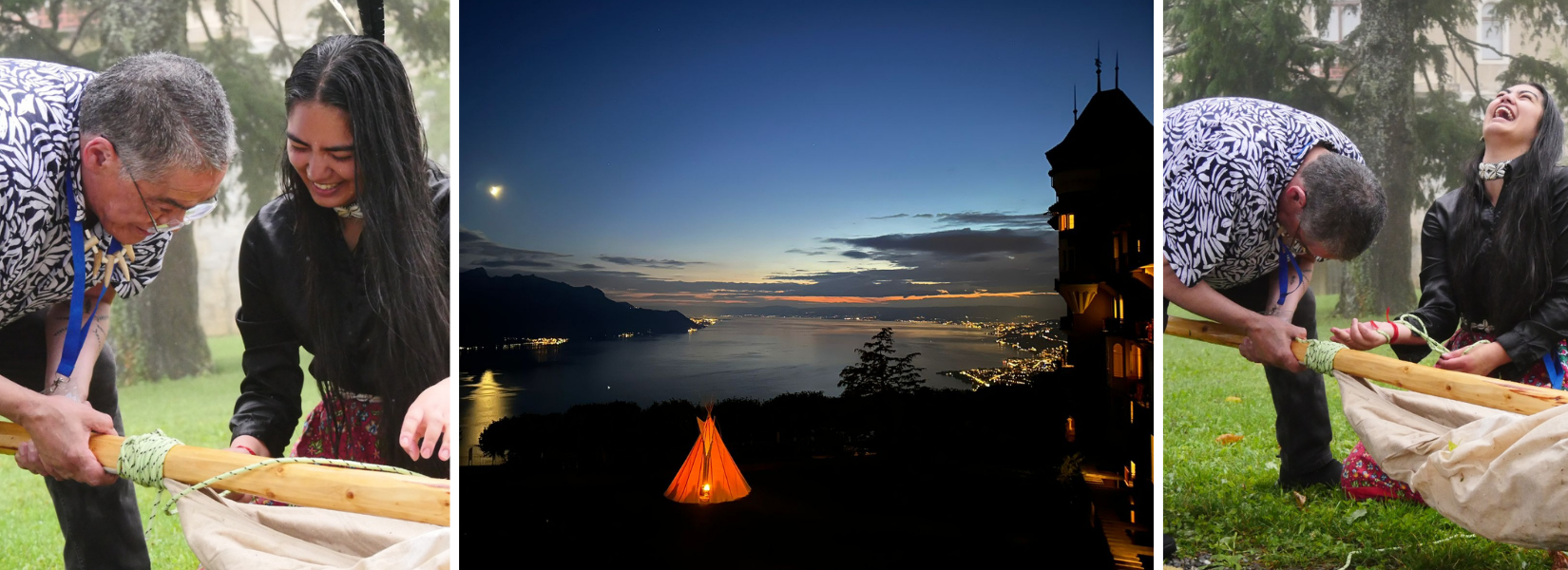
For Lewis, it matters that people understand the importance of balance, of being in relationship with what surrounds us and what we are connected to. And the realization that each of us has a role to play.
"Sometimes the quietest voice holds a piece of the puzzle that will solve your problem," he says. "We won't know that if only the loud people get heard."
Because it's in being quiet and listening that real change begins.
Sometimes the quietest voice holds a piece of the puzzle that will solve your problem. We won't know that if only the loud people get heard.
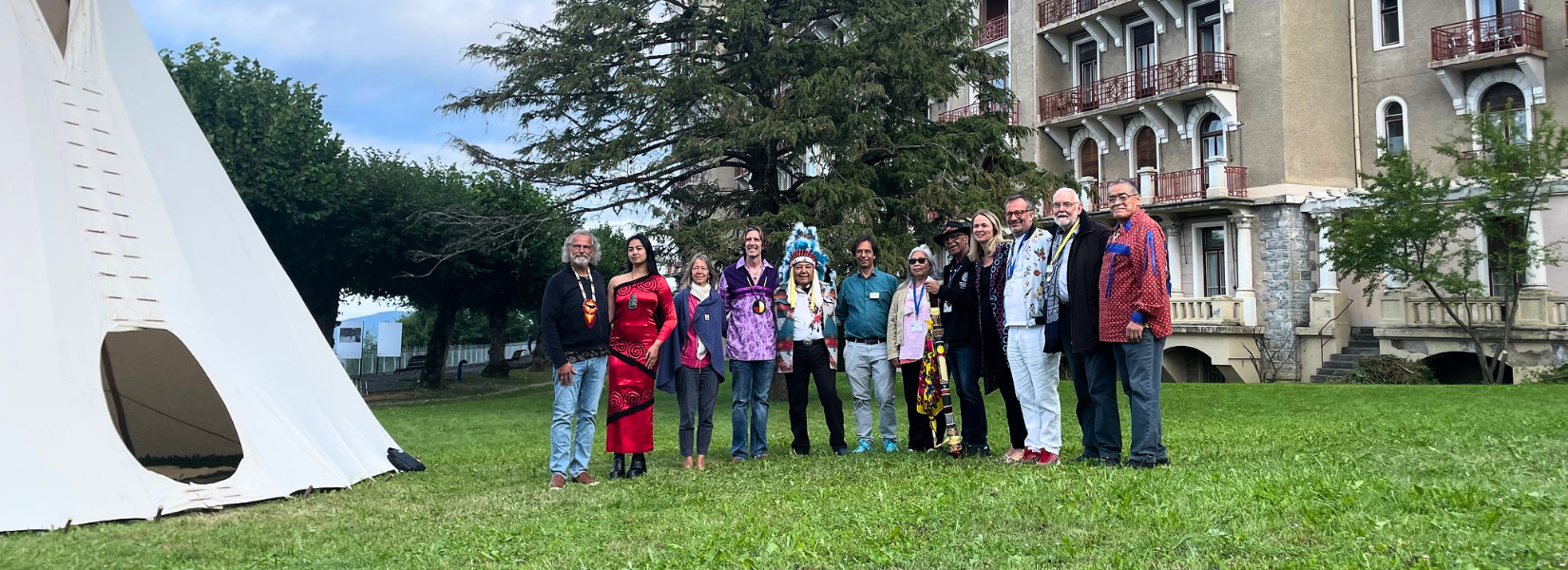
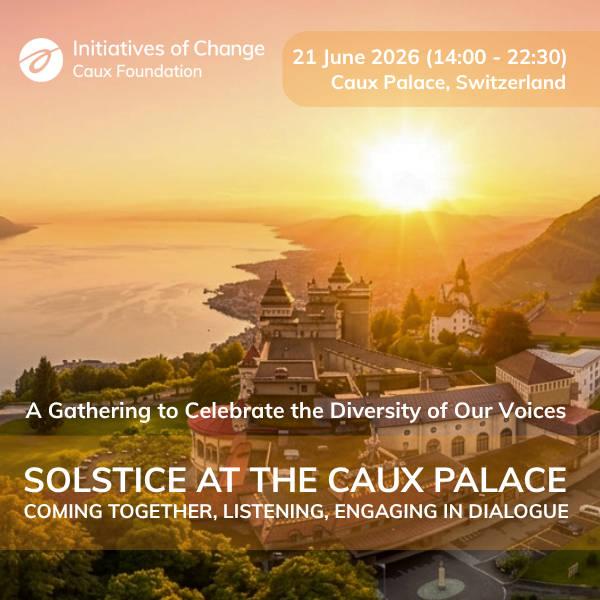
(* The tipi will also be part of the Caux summer 2026. You can join us on 21 June for solstice celebrations at the Caux Palace and take part in raising it for the summer.)
__________________________________________________________________________
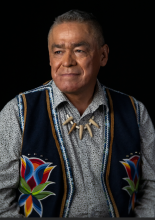
Lewis Cardinal is a communicator, educator and storyholder from the Sucker Creek Cree First Nation in Treaty No. 8 in northern Alberta, Canada. For over three decades, his leadership has spanned local, national, and global advocacy roles, particularly in promoting Indigenous rights, cultural revitalization, urban Indigenous advocacy and capacity development, and interfaith relationship building. His contributions have been recognized with honours such as two Queen Elizabeth II medals (Diamond and Platinum Jubilee), the Indspire Award for Public Service (a recognition by Indigenous Peoples of Canada), the Province of Alberta‘s Centennial Medal for Human Rights and Diversity, and an honourary Doctorate of Sacred Letters from St. Stephen’s College at the University of Alberta for his work in bridging cultural and faith divides. And last October, Lewis was installed as the 11th Chancellor of St. Stephen’s College at the University of Alberta at Edmonton, Canada.
These experiences inform every facet of his consulting and media production work, where he specializes in Indigenous education, Indigenous governance, and strategic communications, and project development. Above all, he remains guided by a lifelong commitment to nurturing sacred relationships among diverse communities and worldviews.
Lewis is the leader of the Global Indigenous Dialogue and Board Co-Chair of Initiatives of Change Canada.

Based on an interview by Olivia Chollet
related stories
Taking a brick to Kyiv
Sveinung Nygaard is a composer, musician and artistic facilitator who helped shape the creative vision of the Caux Democracy Forum 2026 as part of its arts team. Working to integrate the arts as an in...
Caux IDG Forum 2026: Call for Contributors for Workshops and Candlelight Conversations
Would you like to share your inspiration, ideas, and skills with other participants at the Caux IDG Forum this summer on the theme “The Alchemy of Forgiveness”? We look forward to receiving your appli...
The Long Road Back to Trust: Lessons from Davos
After participating in the World Economic Forum Annual Meeting in Davos on 22 January 2026, Ignacio Packer, Executive Director of the Caux Initiatives of Change Foundation, reflects on the question th...
Caux Democracy Forum 2025: The full report is now available
Discover the full report of the Caux Democracy Forum 2025 which brought together more than 350 participants from over 45 countries at the Caux Palace to reflect and act on the theme “Revitalizing Demo...
Caux Inner Development Goals Forum 2025: Call for Workshops
Call for workshops! You would like to give share your inspiration, ideas and skills with other participants at the Caux IDG Forum this summer? We look forward to your application! Applications will be...
Democracy: a matter of choice and voice
"In a democracy, each of us carries the responsibility to engage, listen and to contribute. It is more than a political system. It is about choice and voice. How does this resonate with you?" With the...
Europe: A Mindset of Diversity
Spanish journalist Victoria Martín de la Torre is passionate about Europe, diversity and interfaith relations. Here she reflects on different aspects of Europe, based on her PhD research which led her...
What is the meaning of home?
Amid escalating conflicts worldwide, the arts emerge as a potent force to challenge misconceptions and foster positive perspectives. The pivotal role of artists in creatively raising awareness has nev...

Walking the Talk in Business
On 25 - 28 January, some 60 CEOs and other senior staff came together under Chatham House Rules to share personal experiences on how to balance a sustainable business with integrity and trust. Executi...

Caux Forum 2024: Save the Date!
Save the date for the Caux Forum 2024! This summer Caux Initiatives of Change, in partnership with Initiatives of Change International and supported by other civil society networks, UN agencies, phila...
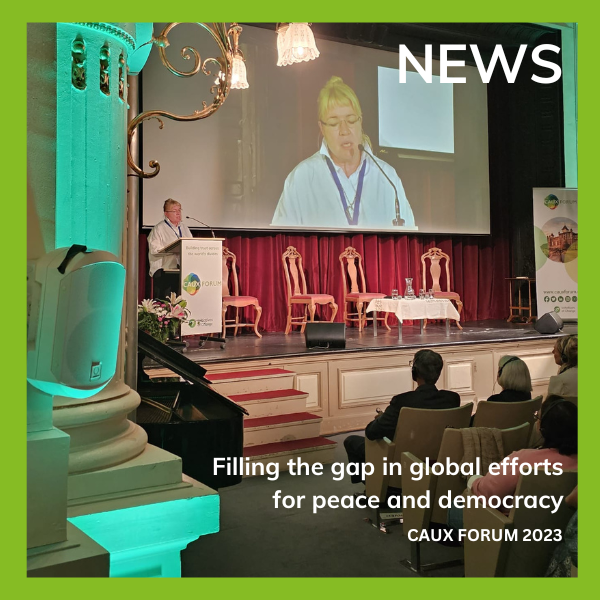
Filling the gap in global efforts for peace and democracy
The Caux Forum 2023 Opening Ceremony set the tone for the conference with the theme, ‘Strengthening Democracy: The Journey from Trauma to Trust.’. Discover the report and relive the highlights of this...
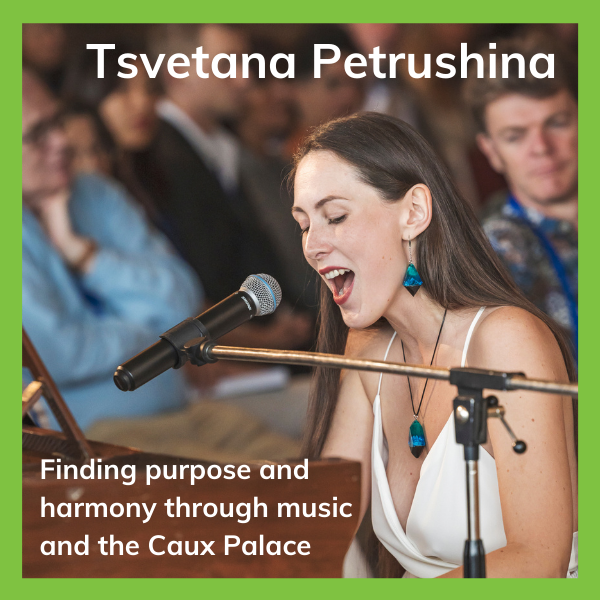
Finding purpose and harmony through music and the Caux Palace
In a world filled with diverse cultures and languages, the journey of musician Tsvetana Petrushina is an inspiring tale of how she discovered her purpose. Her remarkable story led her to the Caux Pala...
Caux Forum 2023: Save the Date
We are excited to announce the Caux Forum will be back in Caux next summer! Find out more and save the date! ...
Arpan Yagnik: Mountains to climb
Arpan Yagnik, a participant of last year's Creative Leadership conference and team member of the IofC Hub 2021, talks to Mary Lean about creativity, fear and vocation. ...