Governance of Land in the Sahel
Catalysing human security and building climate resilience through land restoration
01/02/2021
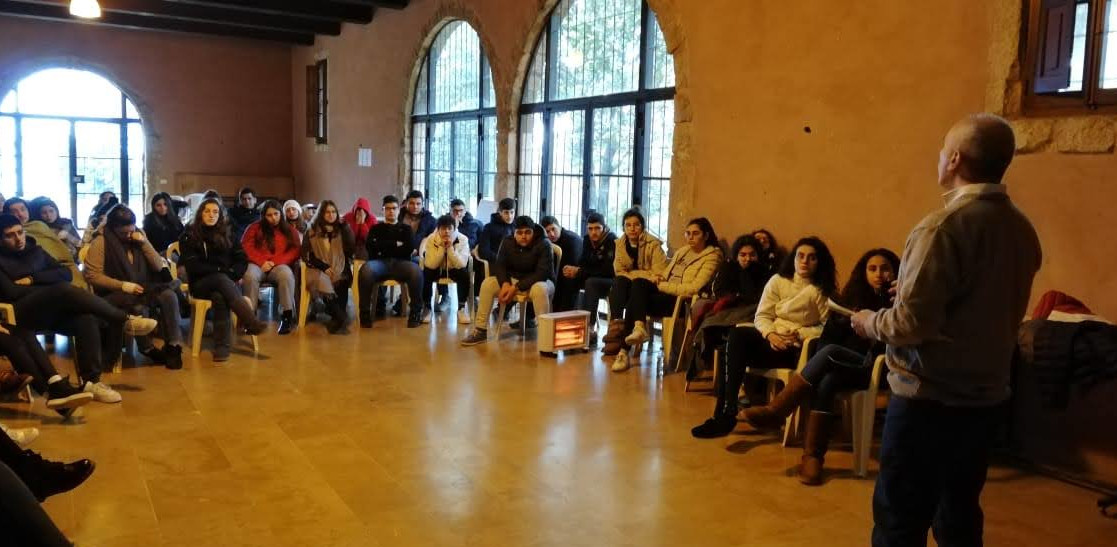
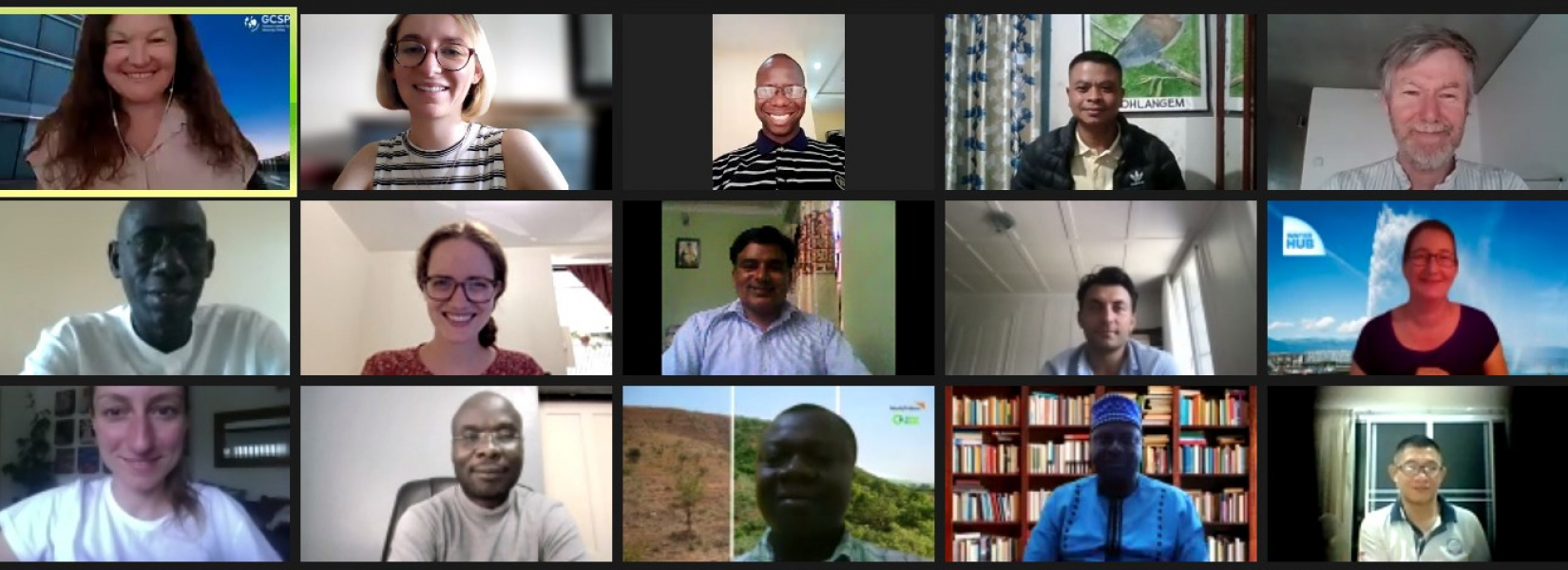
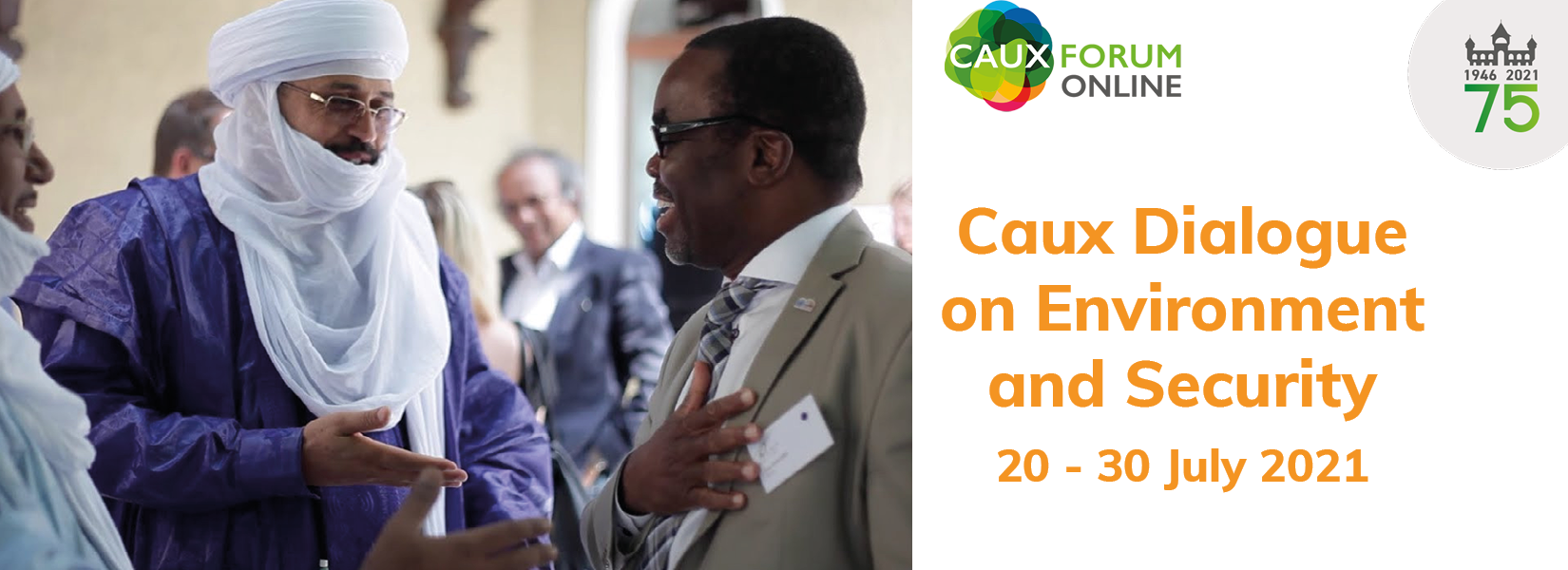
Held on 2nd December 2020, this live webinar followed that of the 10th July 2020 on “Land and Security in Sub-Saharan Africa”, organised for the Caux Forum 2020. The webinar was organised by Initiatives of Change Switzerland and the Swiss Federal Department of Foreign Affairs (Human Security division), in partnership with the Geneva Centre for Security Policy (GCSP), Initiatives for Land, Lives, and Peace, the Environmental Peacebuilding Association and the Global EverGreening Alliance.
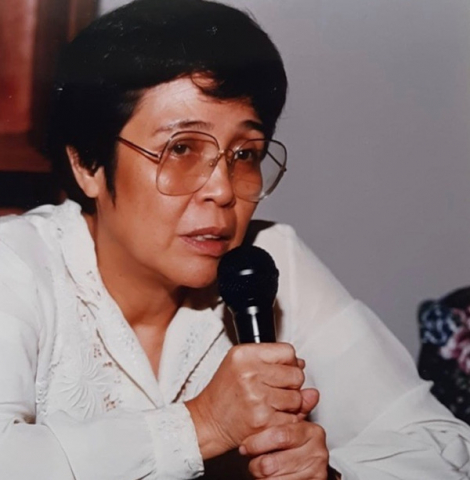
The event was chaired by Mr Luc Gnacadja, Founder and President of GPS-Dev (Governance & Policies for Sustainable Development), former Executive Secretary of the UN Convention to Combat Desertification (2007-2013) and former Minister of Environment in Benin (2004-2007). It brought together personalities who are active at the heart of safeguarding land and peace in the Sahel region:
- Her Excellence Mme Bouaré Bintou Founé Samaké, Minister for the Promotion of Women, Children and Family in Mali
- Colonel Major Ousmane Traoré, former Governor of the Eastern Region of Burkina Faso
- Mr Oumar Sylla (Senegal), Acting Head of UN-Habitat in Africa), Nairobi
- Ms Salima Mahamoudou (Niger), Research Associate, Land Accelerator Programme, World Resources Institute, Washington DC
- Dr Abasse Tougiani, Senior researcher, National Institute for Agronomical Research of Niger (INRAN), Niger
The purpose of the webinar was to explore the multi-dimensional links which unite good land management and the security of Sahelian populations, and to discuss the urgent need to confer to women and young people, often the driving forces of agricultural regions, the ability to manage land, thereby reducing the risks that that they are pulled into extremist groups. The webinar brought to the fore the key subject of governance, as nothing is possible without political will and policies stimulating and framing environmental action for security and peace.
In his introduction, Mr Luc Gnacadja emphasised the extent of the fragility of agricultural and pastoral systems in the Sahel, which are threatened by the interconnected challenges of land degradation, insecurity, poor governance and climate change. According to Mr Luc Gnacadja, it is difficult to create a virtuous cycle of change as long as the multisectoral question of land governance has not been addressed. He emphasised a note of hope, however: at the end of two terrible decades of drought in the 1970s and 1980s, restoration movements for degraded land were developed, particularly in Niger, Burkina Faso and Mali, through the process of Farmer Managed Natural Regeneration (FMNR). The techniques of this are now well-documented – and Luc Gnacadja recommended that we turn our attention in this direction, amongst other local solutions, today.
According to Colonel Major Ousmane Traoré, widespread poor and degraded soils coupled with expanding rural-urban migration and the palpable effects of climate change severely limit the supply of land resources for agropastoral resources, and mean that many people in Burkina Faso are landless, despite 86% of the active population living off these resources. The coexistence of traditional and modern land tenure systems and socio-cultural burdens limits women and young people’s access to land. People frequently lose control of their resources due to the lack of appropriate laws, and because of the way current laws are implemented.
All this contributes to growing frustration, which is exploited by violent extremist groups. This frustration also arises when people no longer have access to land which the State decrees belongs to it, and then gives it to exploitative companies to manage, or when the land is protected (for example in nature reserves) and access by local people is prohibited. Extremist groups offer a simple response, giving people the free choice to use the land in exchange for payment. As these resources are often the community’s only economic capital, it’s not surprising that they accept such arrangements. It is therefore urgent to find solutions.
Recognising that land is an asset linked to the economy, but also a social, cultural, traditional and political living space, Colonel Traoré expressed a conviction that the harmonious management of land assets – through soil fertility programmes, for instance – increases productivity, diminishes food security risks and harmful survival strategies (for example selling off livelihoods and productive capacity) and also creates jobs for rural youth – all of which help to reduce the root causes of insecurity and violence.
Mrs Bouaré Bintou Founé Samaké, referring to the fact that non-degraded soils in Mali represent barely 20% of the country's surface area, strongly advocates for improved access to land for young people and women, 80% of whom are directly dependent in agropastoral activities.
She highlighted the fact that women are essentially excluded from managing arable land (as, according to ancestral traditions, land is inherited by the oldest son), and must make do with degraded or abandoned land. There is a law in Mali which stipulates that 10% of arable land must go to the use of women and youth. Unfortunately, since women and youth tend to serve as the labour force and rarely own fields, they struggle to enforce the law. Moreover, unemployment breaks the patience of young people, pushing them to turn to violent extremist groups for alternative and more readily accessible means of survival. These difficulties are compounded by the lack of demarcation of land borders, which increases the vulnerability of women and youth who depend on agricultural areas for their income, and by the impacts of violence which renders going to the market and selling produce impossible.
Mrs Bouaré Samaké is therefore convinced that as long as women and young people are not included in both central and local decision-making processes, no new approaches to land restoration will be possible. The same goes for peacebuilding processes which cannot succeed unless communities, including women and youth, are the principle driving forces.
For Mr Oumar Sylla, the foundation of good land policy is the full participation of local people in the decisions that affect them. The reason that past policies have failed is because blanket decrees are imposed from capital cities without either community ownership, or respect for the basic needs of farmers and herders, or the use of local conflict resolution and land management mechanisms; agricultural policies are centralised and over-sectoralised. This situation often leaves rural youth with only two options: migration or involvement in violent extremist groups. Climate change only serves to exacerbate these realities.
For Mr Oumar Sylla, the social and ecological dimensions of these challenges compels us to put in place multisectoral approaches which have people at their heart. Working on the root causes of these difficulties, strengthening local authorities and putting land and restoration at the centre of governmental programmes is to him an absolute condition for improving the situation of the Sahelian peoples/populations. The international community, including the UN, must actively participate in these efforts, especially by training farmers, providing frameworks for dialogue and forming creative partnerships.
Finally, speaking as one at the heart of the UN system, Mr Oumar Sylla recommends integrating expertise in agriculture and in soil restoration into UN missions across the region, both in policy formed at headquarters and implemented in the field.
Mr Abasse Tougiani explained that Farmer Managed Natural Regeneration has benefits on several fronts - human and social, scientific and climatic - as demonstrated by the experiences in Niger on FMNR, which recently led to the adoption of new government legislation. Water conservation, soil renewal, landscape preservation, a marked improvement in the profitability of the land and renewed confidence of local authorities in their management capacity are the immediate results. This practice relies mainly on the commitment of local communities “who know what they want".
Abasse Tougiani recalled that in 2005, when Niger was threatened by famine, the areas of the country which practiced FMNR had an oversupply of food, and that currently, when threats of violence drive people away, it is often women who stay behind and ensure continued production. Nevertheless, he underlines the difficulties women face in inheriting portions of land which are regarded as ‘’jewels’’ by the men of the family. When a woman marries, she is not entitled to her parents' land inheritance, which often deprives her children of future possessions. Here again we find the same links between insecurity and the use of land, and also the same answers: invest in land restoration to respond to the needs of the population and use dialogue and participative management to do so.
It was finally the turn of Ms Salima Mahamoudou to introduce the dynamics of the private sector in the preservation and development of agricultural areas. Wondering how it would be possible to restore 100 million hectares of degraded land in the Sahel, she argued, supported by several examples, that private investors need to commit to this immense task. We must prove to them that such investments are profitable, and to do so, the research and accumulation of private data are indispensable. This is also what her programme does - bringing together investors and implementers and teaching farmers to sell their services, create business plans, compete regionally, increase their number of employees, and take into account the ecological and climatic impacts of their work.
Land restoration is not only a question for development experts, but also a question of economic gain. She notes, nevertheless, that politically instable or violent areas scare investors and that her organisation has had to cease its activities around Diffa in Niger because of extremist groups. She also acknowledged that currently women play almost no role in entrepreneurship because they “do not have access to land”, except when in cooperatives. She remarked on the seriousness of this and how it should incentivise authorities to be actively engaged.
At the end of this rich and hope-giving webinar, an important point stands out: “May each make their own what they have learned from the others!” The Chair, Luc Gnacadja, also paved the way for a follow-up to this exchange: “See you next time to discuss the results!”
Facilitators
Dr Alan Channer, land restoration and peacebuilding specialist, remarked that, while internet technology allows us to communicate very easily, we are nonetheless confronted with the challenge of understanding each other. He underlined the importance of this webinar in fostering understanding beyond the borders of country, discipline, and background.
Mrs Carol Mottet, Senior Adviser in the Human Security Division of the Swiss Federal Department of Foreign Affairs, is the Head of a programme for the prevention of violent extremism. She helped to establish the link between environment and security experts in this webinar.
Partners
Spring cleaning at the Caux Palace
22/01/2021
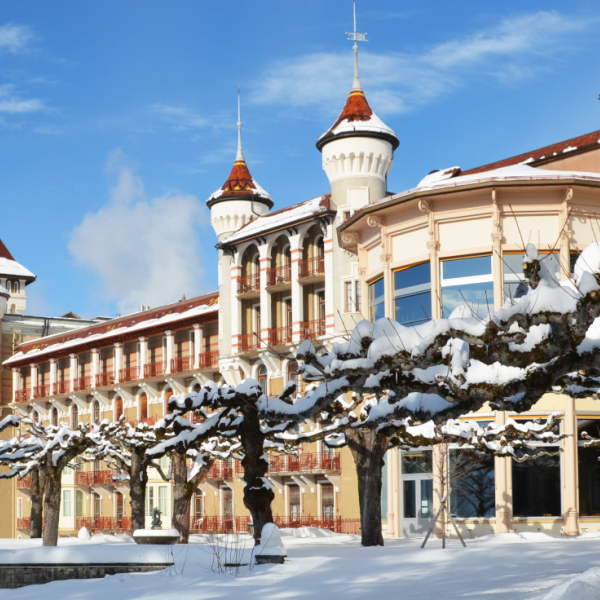
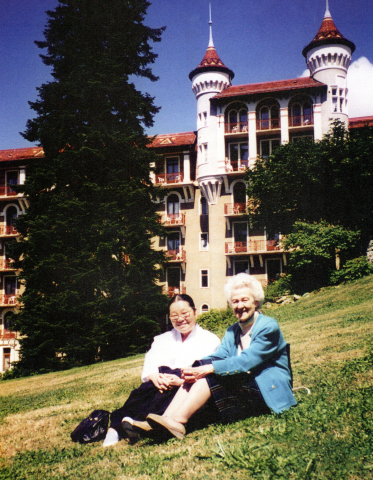
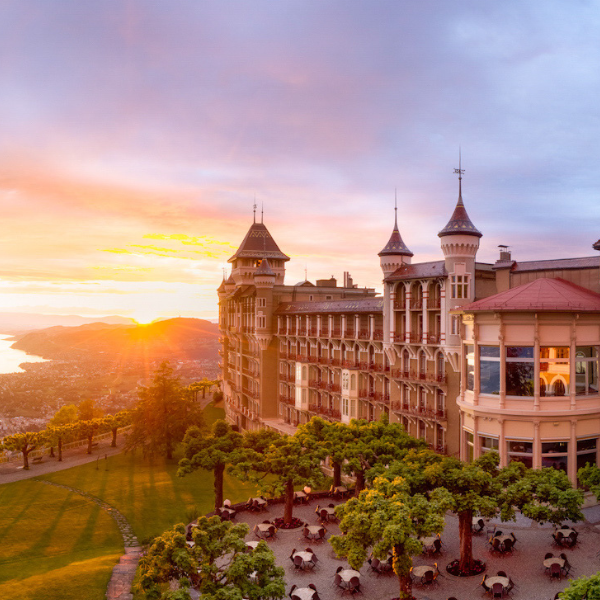
Our hospitality team is using the calmer winter months to transform the Caux Conference and Seminar Centre. Cleaning out storage rooms and offices feels like a treasure hunt in the vast, 29,500 square metre Caux Palace.
We are finding old china and other items dating back years, as well as personal belongings in the most unexpected cupboards. Through these discoveries we feel the spirit of Caux. People from all over the world made this place their home for months at a time, livied, learned and grew together – and most probably still carry a piece of Caux in their hearts today.
We are not only cleaning in a physical sense. We are also re-evaluating our offers and exploring possibilities for workshops in collaboration with Initiatives of Change’s programmes. We are finding ways to improve our processes and to use our current resources skilfully. More stories from our journey towards sustainability and improvement will follow soon.
What is not going to change is our love and passion for offering our guests a warm and caring service. This remains at the heart of all we do.
Our Hospitality Team is looking forward to welcoming you back to the Caux Conference and Seminar Centre soon.
Click here for more information and our offers 2021
New year, new address in Geneva!
12/01/2021
As all organizations, we have been impacted by Covid financially but it has also impacted our way of working. Working remotely has now become the new normal for our team and so we’ve decided to downsize our Geneva offices. We are happy to have found a new home in the International Environment House II in Geneva.
Our new address is now:
Initiatives of Change Switzerland
International Environment House II
Chemin de Balexert 9
CH-1219 Châtelaine- Geneva
We look forward to welcoming you to our new offices as soon as the situation permits.
Our official headquarters remain in Caux (Rue du Panorama 2, CH-1824 Caux). You will also find our updated contact info here.
Credit: Icon homepage slider made by Fasil from www.freeicons.io
‘Afghanistan gave me roots, Denmark gave me wings’
05/01/2021
Abeda Nasrat came to Denmark as a refugee from Afghanistan at the age of two. She now studies Law at the University of Copenhagen and works as a student assistant at the Danish Institute for Human Rights. Abeda was a participant of the Caux Peace and Leadership Programme in 2019. In an interview for CPLP Talks she talks about culture and identity.
What does ‘culture’ mean for you?
When I think of culture, I remember the things that I grew up around – my grandmother putting henna on my hands, celebrating the Afghan New Year and the Islamic festivals, wearing Afghan clothes, the dancing and all the food. How I lived at home was distinctly different from what I experienced whenever I stepped outside the door.
I came to Denmark when I was about two years old. I was put into a kindergarten for refugees. I had a lot of friends who like me, were part of a ‘minority’. We connected over the fact that we ‘didn’t belong’. We shared the same struggles. We all had difficulty speaking Danish and felt a little embarrassed about having a different culture. I grew up surrounded by Arabs, Somalis and Turks.
I don’t think I would be aware of culture if I hadn’t grown up in Denmark, a space where my culture was in a minority. I was soon faced with the reality that Afghan and Danish cultures were contradictory. Danish culture is very liberated, whereas Afghan culture was very traditional. I had a hard time figuring out what I wanted, because I was under social pressure from both cultures. I always chose to do the opposite. At home I would act out Danish culture and at school I would act out Afghan culture. This was my way of finding a space to define and and discover myself.
How significant was language in creating your identity?
The language we shared as immigrants was more about how we communicated, than what we spoke. We all greeted each other by kissing. We were all, children and adults, extremely expressive. We shared body language, the little acts that we all understood. Language was not so much what we said, as what we did. I know my grandmother loves henna, so I show my appreciation to her by going to her room and asking her to put henna on my hands. Then her face lights up. Music has also been an important feature in identifying myself. When I hear Pashto music I connect to the life I never had in Afghanistan, and it sort of shows me who I could be.
I remember from Caux that you are an exceptional footballer. You told us that you play football as part of your ‘rebellion from the expectations from your Afghan culture’?
In Afghanistan, women cannot play football. Some years ago, a member of the Afghanistan women’s football team had to flee to Denmark because the Taliban was after her. This paints a picture of how Afghan culture sets expectations on how women should behave – on men too, but more on women. When guests come, we speak a certain way and act in a certain way. There are social expectations and barriers, for both girls and guys.
I grew up with four brothers, doing ‘boy things’, climbing trees and playing football. When we went home, I had to dress differently, and I felt that was unfair. We had to act a particular way for no reason, except to say ‘this is who we are and this is what we do’. So football was my rebellion. As someone who has never belonged, I know I belong on a football pitch.
I fought hard to prove to my parents that I can’t be the Abeda they want or need me to be. My father was really helpful as he was open to me being who I wanted to be. He sat me down and said we could meet in the middle. And that was really important for me.
In your view, is culture learnt or is it lived?
I find myself challenging the structures that disagree with my personal values. Culture informs us of what we should do, and what we should not do, and sometimes we can see that it is wrong and unfair. When I talked about this with my friends, we all agreed that we are quick to speak about things we would like to change in our cultures, but we do not find it safe to engage in these discussions at home, with our families. It is almost as if we find it acceptable to concede and follow culture at home.
I disagree with a lot of things which have become prevalent in our culture. One of these things is the focus on material status. People are judged on the basis of what they have, as opposed to their character. I disagree with the concept of honour, which has different standards for different genders. It traps women and that is unfair in itself. The perennial struggle is to find a balance between what you know to be right or wrong and what culture sees as acceptable and unacceptable.
One final, unfair question: how do you identify yourself?
I’ve learned that I will always be slash something. I am Danish slash Afghan, woman slash tomboy, refugee slash Muslim. These are all my identities, but the best way to identify myself would be as a third culture kid. My upbringing in Denmark was so beautiful. I was raised in the Turkish and Arab mosque, so naturally I connect with these cultures. When I am with my close friends we all dance dabke, buraanbur and attan (Arab, Somali and Afghan dances). That’s why culture means so much to me, because it gave me the power to connect with people from all around the world.
One of the people who helped me find my identity was my class teacher, Ole. He changed my life. I went to a catholic school and had a hard time fitting in. He taught me to take pride in my values and the parts of my identity that didn’t fit in. He was the first person in my life to accept me for me. When we graduated, he had to choose one person to a give a scholarship to – and, to everyone’s surprise, he choose me.
I still remember his speech, eight years later. He said that what he valued most about me was my roots, my religion and the combination of Denmark and Afghanistan. I hold these words dear to my heart since that day. I really believe that I would be a totally different Abeda, if I had not met this teacher. So I guess you could say that Afghanistan gave me roots and Denmark gave me wings.
If you would like to take part in an online conversation on Saturday, 23 Januray 2021 at 13:00 GMT on the topic of culture, with other Alumni of the Caux Peace and Leadership Programme, you can sign up here for the next CPLP Talks!
After registering, you will receive a confirmation email telling you how to join the meeting.
Find out more about the CPLP Talks here. Please read the terms and conditions here.
Discover the Caux Peace and Leadership Programme.
Culture, origins and freedom
05/01/2021
Sebastian Hasse grew up near the former border between West and East Germany during the period of reunification and reflects on culture, emotions and their impact on our lives.
Whenever I want to write about my cultural roots, the same feelings rise up in me – reluctance and suppressed anger, unlived grief and helplessness. For as long as I can remember, I have been trying to free myself from my origins, which have given me so much on the one hand and denied me so much on the other.
I grew up in a ‘patchwork family’ in a medium-sized town in West Germany, near the border with East Germany. Patchwork families – which include children from the parents’ previous marriages – were not so common back then. We were a very middle-class household where the father earned the money and the mother was a housewife. My four sisters and I attended a traditional old-style grammar school. From early on, I had difficulty identifying with it. I was more enthusiastic about the musical theatre after-school group and I met my first girlfriend during a German-French school exchange.
German reunification was the central political and cultural event of my childhood, both in the sense of a social challenge and on the family level. My stepmother, who had looked after me since I was about two, came from East Germany. She had spent two years in prison there as a political prisoner but we never really talked about it at home.
From my point of view we also didn't really talk about feelings. That didn't mean that there were no feelings or that I wasn't loved. But I don't remember receiving the support I needed in many emotionally difficult situations. Today I know that my parents and teachers were unable to offer this because the generations before them had simply never learned how to. These generations had lived through, and been responsible for, two world wars.
Every imprint is a cultural imprint. Culture is all-encompassing. The people who shape you cannot escape their own cultural imprint any more than you can. It is unfair that you cannot change what has shaped you, especially in early childhood. It hurts you and holds you back. Freeing yourself is literally a lifetime’s task.
These encounters [...] have allowed me to keep growing, both in my self-understanding and in my curiosity about the world.
In doing this work on myself, I have always felt in good hands in Caux. I have almost exclusively met people there who valued and aspired to this liberation as much as I did. Later I understood that this feeling is not limited to Caux – it just meets you there in a very concentrated form. Nevertheless, I cherish every single moment I was able to spend there within the framework of the Caux Forum conferences and the Caux Peace and Leadership Programme.
Time and again, these encounters with people who have different cultural roots from me have challenged and often overwhelmed me. But it is these encounters that have allowed me to keep growing, both in my self-understanding and in my curiosity about the world. They have shown me what I already possess and what I still lack. They have given me pride in my origins and made me feel despair about all that I lacked in my childhood. And it is precisely these intercultural encounters that make me feel the joy of life most intensely.
Sebastian Hasse's career path has been serpentine. He started out studying Computer Science in his hometown, Lübeck. Realizing that this diploma did not make him happy he followed an acting career, changed to filmmaking and finally returned to IT as a consultant in the family business. He is first chairperson of a small volunteer-based NGO in Berlin which focuses on non-formal education for young adults in Central- and Eastern Europe. Through several international encounters over the years, he found his way to IofC and Caux. This inspired him to train in mediation and to be part of the Caux Peace and Leadership Programme in 2019. Sebastian loves stories and believes that paradoxes and contradictory perspectives are an essential part of human life.
___________________________________________________________________
If you would like to take part in an online conversation on Saturday, 23 Januray 2021 at 13:00 GMT on the topic of culture, with other Alumni of the Caux Peace and Leadership Programme, you can sign up here! After registering, you will receive a confirmation email telling you how to join the meeting.
Please read the terms and conditions here.
Find out more about the CPLP Talks here.
Find out more about the Caux Peace and Leadership Programme.