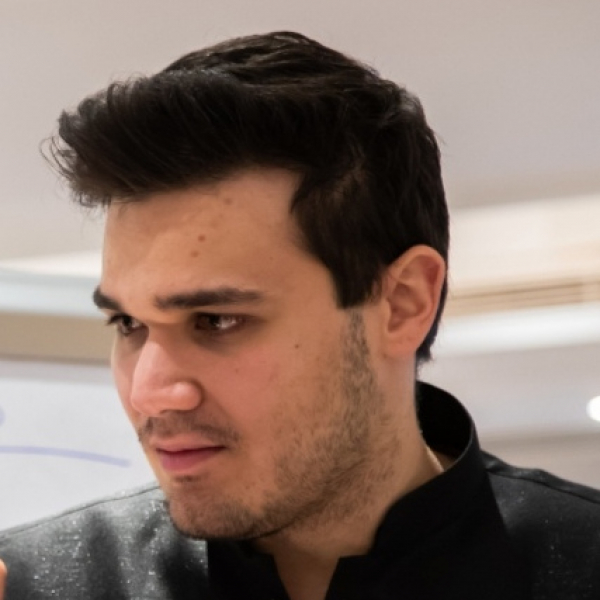
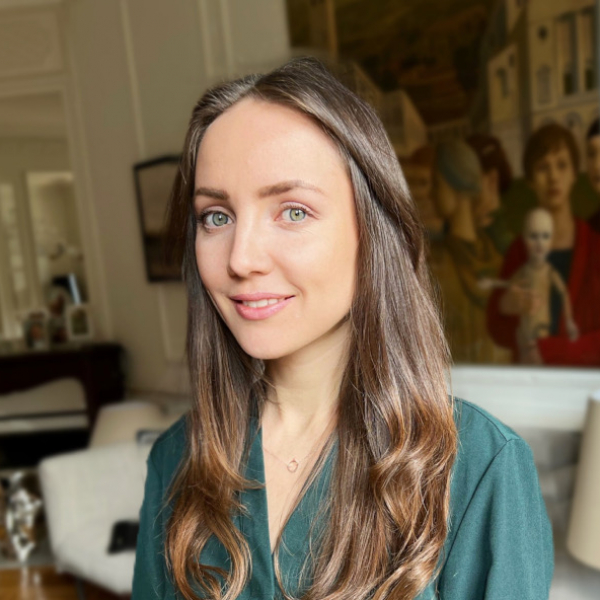
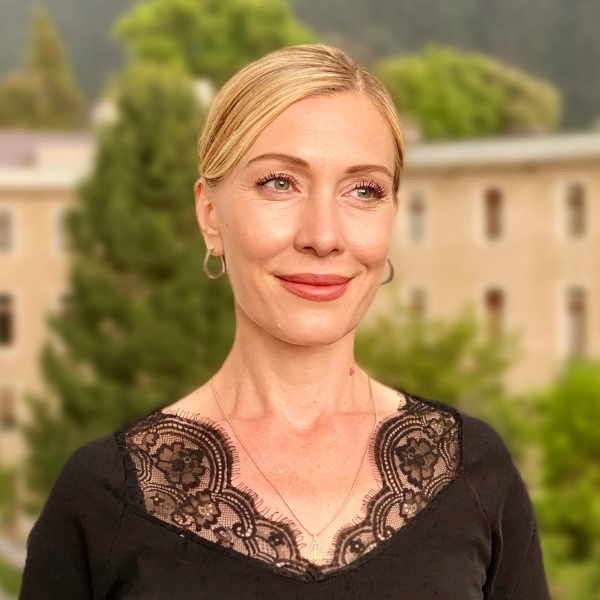
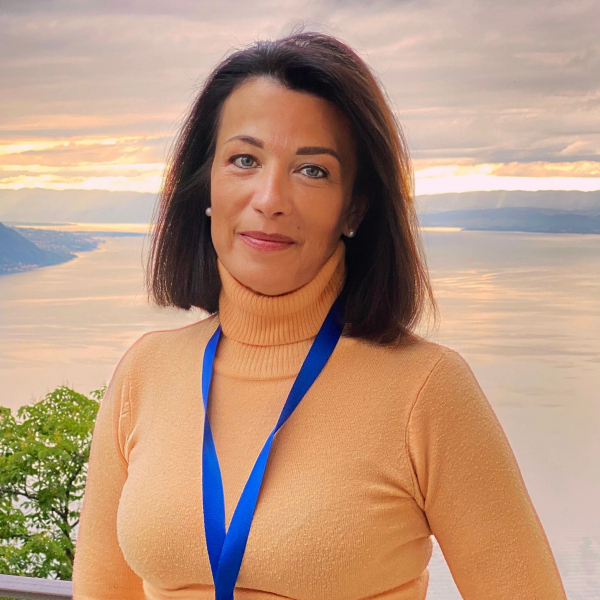
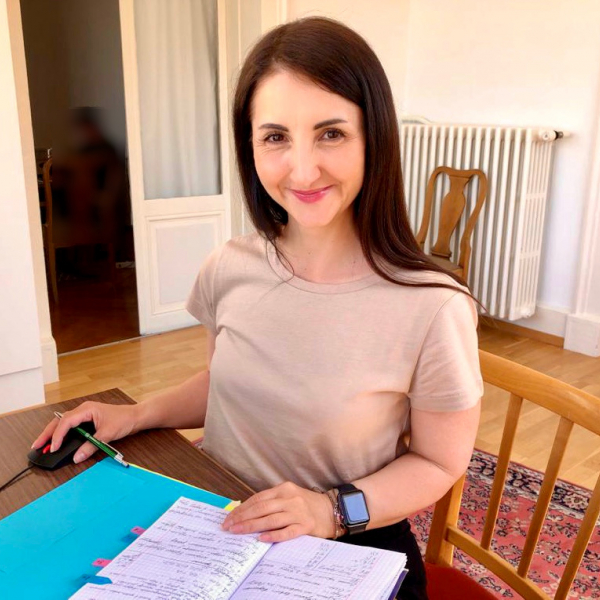
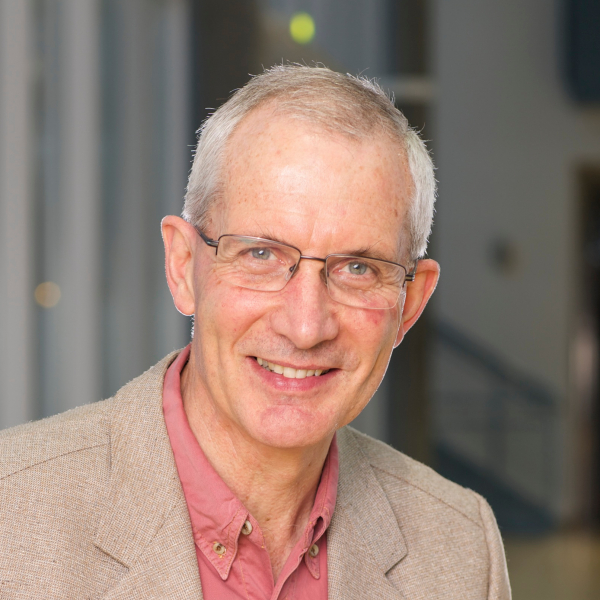
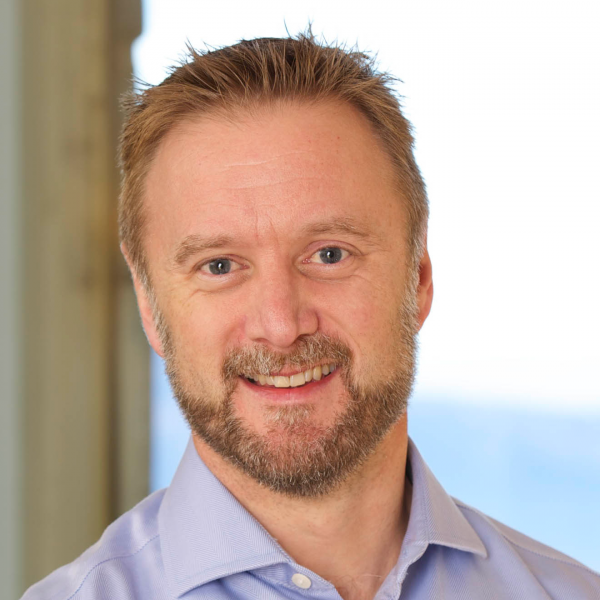
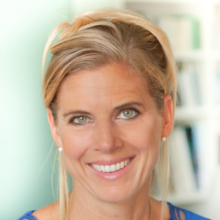
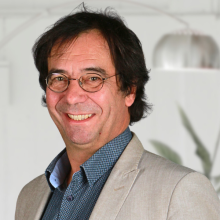
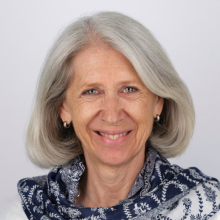
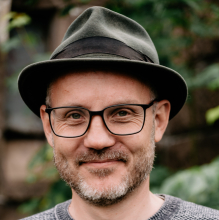
A French national, Etienne Jacques trained in the traditional hotel industry at the Ecole Hôtelière de Nice. He has a diploma in cooking and catering and looks back on more than thirty years of international experience at the head of atypical hotel establishments. A man of the field, he is quick to adapt and has already successfully managed several high-altitude hotels and restaurants in the Swiss canton Valais. Pragmatic and a fan of digitalisation, he knows how to make proposals to make a business more efficient, but also more human.
N'kolongo Kalombo was born in the Democratic Republic of Congo and came to Switzerland at the age of 6. He joined the Foundation in March 2023 as a multi-skilled technician and building painter. His first boss was a real mentor to him and it is thanks to working with him that N'kolongo acquired all his professional skills. He has been working as a painter since he was 15 years old and says: 'Now life has given me the opportunity to be part of your team.' N'kolongo is married and has 4 children, likes travelling, competitive sports, nature and fitness.
The inspiration came from Yara Zgheib, a young Lebanese novelist living in the US. She introduced the series by describing how she first came to Caux in 2010 and the impact this time had on her: ‘This place taught me to breathe, to see, others and myself,’ she wrote. ‘By the time I left, I felt so light I could have flown to Montreux.’
Caux’s story, she concluded, ‘contains hundreds of thousands of train rides, walks, talks, teas, conversations, and quiet moments of giant transformation’.
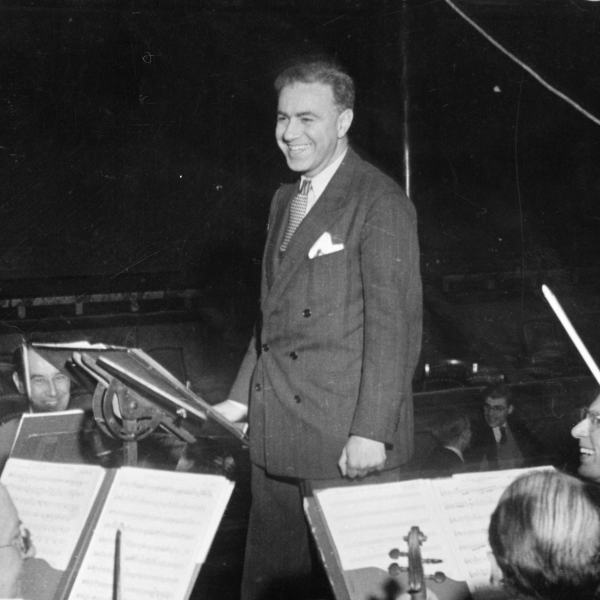
Over the entire year 2021, we shared 75 of them online. Turning them into a book once the anniversary celebrations were over seemed like an evidence and we are excited to announce it is now ready to order (English copy: £11.99).
About the book
In 1946, 100 Swiss families and individuals bought the run-down Caux Palace Hotel as a ‘place where Europeans, torn apart by hatred, suffering and resentment, can come together.’ Hundreds of volunteers from across Europe helped them to transform the building into an international conference centre. Over 100,000 people have taken part in conferences in Caux since then, seeking their part in bringing healing and justice to a divided world.
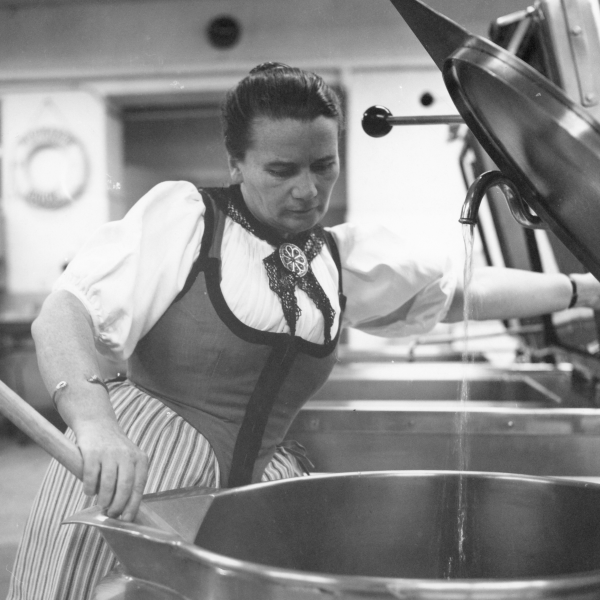
This book tells 75 stories – one for each year between 1946 and 2021 – of the lives which have been touched by Caux. They include far-reaching encounters, such as those between French and Germans after World War Two or between Somalis of warring communities in 2005; heart-stopping moments, such as in 1981 when Agnes Hofmeyr spoke from the stage with a man who had sanctioned her father’s murder; and stories from the corridoes, offices and kitchens of the many volunteers who have made the conferences possible.
These stories offer a glimpse of the magic at work in the international conference centre in Caux, owned by Initiatives of Change Switzerland for the worldwide network of Initiatives of Change.
A Creative Leadership story for International Women's Day 2023
08/03/2023
Featured Story
Off
A Creative Leadership story for International Women's Day 2023
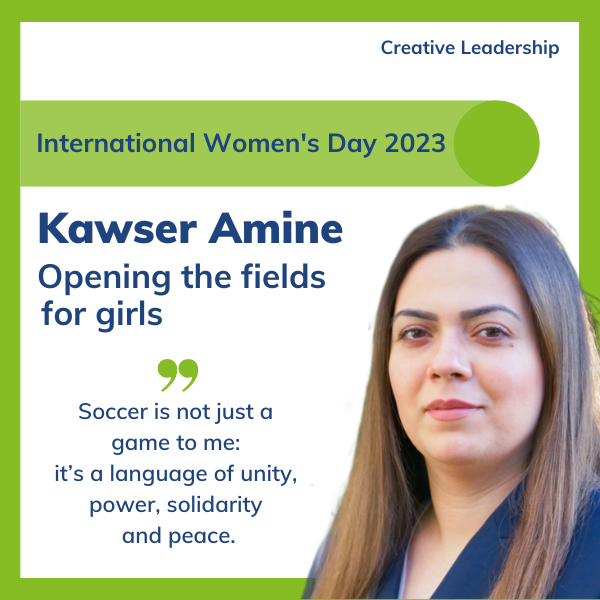
Afghan soccer player and women’s rights advocate Kawser Amine was a guest speaker at a Human Library event during the online 2022 Creative Leadership conference on Living your Possibilites - From Healing to Action. On International Women's Day 2023, celebrating the achievements of women from all walks of life, she talks about her remarkable journey and her fight for every woman to be free to fulfill her potential.
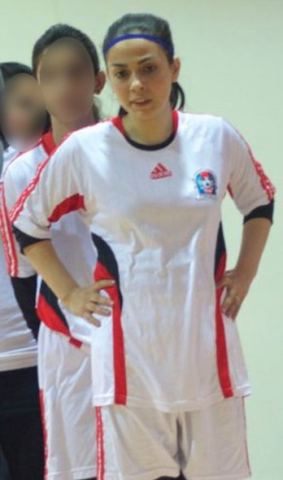
Kawser Amine playing soccer
Whether she’s on the soccer field, or speaking up for women’s rights, Kawser Amine doesn’t believe in giving up. For eight years, she was a member of Afghanistan’s first national women’s soccer team, a risky business in a society where infringing cultural conventions can put your life at risk.
Three times a week, she and her sister went to the army helicopter ground in Kabul, passing through 12 checkpoints on the way to train behind high walls.
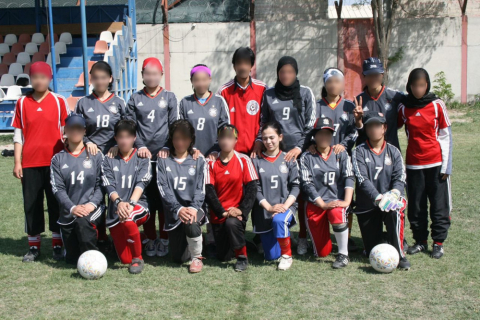
A young Kawser (third from right in front row) posing with her team
Once a bomb exploded behind them just as they were getting onto the bus home. ‘It was very hard, but we did not give up because if we did, there would be no opportunity for the women and girls standing behind us.
We opened up the field for girls. Before the regime change, hundreds of girls were playing soccer in Afghanistan. I felt so proud!’
Kawser was only nine in 2007 when she was selected for the team. (She explains that, because of cultural norms, the women’s national team is made up of youth and teens.) Her mother must be remarkable, to allow her children to follow their dreams in the face of such risks? Yes, Kawser agrees: ‘She did an amazing job of supporting us in continuing our education and playing our sport.’
Kawser went to the American University of Afghanistan (AUAF) in 2013 to study political science, got married in 2014, and resigned from professional soccer the next year, with her daughter on the way. In 2016 the AUAF was attacked. Thirteen people were killed and 50 injured. The Taliban followed up with a letter to each student, threatening to kill them if they continued to study there. The university closed down indefinitely, and Kawser transferred her degree to the Indian School of Business Management in New Delhi, where she graduated in general management with a specialization in international relations.
From Afghanistan to the US
Kawser with fellow players
Meanwhile, she and her husband looked for ways to leave the country for their own safety and for their daughter’s future. ‘Afghanistan is not a country where girls are safe to explore or to think big. I didn’t want her to experience what I had experienced.’ Finally, in 2019 they left for the US under a scheme open to them because her husband worked with the American military and NATO.
The adjustment was difficult. In Afghanistan, Kawser had worked as a political advisor, gender advisor and programme director for the government. ‘I struggled to find myself as an immigrant woman in San Francisco, but I never thought of leaving my activism,’ she says. ‘I got a job as a bank teller, but my heart and mind were far away from my job.’ Then Covid started, and because Kawser was pregnant, her doctor advised her to resign.
Over the next 18 months, during which her son was born, Kawser began to build her own foundation,Women’s Solidarity for Peace and Leadership, with the help of a friend and the network she created. Then, in August 2021, Kabul fell. ‘I knew from the very beginning that the Taliban would stop girls’ activities and women’s access to their fundamental rights.’ She designed a social media campaign, Stand for Girls’ Education in Afghanistan.
New initiatives
A year later, when 22-year-old Mahsa Amini was beaten to death in Iran for allegedly failing to comply with women’s dress regulations, Kawser realized that her advocacy needed to reach wider. She launchedJoin My Voice, an international women’s solidarity campaign which invites women to share their stories. ‘The campaign is designed to respond to women’s crises, such as inequality, sexual assault and violence of all sorts, and to uplift their stories and experiences,’ she says.
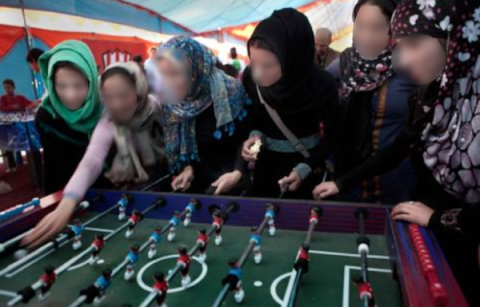
Young Afghan women playing table football
Kawser believes in the power of sport to bring change for the better. ‘Soccer is not just a game to me: it’s a language of unity, power, solidarity and peace.’
Alongside her social media campaigns, Kawser is setting up the Amine Soccer Academy, to help vulnerable children to realize their dreams of playing soccer. ‘I want to give them the confidence that comes from sport, the skills to succeed and the belief that they are capable of greatness.’ She has found a warm response to her plan from local government and schools and allies in such organizations as the US Soccer Foundation and Beyond Sport to partner with her.
She is also taking part in an initiative of the National Football League, which promotes football in high schools as a means of preventing students from falling into addiction. Recently she spoke at a high school in Arizona and was astonished by the warmth of the students’ response.
‘I never give up,’ she told them. ‘I fought for my education. You guys have many opportunities. Please use them to change your society. I come from a country that has seen more than 45 years of war and oppression. But instead of becoming a victim, I choose to turn my anger into action.’
A call for gender equality in Afghanistan
On International Women’s Day, Kawser calls on world leaders to push for gender equality in Afghanistan. ‘Women in Afghanistan are not even allowed to go out of their homes without a male companion: can you imagine what it is like in families where there are no males? I hear these stories every day and night, and my heart breaks.’
The Creative Leadership conference Living your Possibilities - From Healing to Action challenged participants to explore their potential to change the world for the better. Nearly 200 people from all over the world took part. Kawser’s mission fitted right in.
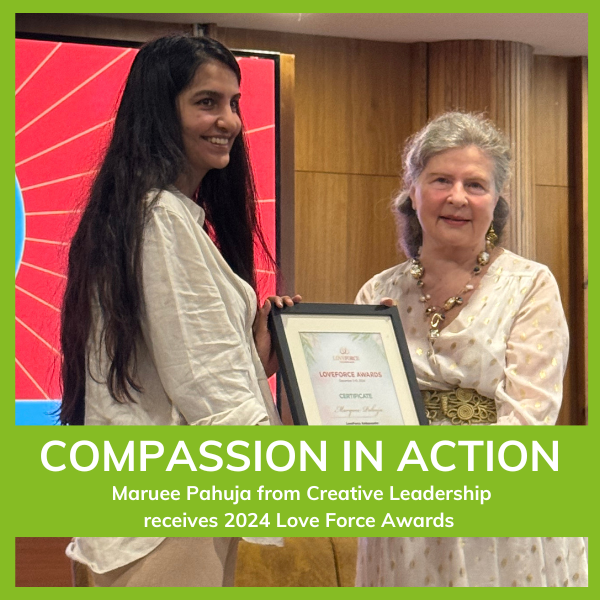
We are delighted that Maruee Pahuja from our Creative Leadership youth programme received the inaugural Love Force Awards at Kanha Shanti Vanam, Hyderabad/India....
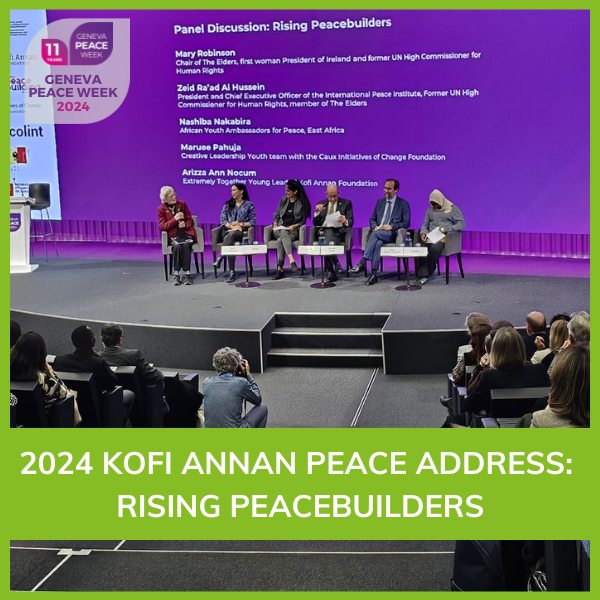
“As crises multiply, we are in dire need of courageous and ethical leadership!” said moderator Ahmad Fawai, in his opening words at the Peace Address, entitled “Rising Peacebuilders”. His words set th...
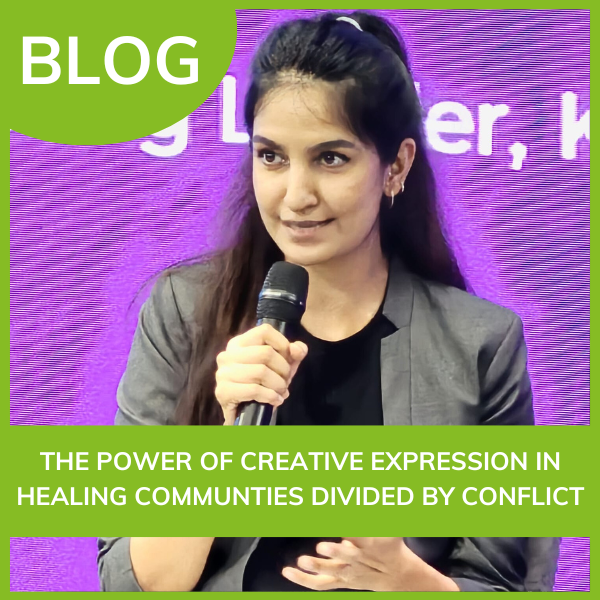
On 15 October 2024, Maruee Pahuja was a panelist at this year's Kofi Annan Peace Address where she discussed with Mary Robinson, first woman President of Ireland, former UN High Commissioner for Huma...
In September 2024, Caux Initiatives of Change participated as a knowledge partner in the Global Ethics Forum, with contributions on 3 panels from Sidra Rislan, member of the Creative Leadership youth ...
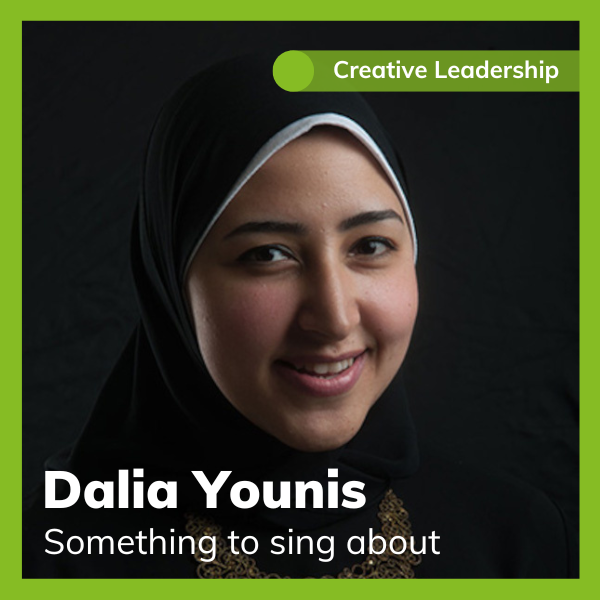
How can singing make a difference in people's lives? Pioneering Egyptian musician Dalia Younis was a guest speaker at the Creative Leadership conference in 2022 where she talked about how she uses sin...
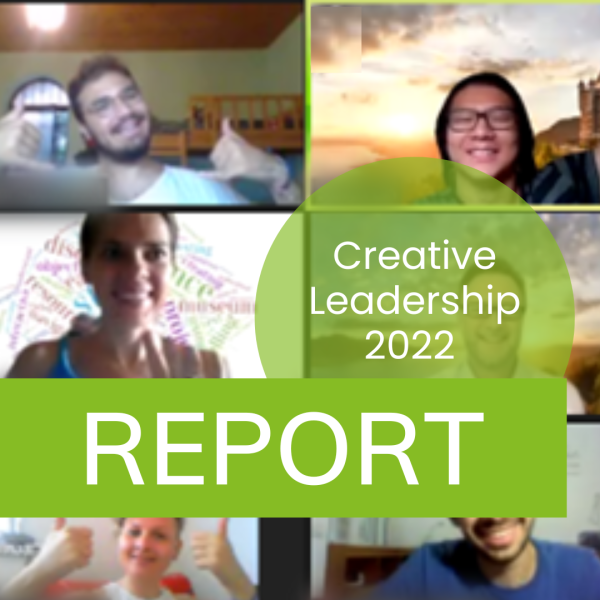
Creative Leadership 2022 guided participants on a six-day journey from healing to action. The conference took place online from 23 to 29 July – with a break day in between – and brought together aroun...
Arpan Yagnik, a participant of last year's Creative Leadership conference and team member of the IofC Hub 2021, talks to Mary Lean about creativity, fear and vocation. ...
How can we face times of uncertainty as individuals and as an organization? Anas Badawi from Y-Peer was one of four young leaders who presented their perspective on overcoming fear and responding to s...
2021’s Creative Leadership conference took participants on a six-day journey ‘From Uncertainty to Possibility’. Between 25 to 31 July around 150 online participants living in over 50 countries engaged...
'I have never been to Caux, because of visa issues. So when I received an email asking about the impact of the conference, I wrote as part of my reply, ‘Thank you for bringing Caux to us’. - Betty Nab...
'The conference showed me how much I really love to socialize with people. The members of our dialogue group asked me questions I never been asked before. This made me think about lots of things, in n...
Manuela Garay from Canada was part of the Caux Peace and Leadership Programme in 2017 and reflects on the impact her participation has had on her and her perspective on life and other people ever sin...
'This extraordinary conference has changed me to be more ambitious, intellectually honest and more consistent', said Hani Abou Fadel from Lebanon after his participation at last year's Creative Leader...
'I wouldn’t have imagined that with a piece of paper, a pencil and a little bit of your time and effort, you can really make a difference in someone else’s life!' - Georgina Flores and Lorena Mier y T...
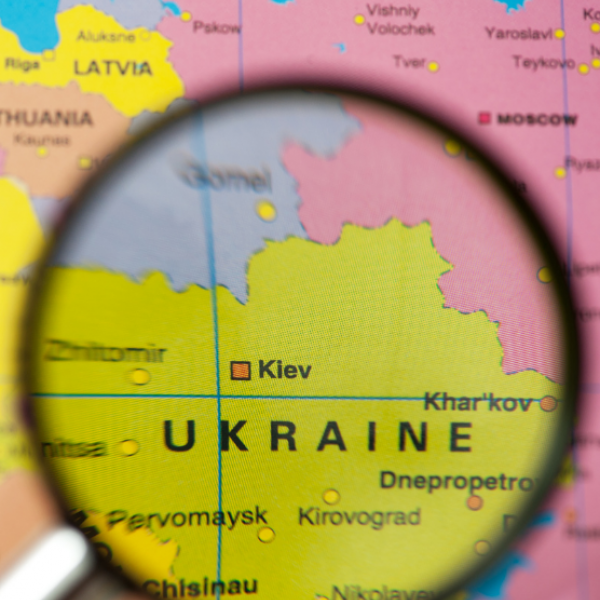
24 February 2022 marks a day that many of us will not forget and divided the lives of many into ‘before’ and ‘after’. Since then, millions of displaced people have left their homes in Ukraine in search of a safe space.
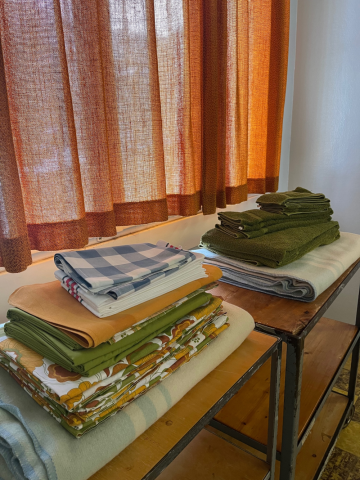
Sheets and towels from the Caux Palace
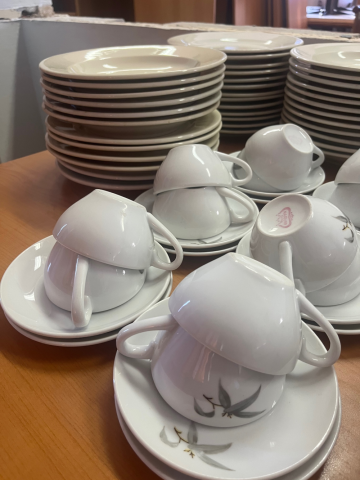
Crockery from the Foundation's stock
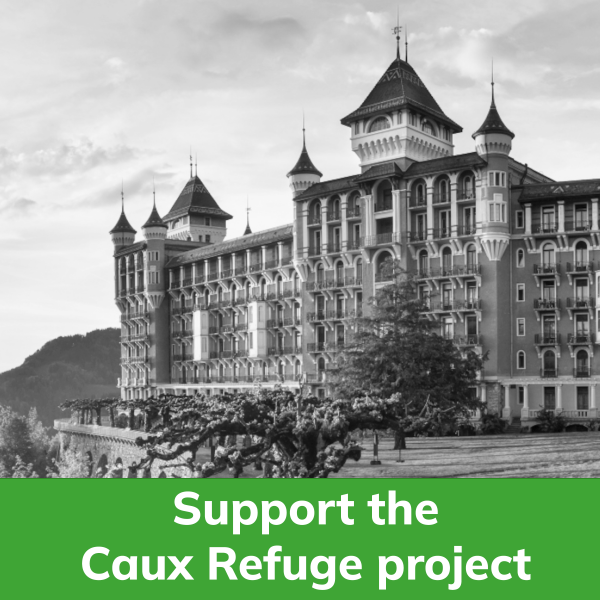
Initiatives of Change Switzerland felt compelled to respond to the need and decided to offer accommodation and support at their centre in Caux. The Caux Refuge was born.
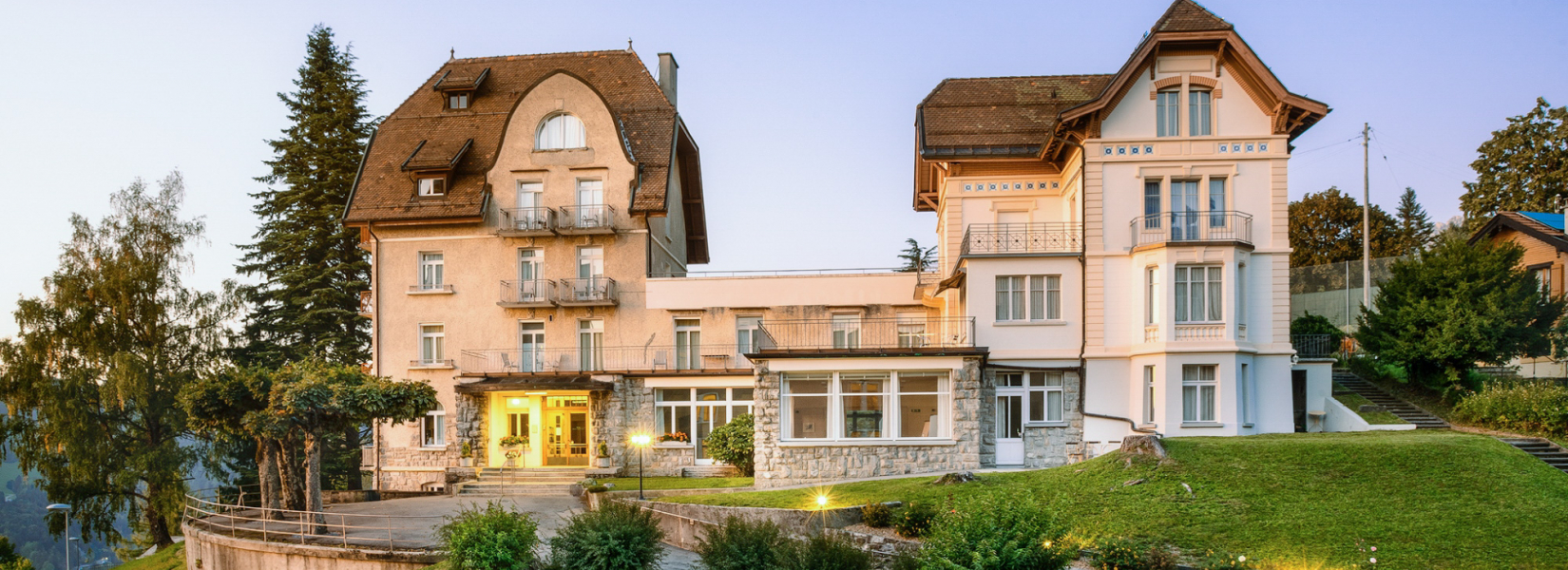
The Caux Palace has a long tradition of providing a safe space for people from conflict areas. It acted as a refugee centre during WWII, before Initiatives of Change bought the building with the purpose of restoring trust between people in post-war Europe.
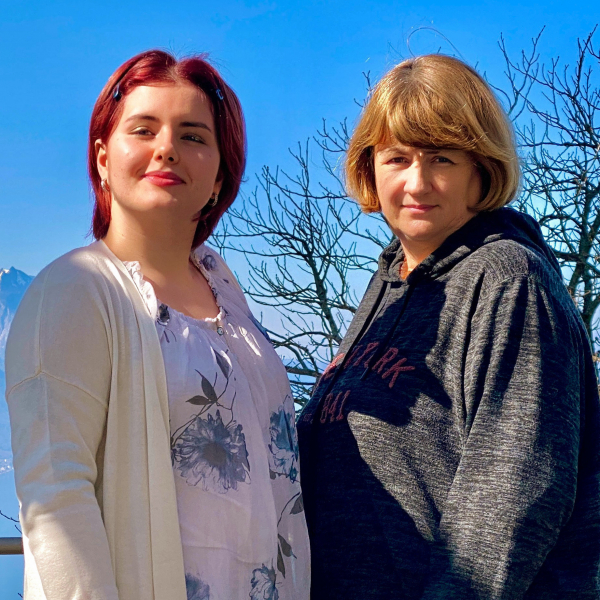
The Caux Refuge was located in the Villa Maria next to the Caux Palace. Alina and her mother Liudmyla were the first Ukrainians welcomed at the Caux Refuge on 23 March 2022. ‘I am so thankful to all the members of the wonderful IofC and Caux community, who brought all the essentials – healthcare items, medicine, clothes and food, all with great generosity.’ Alina told Ukrainian journalist Anastasia Slyvinska, who supported the Foundation’s communications department, giving her fellow Ukrainians in Caux a voice through a series of interviews.
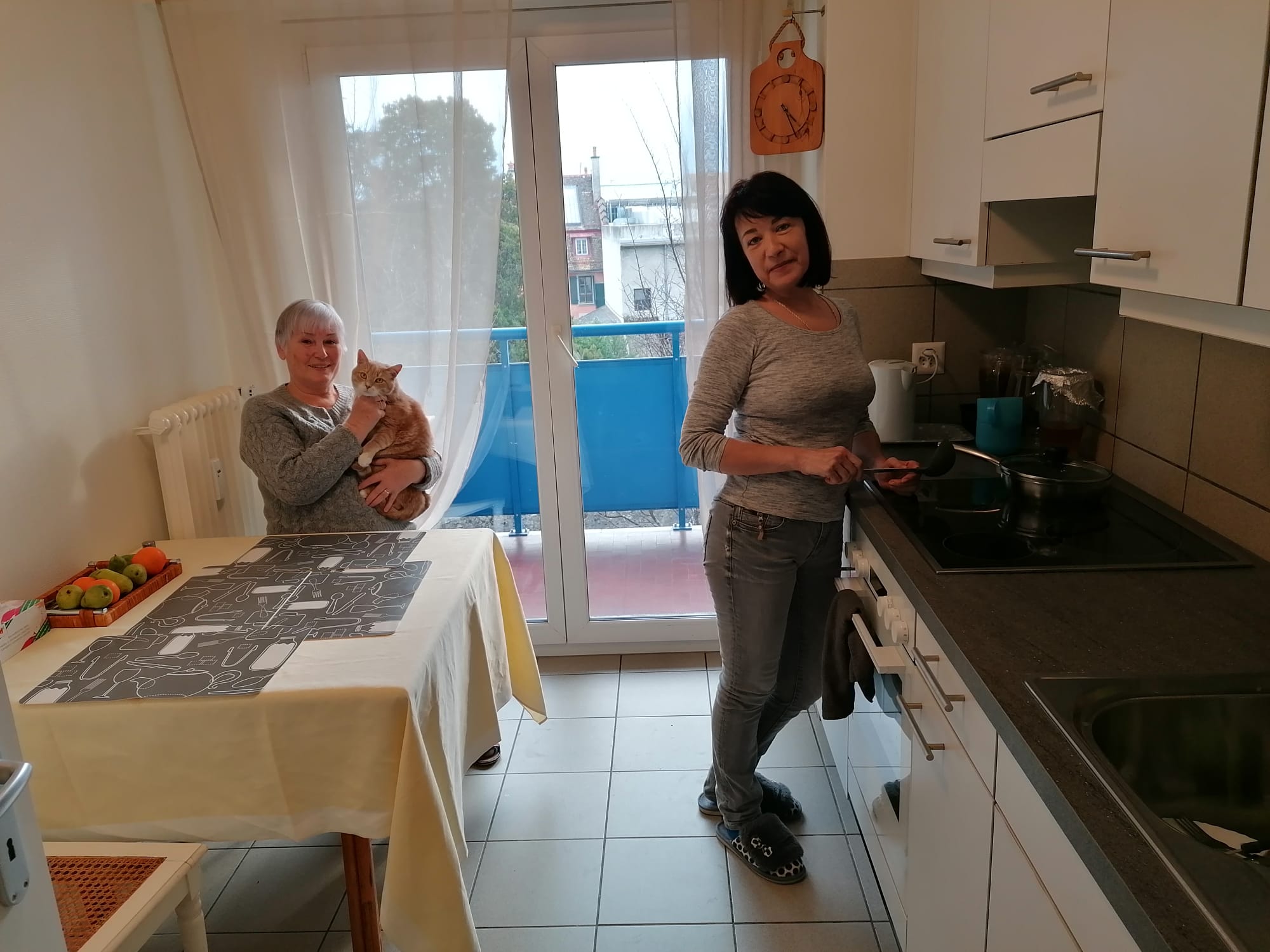
Oksana (right) and Liuba with cat Kersha in their new flat
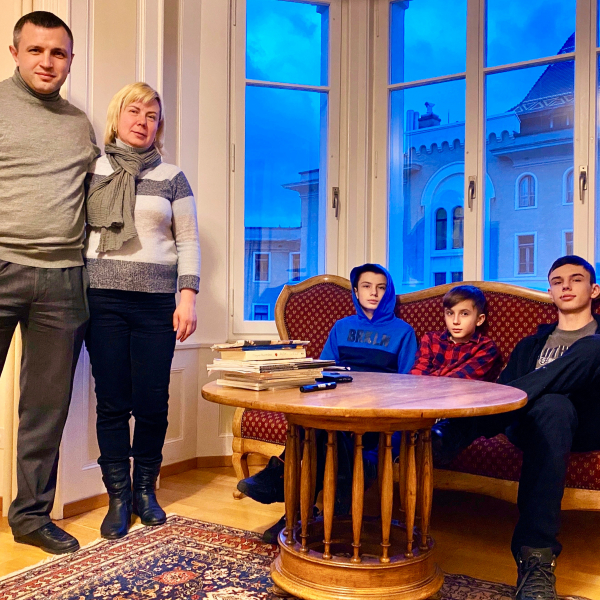
The Caux Refuge quickly started filling up. Thirty-five Ukrainians, including eight families with children, stayed at the Villa Maria during the year. Some had a direct connection with IofC, others were sent by family members who had been to Caux or were part of the IofC- inspired Foundations for Freedom (F4F) network. For some, Caux was only a place to pause, gather strength and then move on. Others stayed the entire year.
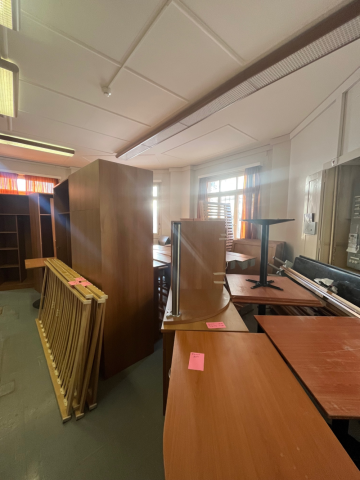
A new life for old furniture
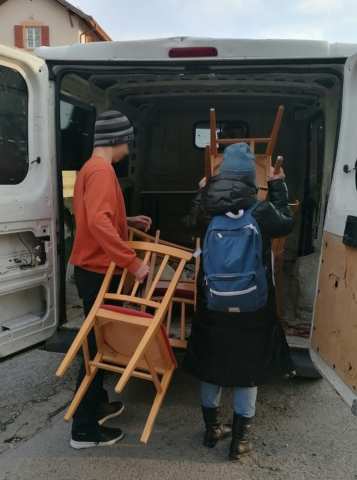
On their way to their new home in Montreux
They included people from all walks of life – a politician and his family, a teacher and her daughter, a nurse.
The children quickly integrated into local life. ‘The school here is fantastic. They organized a special class with five boys, a teacher and a translator’, said Anatolii, father of three teenage boys.
IofC Switzerland’s liaison officers, Ekaterina and Marina, helped the Caux Refuge residents enrol in French lessons (‘Language is crucial’, says Oksana), apply for internships and training, discover the social welfare system in Switzerland, explore Swiss culture and customs and and gain in autonomy.
Since that fatal day in February 2022, a year has gone by and the Ukrainians of the Caux Refuge have moved on. All but one have left the Villa Maria. Many have decided to stay in Switzerland and close to Caux.
This last year hasn’t been easy. But the Ukrainians of the Caux Refuge are now ready for their next steps.
We wish them all the very best for this next chapter in their life and are grateful that we were able to help and offer them a safe space in these difficult times.
Thank you
So many have helped and supported us over this past year and we are grateful to each one of you. This list is by no means complete but we would like to name some of those who have been particularly involved in making the Caux Refuge a success:
Ekaterina, Horia, Fabian, Adrien, Myriam, Edna, Claude, Valentin, Nick and Stephanie from IofC Switzerland
Véronique and Sylvie from the Amis de Caux association
Eliane, Andrew, Amandine, Marina and Alessandro from the village of Caux
Victor, Greg, Patric, Ana, Patrick and Mica from a local hotel school
Etablissement Vaudois d'Accueil des Migrants (EVAM), Commune de Montreux, Société de Développement de Caux, Amis de Caux, L’Armée du Salut, Office régional de placement (ORP), IofC Netherlands, IofC UK
A special thanks goes to all those who have responded to our call for donations and supported the Caux Refuge financially!
Without you, this year would not have been possible! THANK YOU!
Everything is forever changing. Nothing is permanent. Nothing can last forever. If the curve has gone down so drastically it means, at some point it is bound to go upwards again! Of this I am absolutely convinced and I have trust.
Eliane Stallybrass lives in Caux and has supported the Caux Refuge with French lessons, an open ear, friendship, advice and practical help. Looking back on the past year she writes:
A year has gone by since the first Ukrainians arrived in Caux. Their time in Caux has enabled them to gain a foothold in Switzerland, to find security and to prepare themselves for their next steps which are still so uncertain.
They are taking French classes and the EVAM, the institution that looks after refugees in this canton in Switzerland, has allocated them a small sum of money so that they can settle ‘at home’ with their own lease. They have all found a flat and some of them are housed in the rectory of the Protestant Church in Montreux where 11 people, including families with children, are now free from the worry of finding somewhere to live. Their move to Montreux took place on 1 March. A local hotel school donated desks and tables, an organization offered beds and mattresses, and IofC Switzerland is happy to see chairs and tables, received 60 years ago for the Caux Palace dining room, finding a new life. There are also dishes, towels, sheets and duvets that have finally come out of the cupboards where they have been sleeping for years.
Several of the Ukrainians have become close friends. We celebrated Liuba’s 70th together and the oldest Caux Refuge resident, Anna, has an incredible gift for making friends. Everyone knows and loves her in Caux and even though she hasn't managed to learn more than ‘Hello, how are you?’ she will have coffee at everyone's house.
We will miss their smiles and their ‘Bonjour, ça va?’ here in Caux.
Ekaterina Gross has been working as a liaison officer at the Caux Refuge project since April 2022. Here she reflects on her mission of supporting the Caux Refuge residents in their new life in Switzer...
Maria Raffin is originally from Moldova, but has been living in Switzerland for 17 years, two of which in the village of Caux. A neighbour to the Caux Palace, she very quickly stepped in to support th...
As the war in Ukraine has been raging for 3 months, Oksana Stelmakh, a nurse from Kharkiv, reflects on how the situation has impacted her family, now scattered over 3 different countries. Since her ar...
Before the war in Ukraine broke out, Nadia Donos enjoyed her dream job as a Ukrainian language and literature teacher. Now based at the Caux Refuge, Nadia continues to teach children in Ukraine full-t...
For more than a week Anatolii, Tetiana, and their three sons lived without electricity, heating or water in freezing temperatures in the village of Horenka near Kyiv. After a long journey through Ukra...
Discover the first in a series of interviews by Ukrainian journalist Anastasia Slyvinska with people affected by the war who have found temporary shelter at our conference centre in Caux....
In response to the war in Eastern Europe, Initiatives of Change Switzerland have decided to provide space for up to 30 people in Villa Maria (next to the Caux Palace). Find out how you can help!...
We strongly condemn the current unilateral military attacks in Ukraine that are costing and destroying lives and violate international law at the moment. We stand in solidarity with all those wanting ...
The Caux Palace showcased as an example for sustainable restoration of historic buildings in Switzerland
28/02/2023
Featured Story
Off
The Caux Palace showcased as an example for sustainable restoration of historic buildings in Switzerland
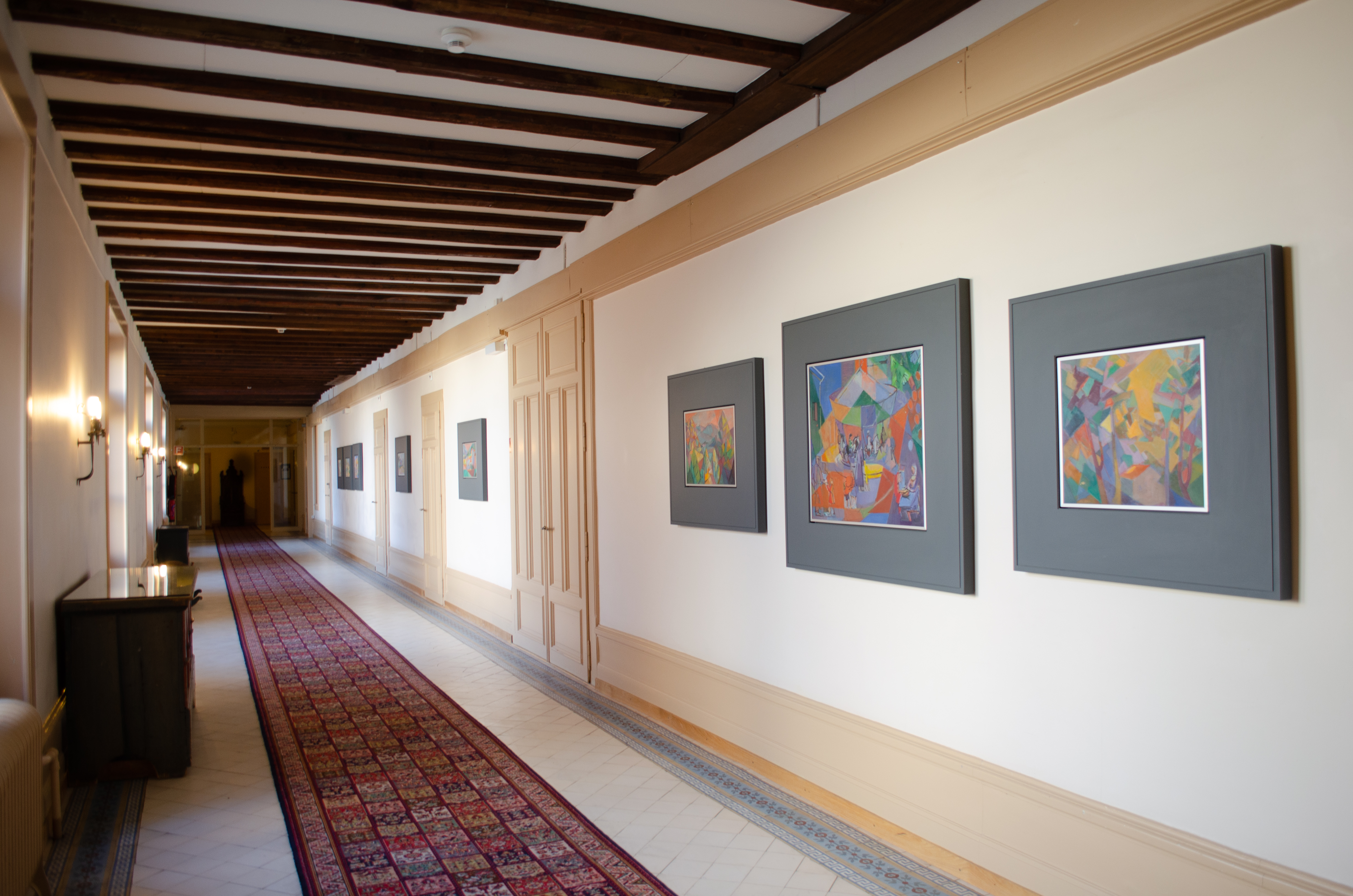
When you own a unique historic building like the Caux Palace with its 225 rooms, 1,600 windows and 1.6 kilometres of corridors, reaching carbon neutrality by 2050 seems a Herculean task. But each step on the way is important. Over the last years IofC Switzerland has worked continuously on improving the ecological sustainability of its flagship building.
In its current edition, the top real estate magazine in French-speaking Switzerland, immobilier.ch, showcases the Caux Palace as one of five positive examples of how historic buildings can be preserved and renovated, while improving ecological sustainability.
The corridors at the Caux Palace add up to a total length of 1.6 km
Restoring historic buildings keeps local history alive and anchors them in their communities. This is certainly true of the Caux Palace. Its prominent position high above Lake Geneva and its long and rich history attracts tourists and visitors.
Restoration is also a step towards ecological sustainability because it maximizes the use of existing materials and reduces waste and consumption.
Setting up the new system in the confined space of the Caux Palace’s basement was not an easy task. The project began in July 2015 and the system was inaugurated in October 2016. It saves about 600 tons of fossil-fuel-based CO2 every year.
We are pleased and grateful that our efforts to maintain and restore the Caux Palace have been recognized in the region. The Foundation will continue to ensure the preservation and sustainability of this unique place.
When the first Ukrainians arrived at the Caux Refuge, Eliane and Andrew Stallybrass were amongst the first volunteers to welcome them at the Villa Maria and to offer their support. Eliane knew that le...
What happens when 26 IofC trainers and facilitators from 12 countries embark on a three-day learning journey in Caux on designing and facilitating participatory learning experiences? At the opening se...
Sunday 19 June 2022 saw crowds of visitors and local people gathering in the park of the Caux Palace for the inauguration of a ‘Caux Belle Epoque’ self-guided walk. ...
Christine Beerli will step down as President of the Foundation of Initiatives of Change Switzerland in April 2022, after four years in the role. Jacqueline Coté, former Director of Public Relations at...
Former President of the Council of IofC Switzerland, Antoine Jaulmes, interviews Andrew Lancaster from Australia, who has just stepped down from the Council after 16 years....
Nick Foster, until now Caux Forum Director, will take over the role of Co-Director of IofC Switzerland, alongside Stephanie Buri. After nine years with Initiatives of Change (IofC) and one year as the...
Germany was in ruins. Europe was in ruins. Millions had been killed; millions more wounded and displaced. There were also ruins of the mind, deep collective trauma in desperate need of healing. In the...
‘At that time, even a dog would have refused a bit of bread from the hand of a German,’ remembered Peter Petersen, one of 150 Germans who the Allies allowed to come to Caux in 1947. They were some of ...
"Deep down inside, I blamed the rich, I held them responsible for so many people’s unhappiness. I couldn’t accept that some could have everything they wanted without having to lift a little finger, wh...
"My story is not special, or mine. It belongs to this conference centre. It is 75 years long and contains hundreds of thousands of train rides, walks, talks, teas, conversations, and quiet moments of ...
We are committed to inspire, equip and connect you to support you on your journey from personal to global change. But we need your help to see how we can do this best!...
Usually, Swiss National Day on 1 August is an opportunity for Caux Forum participants to discover some Swiss traditions, including cheese fondue. This year, it looked like the Caux Palace would be emp...
Living Your Possibilities - From Healing to Action
Creative Leadership 2022
06/02/2023
Featured Story
Off
Creative Leadership 2022
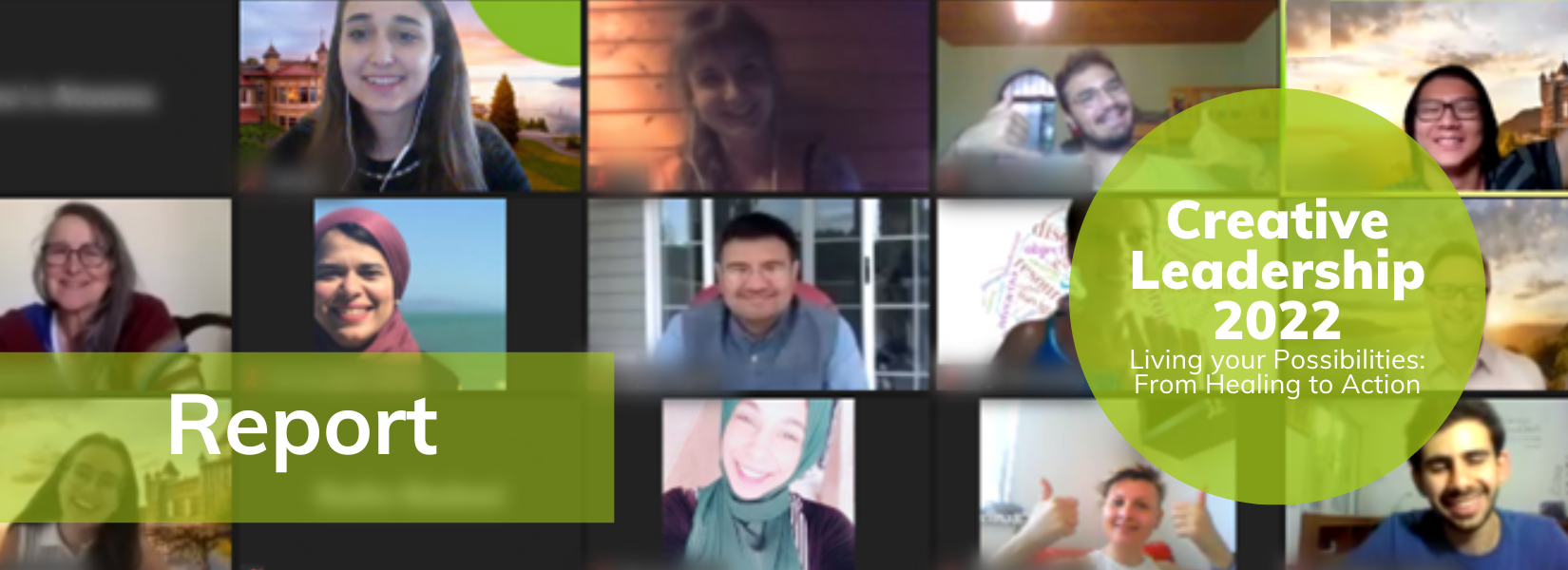
Creative Leadership aims to be an inclusive space where diverse participants from around the globe can come together and reconceptualize leadership. The 2022 conference took people on a journey of personal and collective growth, using arts, story-sharing, workshops and dialogue groups. These tools helped participants unlock their own leadership potential.
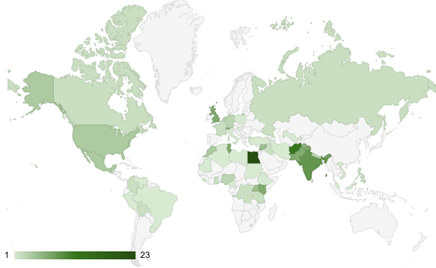
Participants Demographics: approx. 194 participants living in 54 countries
Creative Leadership 2022guided its participants on a six-day journey from healing to action. The conference took place online from 23 to 29 July – with a break day in between – and brought together around 194 participants in 54 countries to engage in meaningful dialogue, listen to inspirational stories from like-minded changemakers, and gain tools from experienced speakers. At the heart of it all, the Creative Leadership conference offered space for inner reflection and network building.
The theme of Living your Possibilities: From Healing to Action was a response to global events, in times of uncertainty and rapid change. To take action and create change, we must begin by reconnecting with our inner voice and finding our own healing process. The conference was based on the idea that healing is a continuous process that requires conscious effort and deliberate action in our day-to-day lives.
Now more than ever, conscious leadership and collective action are required. This was an opportunity to empower global voices to come together to find hope and healing for themselves and their communities.
The Team
The inspiration for the Creative Leadership conference came from more than 250 young changemakers of 98 nationalities who have taken part in the Caux Peace and Leadership Programme (CPLP).
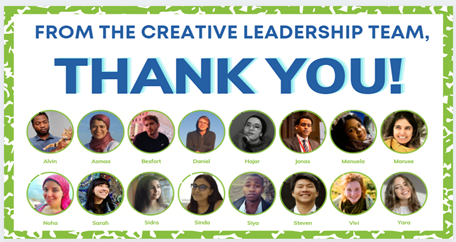
The conference was organized by an international team of 10, supported by 16 facilitators and six others, as well as the Caux Peace and Leadership Programme team, the Caux Forum team and the IofC Switzerland team.
The Programme
We began each day with time for individual reflection and growth. Activities then focused on fostering a culture of solidarity and collective healing through compassion, awareness and overcoming individualism. Finally, we explored creative methods to reignite participants’ energy for taking personal and collective action.
Creative Leadership uses a wide range of activities to take people on the journey through healing to action. The centrepiece is dialogue groups, which bring participants together to discuss and share their different perspectives. This places participants at the centre, rather than requiring them to be passive listeners. These encounters are deepened through the time-honoured IofC practice of quiet time, offering space and time to reflect and process. Webinars and workshops focus on issues concerning the participants, with speakers sharing their own experiences. Workshops are more interactive. with more time for questions and answers. In the human library people share highly moving personal stories, as a bridge to understanding. Finally, tea time offers a chance to chat informally and get to know other conference participants.
The dialogue groups focused on exploring a four-part journey, taking people from healing the wounds of the past, personal or collective, and moving towards taking action in the future to prevent further suffering. This involved engaging with the inner journey and then taking outward into daily life. On the first day participants were divided into small facilitated discussion groups, which they stayed with for all four sessions.
Journey of conscious healing – The first dialogue group focused on creating the space for the journey of conscious healing.
Culture of solidarity – The second dialogue group allowed participants to engage with the connection between solidarity and healing, and discuss how to create a sense of healing.
Igniting action – The third dialogue group focused on story-telling and on using imagination and experiences to ignite action through healing and solidarity.
Reflection – The final dialogue group offered the chance to reflect on previous discussions and set future intentions.
The facilitators of each group had the freedom to shape their group according to their own facilitation style. This meant that every group tailored its own unique space and built its own special connection of trust.
Solidarity is the bridge between the possibility of healing and the step towards action and justice. Most healing processes can't be addressed alone, a culture of solidarity is therefore needed.
During this session we began to see solidarity as essential to our individual and collective healing processes and as an indispensable element in enabling us to move towards global action in the search for justice.
This webinar focused on the human journey of going to the root. Regardless of the social, political, environmental or economic issue, going to the root means discovering the deeper layers of beingness where real, meaningful and sustainable change can manifest.
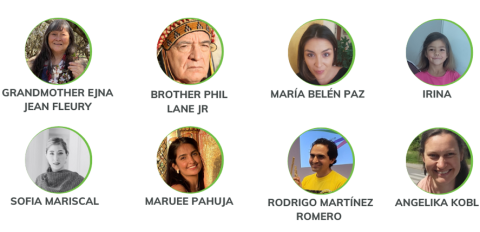
We explored three interrelated topics: Indigenous prophecies and spiritual leadership, children and intergenerational collaboration and, lastly, art as a vector for social healing.
The aim was to support changemakers in returning to their spiritual homes and seeing action through the lenses of social healing and personal healing.
Ahmed Abdelsalam facilitated a quiet time, relating a fable on how people
can pass up on opportunities for happiness.
Quiet time is a core practice of Initiatives of Change, and one of the best ways to introspect, connect with one’s inner self and others. For this reason, this year’s Creative Leadership conference offered a collective quiet time at the beginning of every day, in order to use inner listening and reflection as a core tool in moving from healing to action.
During this 30 minutes, participants had the chance to explore different ways of practising inner reflection, ranging from open reflections (through songs or texts) to guided questions related to each day’s theme. The sessions included room for general sharing.
Each quiet time facilitator brought their own definition and experience along with their practice. Participants were encouraged to take what they adopted into their day to day lives.
Tea Time
At the end of each day, participants were offered an informal optional space where they could meet webinar and human library speakers in smaller groups. Other breakout rooms included a culture sharing space, international music jam sessions, art sessions and an unfacilitated space where participants could meet each other.
Tea times were ranked the second most successful sessions in the conference, with dialogue groups taking the lead. These spaces, where people could participate actively and listen to one another, helped forge lasting and meaningful connections.
Closing Session
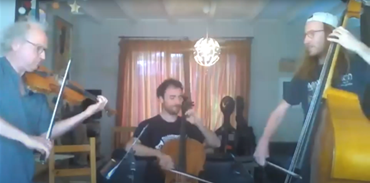
Trio Rigoudon from Canada playing
at the Closing Ceremony
The closing ceremony began with music provided by the Trio Rigudon, a father-son band composed of Bennet on the violin, Raphael on the cello and Clement on the double bass, playing everything from oriental to jazz.
Participants were given the chance to share what had affected them most deeply from the dialogue groups, before finishing with a celebration of our backgrounds, with participants speaking about their countries and culture.
We blossomed from silence to relevant deep sharing. We felt a safe space where we trusted each other with deep things, and laughter and love.
Charles Aquilina
_________________________________________________
We all came in as individuals acknowledging that we needed to acknowledge pain and accept and embrace healing. From there we were all walking on this journey and held each others’ hands. The culture of solidarity came to the forefront when we walked together through haze not knowing what is beyond.
Arpan
_________________________________________________
We started as a group and ended as a family of diversity.
Fahim Mayar
________________________________________________
Conscious healing plus unconscious healing equals optimal healing.
We are delighted that Maruee Pahuja from our Creative Leadership youth programme received the inaugural Love Force Awards at Kanha Shanti Vanam, Hyderabad/India....
“As crises multiply, we are in dire need of courageous and ethical leadership!” said moderator Ahmad Fawai, in his opening words at the Peace Address, entitled “Rising Peacebuilders”. His words set th...
On 15 October 2024, Maruee Pahuja was a panelist at this year's Kofi Annan Peace Address where she discussed with Mary Robinson, first woman President of Ireland, former UN High Commissioner for Huma...
In September 2024, Caux Initiatives of Change participated as a knowledge partner in the Global Ethics Forum, with contributions on 3 panels from Sidra Rislan, member of the Creative Leadership youth ...
How can singing make a difference in people's lives? Pioneering Egyptian musician Dalia Younis was a guest speaker at the Creative Leadership conference in 2022 where she talked about how she uses sin...
Afghan soccer player and women’s rights advocate Kawser Amine doesn’t believe in giving up. On International Women's Day 2023 she talks about her remarkable journey and her fight for every woman to be...
Arpan Yagnik, a participant of last year's Creative Leadership conference and team member of the IofC Hub 2021, talks to Mary Lean about creativity, fear and vocation. ...
How can we face times of uncertainty as individuals and as an organization? Anas Badawi from Y-Peer was one of four young leaders who presented their perspective on overcoming fear and responding to s...
2021’s Creative Leadership conference took participants on a six-day journey ‘From Uncertainty to Possibility’. Between 25 to 31 July around 150 online participants living in over 50 countries engaged...
'I have never been to Caux, because of visa issues. So when I received an email asking about the impact of the conference, I wrote as part of my reply, ‘Thank you for bringing Caux to us’. - Betty Nab...
'The conference showed me how much I really love to socialize with people. The members of our dialogue group asked me questions I never been asked before. This made me think about lots of things, in n...
Manuela Garay from Canada was part of the Caux Peace and Leadership Programme in 2017 and reflects on the impact her participation has had on her and her perspective on life and other people ever sin...
'This extraordinary conference has changed me to be more ambitious, intellectually honest and more consistent', said Hani Abou Fadel from Lebanon after his participation at last year's Creative Leader...
'I wouldn’t have imagined that with a piece of paper, a pencil and a little bit of your time and effort, you can really make a difference in someone else’s life!' - Georgina Flores and Lorena Mier y T...
Appointment of Ignacio Packer as Executive Director of Initiatives of Change Switzerland
20/01/2023
Featured Story
Off
It is with pleasure that we announce the appointment of Ignacio Packer as Executive Director of the Initiatives of Change Switzerland Foundation, starting 1 May 2023.
Ignacio Packer is currently the Executive Director of ICVA, bringing with him more than 30 years of experience in the fields of development cooperation, human rights and humanitarian assistance. He served a five-year term as Secretary General of the Terre des Hommes International Federation, and previously worked for the Terre des Hommes Foundation, the Swiss Tropical Institute, the European Association for Development and Health, Médecins Sans Frontières, KPMG and the European Bank for Latin America. He has been involved in various Initiatives of Change activities, primarily in Caux, and has passion and vision for the future.
‘On behalf of the Council I am delighted to welcome Ignacio as our next Executive Director,’ says Jacqueline Coté, President of IofC Switzerland. ‘He possesses the essential values-based leadership skills that are needed to steer the Foundation in its next phase of development, as well as an international network built over several decades that will greatly support our new strategy. Both of these elements will ensure the sustainability of our Foundation and its unique contribution both to the Initiatives of Change movement and our partners.’
Ignacio says of this new opportunity: ‘I am grateful for what I have experienced with my colleagues in leading the ICVA network. I am deeply honoured by the trust the board of IofC Switzerland has placed in me. I have a high degree of confidence in the strengths of IofC and its dedicated team. I am excited to contribute with IofC to building trust across the world’s divides, leading ethically and living sustainably.’
The Opening Ceremony of the Caux Forum 2023 titled "Strengthening Democracy: The Journey from Trauma to Trust" sets the stage for two important conferences: Healing the Wounds of the Past, which runs from 17 - 22 July, and Trust and Integrity in Democracy, which takes place from 24 - 26 July 2023.
ABOUT THE EVENT
In a world witnessing a rise in conflicts that threaten our democratic values, our speakers will share their insights on confronting the past, address the key challenges facing community trustbuilding and offer their vision on where we can find hope for a stronger democratic future. It will offer inspiration for us to take action by standing against extremes, promoting dialogue and fostering respect whilst working for a more just, peaceful and sustainable world, one step at a time.
We are delighted to welcome you back to Caux both in person and online. This Opening Ceremony sets the tone for the Caux Forum 2023, which will provide a unique opportunity to discuss, share and discover global issues in a multicultural and diverse setting.
Time: 10:00 - 12:00 CEST
Location:Caux Palace - Main Hall, 1824 Caux, Switzerland
Gerald Pillay, President of Initiatives of Change International and Jacqueline Coté, President of Caux - Initiatives of Change, will open the event with a short welcome address.
We are honored to have a distinguished panel of speakers who are dedicated to human rights, peace building and conflict prevention.
Rea Gehring, Minister and Deputy Head of the Peace and Human Rights Division at the Federal Department of Foreign Affairs, will provide a welcome address, giving the FDFA's perspective on the role Switzerland has played and continues to play in strengthening democracy and supporting individual and national journeys from trauma to trust.
Our keynote speaker is Elena Zhemkova, the Co-founder and Executive Director of Memorial, a human rights organization that was awarded the Nobel Peace Prize in 2022 along with Ales Bialiatski, a pro-democracy activist from Belarus, and the Ukrainian human rights organization Centre for Civil Liberties. Ms Zhemkova will talk about honesty as a tool for healing historical wounds, her experience of how that works and the challenges it represents.
Following her speech, Ms. Zhemkova will join a panel discussion with two other important figures in the field of conflict prevention and reconciliation:Corinne Momal-Vanian, the Executive Director of the Kofi Annan Foundation, and Mô Bleeker, Independent Advisor and Former Special Envoy for Peace and Prevention of Atrocities for the Swiss Federal Department of Foreign Affairs.
The panel will be moderated by Ignacio Packer, Executive Director at Caux - Initiatives of Change, ensuring that the discussion is insightful and thought-provoking. After a short musical performance by Norwegian musician Sveinung Nygaard, there will be a Q&A session open to participants.
Born in Saratov, Russia, Elena Zhemkova is a mathematician by education. Elena was a co-founder of the Memorial International Historical, Educational and Human Rights Society and served as its Executive Director until the organization was shut down by the Russian government in February 2022. In December 2022, Memorial was awarded the Nobel Peace Prize.
Besides this, she coordinates the International Memorial regional network, which includes more than 40 regional organizations from Germany, Italy, Russia, France, the Czech Republic and Ukraine.
She is a member of the Supervisory Council of the Russian foundation Understanding and Reconciliation which paid compensations for the people who used to be forced workers in Nazi Germany.
Her main fields of academic interest are the history of political repression, a comparative analysis of the Nazi and Soviet repression mechanisms, and the memorialization of victims of political repressions (monuments, toponymy etc.). Her main field of public interest is the development of non-profit, non-governmental organizations and assistance with their work.
Corinne Momal-Vanian is the Executive Director of the Foundation. Previously, she worked in various senior positions and a variety of countries for the United Nations, most recently as Director of Conference Management at the United Nations Office at Geneva (2015-2020) and Director of Information (2010-2015).
Ms. Momal-Vanian served as Special Assistant to Kofi Annan in 2005 and 2006, traveling with him to some 20 countries as he worked to resolve crises, defuse tensions, highlight the plight of communities and individuals suffering from discrimination and abuses, build international cooperation and strengthen support for development and justice. She worked for a total of six years in the Executive Office of the Secretary-General, after serving in two regional economic and social commissions of the United Nations.
Passionate about justice, gender equality, inclusion, innovation and learning, Ms. Momal-Vanian chaired the Steering Group of the International Gender Champions from 2016 to 2019 and was a co-organiser of the three editions of TEDxPlaceDesNations.
A French citizen, she holds a master’s degree in business administration from HEC Graduate School of Management, Paris, an advanced degree in international relations from the Institut Etudes Politiques (Sciences Po) – Paris and an Executive Certificate in Management and Leadership from the MIT Sloan School of Management.
Mô Bleeker served as a member of the Swiss Foreign Ministry from 2003 to February 2022. During her tenure, she held several key positions such as Special Envoy for Dealing with the Past and Prevention of Atrocities, Special Envoy for Peace in Colombia, Chair of the Transitional Justice and Reconciliation Commission for the Bangsamoro Peace Agreement-Philippines, and Co-founder and Chair of the multilateral prevention platform Global Alliance Against Atrocity Crimes (GAAMAC). She has been actively involved in mediation, negotiation, dealing with the past/transitional justice, prevention, reconciliation, conflict transformation, promotion of human rights, and the rule of law in various contexts including Central and Latin America, Balkans, South and North Caucasus, Central Asia, South-Eastern Asia, several African countries, Middle East, and North Africa. Mô Bleeker has studied anthropology, religious sciences, journalism, social communication, and development.
Rea Gehring is currently Deputy Head of the Peace and Human Rights Division (PHRD) at the Swiss Federal Department of Foreign Affairs (FDFA). Previously, she was Deputy Head of Mission at the Swiss Embassy in Dakar from 2017 to 2021, with responsibility for Senegal, Mauritania, Mali, Gambia, Guinea-Bissau and Cabo Verde. Rea Gehring studied in Switzerland and Australia. She holds a Master in Law from the University of Lausanne (2001), where she first studied Forensic Science, and a Master in Strategy and Defence (National University of Australia, 2005). She is currently furthering her studies with an MBA at the Institute for Communication and Leadership (IKF Lucerne). After completing her law degree, she worked for the International Committee of the Red Cross (ICRC) for three years as a delegate and later team leader in Israel, the West Bank, Iraq, Kuwait and Jordan before joining the Federal Department of Defence (DDPS) in 2005. In 2012, she joined the Swiss diplomatic service and initially completed assignments in Bern and Singapore. From 2013 to 2017, she worked at the FDFA's Crisis Management Centre, including as head of an interdepartmental operational task force for handling kidnapping cases. Rea Gehring has three children.
Ignacio Packer has been Executive Director of the Caux - Initiatives of Change Foundation since 1 May 2023. Prior to this, he served as Executive Director of ICVA, the global consortium of humanitarian NGOs. Ignacio has over 30 years of experience in humanitarian work and development issues. He served a five-year term as Secretary General of the Terre des Hommes International Federation, and previously worked for the Terre des Hommes Foundation, the Swiss Tropical Institute, the European Association for Development and Health, Medecins Sans Frontieres, KPMG and the European Bank for Latin America. Ignacio is an expert on human rights and social issues and has been strongly engaged in global advocacy on protection frameworks for migrant and refugees with a particular focus on children and youth.
Gerald Pillay has been president of IofC International since January 2022 and has served in senior leadership roles in South Africa, New Zealand, the USA, and England. Appointed Rector of Liverpool Hope University College in 2003, he became Liverpool Hope University’s first Vice-Chancellor in 2005 when the institution was given full University status. In 2021, he appeared in the Queens’s Birthday Honours list when he was made an Officer of the Order of the British Empire (OBE) for ‘services to Higher Education'. Gerald Pillay earned a Doctor of Philosophy degree from Rhodes University, a Doctor of Theology degree from the University of Durban and holds dual citizenship of the UK and New Zealand.
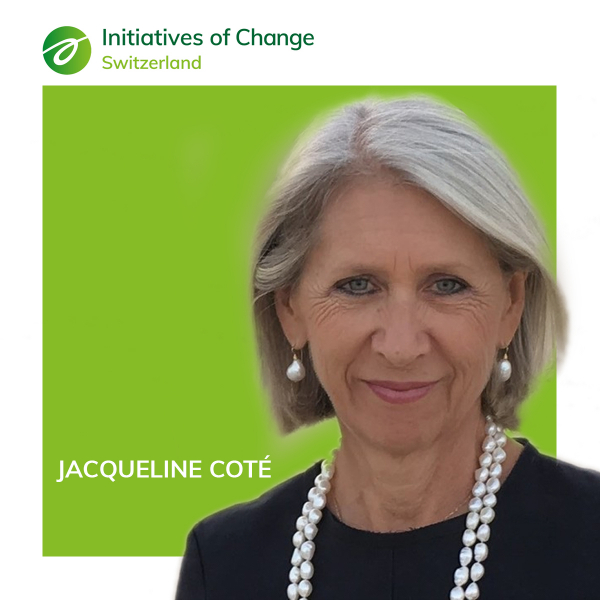
Jacqueline Coté was the Director of Public Relations and previously Head of Communications at the Graduate Institute of International and Development Studies in Geneva from 2009 to 2021. Prior to that she served as the Permanent Representative to the UN of the International Chamber of Commerce and was Senior Advisor Advocacy & Partnerships to the World Business Council for Sustainable Development. In the early part of her career, Ms Coté practiced as an international lawyer in Canada and Switzerland and held management positions with multinational companies SGS and DuPont. She has been president of Caux - Initiatives of Change since April 2022.
Sveinung Nygaard is from Norway and works as a professional composer, based in Gothenburg. He holds an MA in Audio Production from the University of Westminster and composes music for TV series, film and documentaries, among others the documentary The Lost Leonardo (Denmark) and the TV series Freej (Dubai). He also has his own musical project called FLYT which combines musicians from different cultures. Before the war in Ukraine, he travelled across Ukraine and recorded music there. He is the founder of the micro-festival TRACKS, seeking to bring Ukrainian and European artists together, and he is also behind the initiative Bards for Climate.
PARTICIPATION FEE
Daily Visitor Rate
CHF 60 - Day Visitor rate (per person per day, including lunch, dinner and refreshments). Kindly note that this fee does not include accommodation.
Full Package (including Accommodation)
CHF 150 - Standard rate (for individuals - per person per night and day)
CHF 210 - Corporate rate (for institutions - per person per night and day)
For further information, please get in touch by email!
Caux, high above Montreux overlooking Lake Geneva, is the location of Initiatives of Change Switzerland's conference centre, the Caux Palace. Initiatives of Change Switzerland is hosting the Caux Forum in cooperation with Initiatives of Change International.
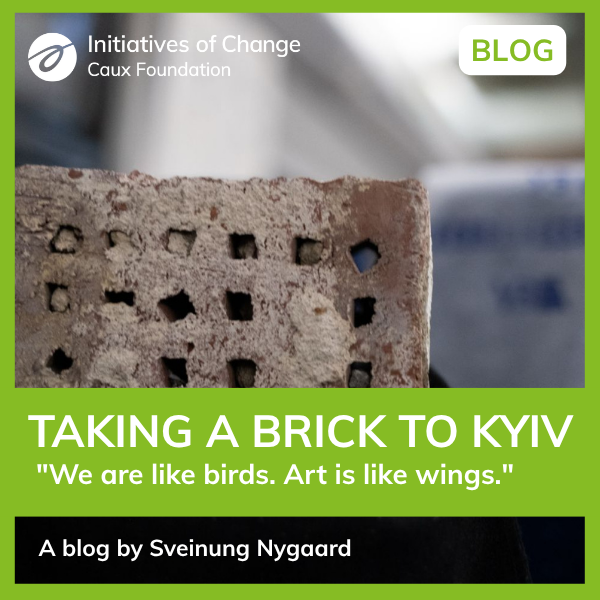
Sveinung Nygaard is a composer, musician and artistic facilitator who helped shape the creative vision of the Caux Democracy Forum 2026 as part of its arts team. Working to integrate the arts as an in...
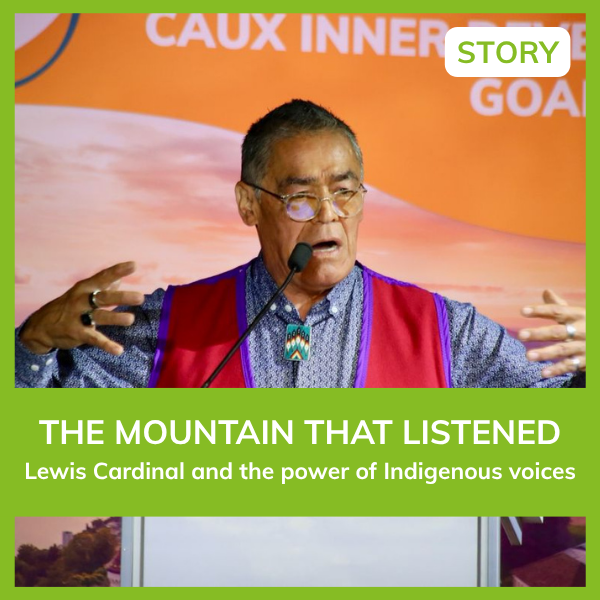
Sometimes the moments that shape our lives arrive unexpectedly. For Lewis Cardinal, one such moment began with a midnight drive up a mountain and grew into a lifelong journey of listening, belonging, ...
Would you like to share your inspiration, ideas, and skills with other participants at the Caux IDG Forum this summer on the theme “The Alchemy of Forgiveness”? We look forward to receiving your appli...
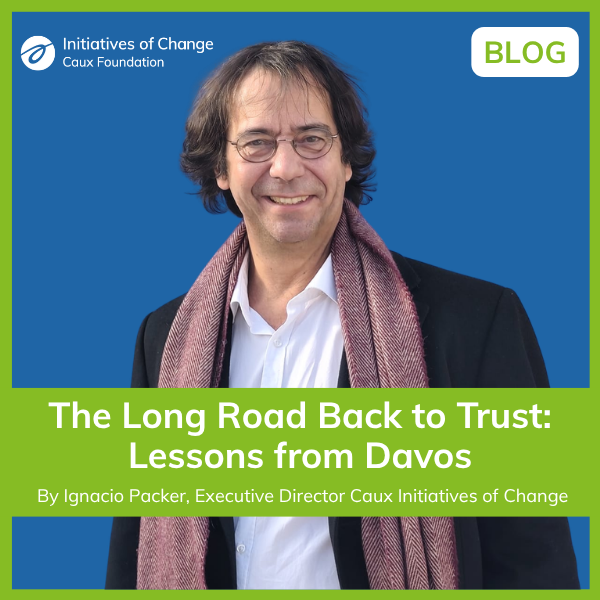
After participating in the World Economic Forum Annual Meeting in Davos on 22 January 2026, Ignacio Packer, Executive Director of the Caux Initiatives of Change Foundation, reflects on the question th...
Discover the full report of the Caux Democracy Forum 2025 which brought together more than 350 participants from over 45 countries at the Caux Palace to reflect and act on the theme “Revitalizing Demo...
Call for workshops! You would like to give share your inspiration, ideas and skills with other participants at the Caux IDG Forum this summer? We look forward to your application! Applications will be...
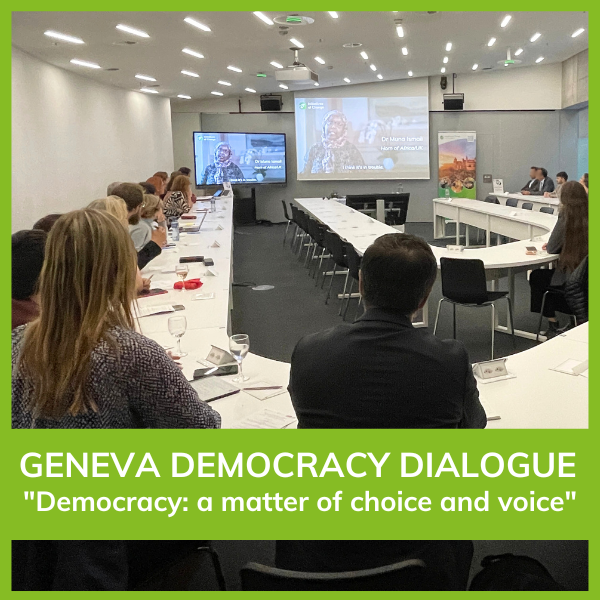
"In a democracy, each of us carries the responsibility to engage, listen and to contribute. It is more than a political system. It is about choice and voice. How does this resonate with you?" With the...
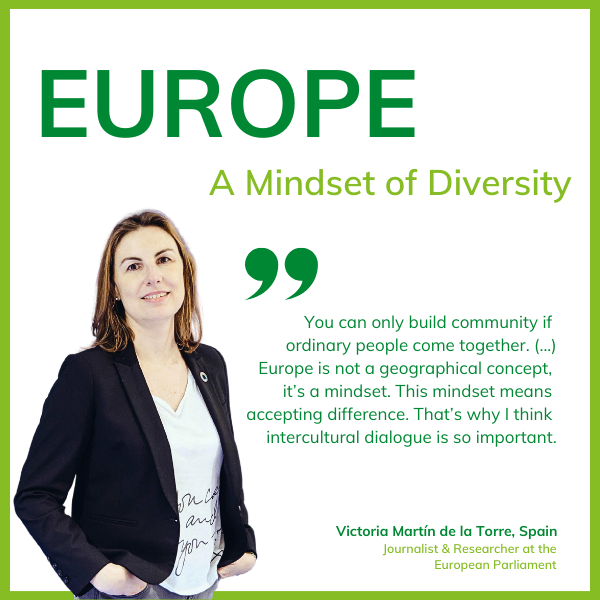
Spanish journalist Victoria Martín de la Torre is passionate about Europe, diversity and interfaith relations. Here she reflects on different aspects of Europe, based on her PhD research which led her...
Amid escalating conflicts worldwide, the arts emerge as a potent force to challenge misconceptions and foster positive perspectives. The pivotal role of artists in creatively raising awareness has nev...
On 25 - 28 January, some 60 CEOs and other senior staff came together under Chatham House Rules to share personal experiences on how to balance a sustainable business with integrity and trust. Executi...
Save the date for the Caux Forum 2024! This summer Caux Initiatives of Change, in partnership with Initiatives of Change International and supported by other civil society networks, UN agencies, phila...
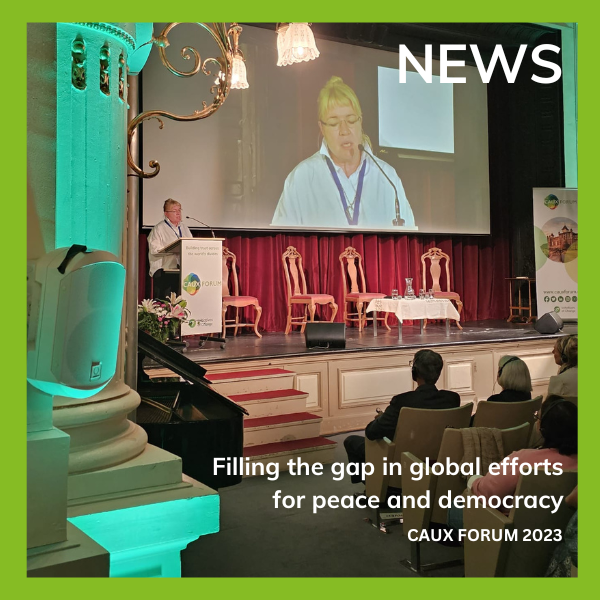
The Caux Forum 2023 Opening Ceremony set the tone for the conference with the theme, ‘Strengthening Democracy: The Journey from Trauma to Trust.’. Discover the report and relive the highlights of this...
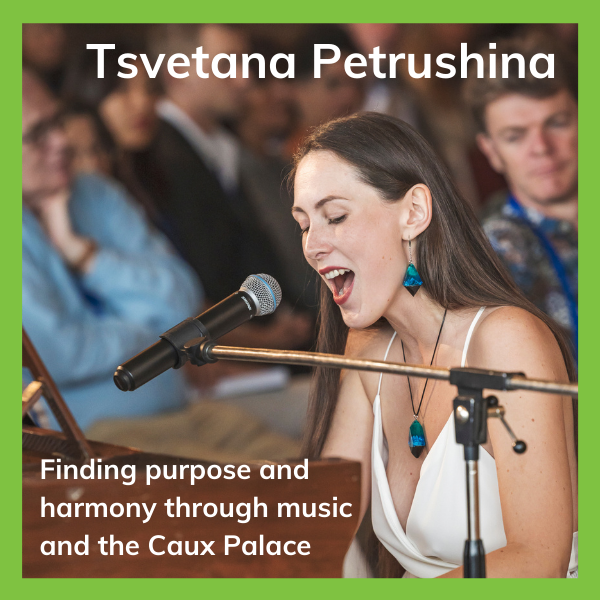
In a world filled with diverse cultures and languages, the journey of musician Tsvetana Petrushina is an inspiring tale of how she discovered her purpose. Her remarkable story led her to the Caux Pala...
Arpan Yagnik, a participant of last year's Creative Leadership conference and team member of the IofC Hub 2021, talks to Mary Lean about creativity, fear and vocation. ...